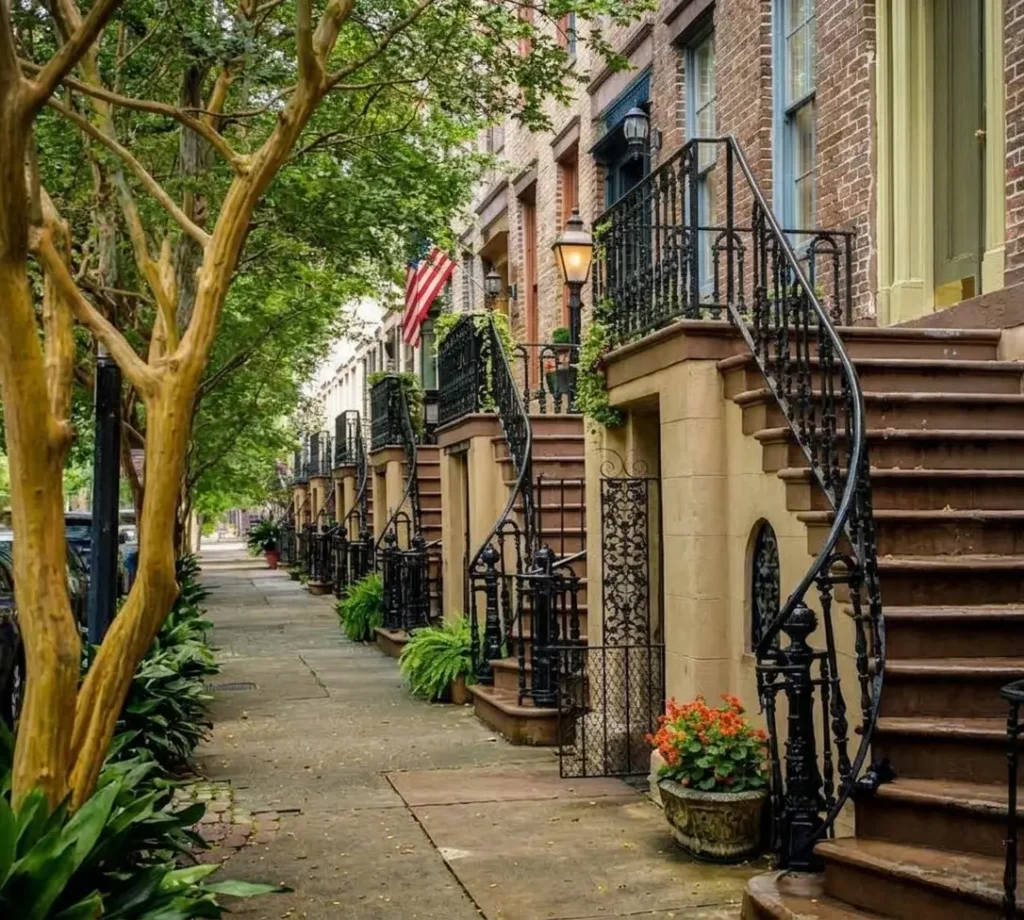
Savannah Historic District: Map, Things to Do & Visitor Guide
The Savannah Historic District is the best place to start exploring Savannah, Georgia. It brings historic squares, grand homes, museums, churches, shops, and River Street together in one compact area. The district follows Savannah’s original city plan, created after James Oglethorpe founded the city in 1733.
Most visitors explore the district on foot. The main areas include River Street, City Market, Bull Street, the historic squares, and Forsyth Park. Official tourism guidance also highlights walking as one of the best ways to experience the district.
Plan at least half a day for the main sights. Allow one or two days if you want museums, historic homes, shopping, dining, and slower walks through the squares.
Quick Facts
Quick Fact | Answer |
Location | Savannah, Georgia |
Best known for | Historic squares, architecture, museums, River Street |
Main walking areas | River Street, City Market, Bull Street, Forsyth Park |
Best way to explore | Walking, with trolley and guided tours as options |
Recommended time | Half a day to 2 days |
What Is the Savannah Historic District?
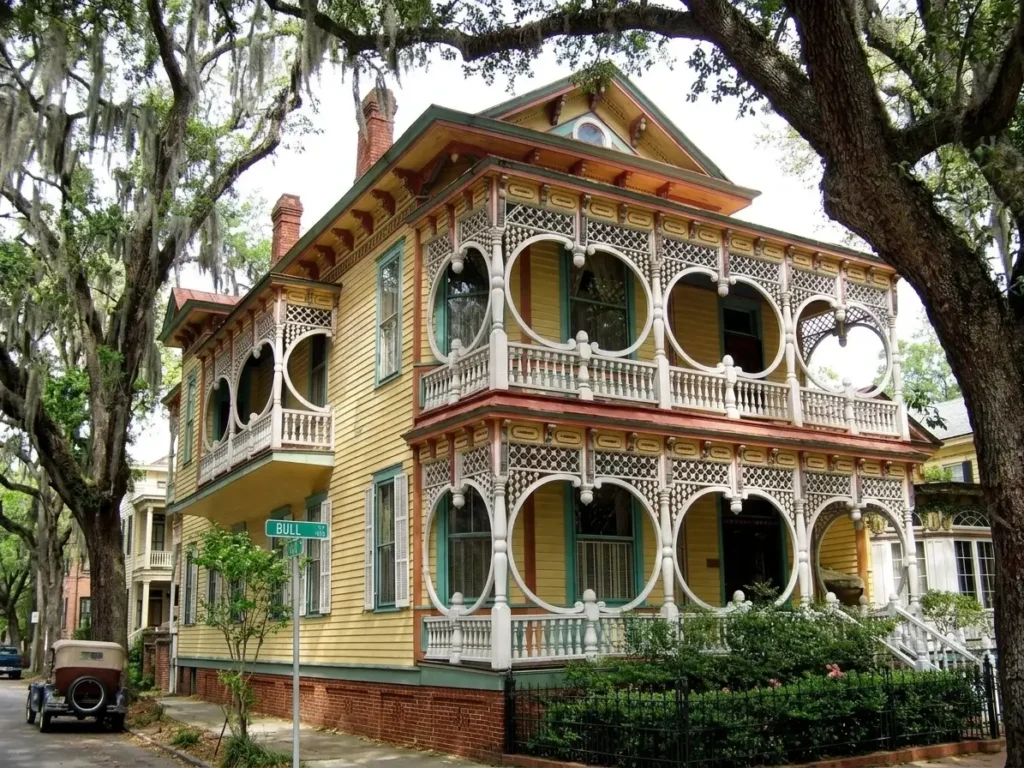
The Savannah Historic District is the historic core of Savannah, Georgia. It preserves the city’s original planned layout and many historic buildings. The district sits along the Savannah River and includes famous squares, historic homes, churches, museums, and streets. It also connects major visitor areas such as River Street, City Market, and Forsyth Park.
What makes Savannah unusual is not one landmark. It is the relationship between streets, squares, buildings, and public spaces. That layout still shapes how visitors explore the city today. The National Park Service recognizes the area’s historic town plan and its collection of architecturally significant buildings as key reasons for its national importance.
Savannah Historic District vs. Savannah Historic Landmark District
You will see both the Savannah Historic District and the Savannah Historic Landmark District used when researching the city. The terms can cause confusion because they do not always describe the same designation.
The Savannah National Historic Landmark District refers to the nationally recognized historic area. The National Park Service designated it in 1966. Its importance centers on Savannah’s original town plan and its historic buildings.
The Savannah Downtown Historic District is a local preservation district. The Metropolitan Planning Commission says it was established in 1966. Local rules help protect Savannah’s historic character, architecture, and city plan. The Historic District Board of Review oversees projects covered by those rules.
For travelers, the difference matters when you research maps, boundaries, buildings, or preservation rules. Most travel guides use Savannah Historic District as the simple visitor friendly term.
Why the District Is Historically Important
Savannah began in 1733 under the leadership of General James Edward Oglethorpe. The first settlers established the town on a bluff overlooking the Savannah River. Oglethorpe then developed a planned layout for the new settlement.
His plan differed from the street patterns found in many older colonial towns. The basic unit was a ward centered on a public square. Streets and building lots followed a repeated pattern around each square. This created neighborhoods with shared public spaces.
The squares were more than attractive green spaces. They formed the center of each ward and gave residents a place to meet. The surrounding streets also created a practical network for movement through the city.
Savannah’s plan continued to shape the city as it expanded. Historic buildings from different periods were later added around the original street and square system. That combination gives today’s district much of its character.
Preservation became especially important during the twentieth century. The Historic Savannah Foundation, founded in 1955, helped protect historic buildings, squares, and neighborhoods. The organization played a major role in Savannah’s preservation movement.
Federal recognition followed in 1966. The National Park Service identifies the Savannah Town Plan, also called the Oglethorpe Plan, as a central part of the district’s historic significance. Its architectural resources add another major layer of importance.
What Makes Savannah’s Historic District Different?
Savannah’s Historic District feels different because its history remains part of the street experience. You do not need to enter a museum to see the city’s historic design. Much of it appears around you as you walk.
The historic squares form the heart of that experience. Each square has its own setting, monuments, surrounding buildings, and history. Streets connect the squares and create a walkable pattern that is easy to explore at a relaxed pace.
Historic homes add another layer. Visitors can see different architectural periods within a relatively small area. Regency, Greek Revival, Gothic Revival, and other styles appear across Savannah’s historic streets.
Churches and public buildings also contribute to the district’s architectural identity. The Cathedral Basilica of St. John the Baptist is one of the best known examples. Historic homes such as the Owens Thomas House also show how architecture can reveal Savannah’s social history.
The district also reaches the Savannah River waterfront. River Street adds a different setting with historic warehouses, cobblestone streets, shops, restaurants, and river views. City Market provides another focal point for dining, shopping, art, and entertainment.
At the southern end, Forsyth Park provides a large open space beneath mature live oaks. Its location helps connect the historic squares with the southern part of downtown.
That mix is the real strength of Savannah’s Historic District. You can move from a quiet square to a historic church, then continue toward a museum or the riverfront. The city plan makes these places feel connected rather than isolated.
For a first visit, that connection is important. The best way to understand Savannah is often to follow the streets and squares instead of visiting landmarks one by one.
Where Is the Savannah Historic District?
The Savannah Historic District sits in the heart of downtown Savannah, Georgia. It extends from the Savannah River toward the southern part of the city’s historic core. River Street marks the waterfront edge, while Forsyth Park anchors the southern end of the main visitor area.
For most visitors, the district is easier to understand as a connected group of areas. These include River Street, City Market, the historic squares, Bull Street, and Forsyth Park. The streets and squares follow Savannah’s historic planned layout. This makes walking between many major sights practical.
Savannah Historic District Location
The district lies along the south bank of the Savannah River in central Savannah. River Street runs along the riverfront and sits below much of the upper historic area. City Market sits farther inland, close to the central part of the district.
From there, the historic squares spread through the downtown street grid. Bull Street provides one of the most useful north to south routes for visitors. Forsyth Park sits farther south and serves as a major landmark for the southern end of the visitor area.
The location also makes the district a practical base for sightseeing. Visitors can reach major attractions, restaurants, shops, museums, and historic streets without crossing the entire city.
If you arrive by air, Savannah Hilton Head International Airport sits about 15 miles from the Historic District.
Savannah Historic District Boundaries
The Savannah Historic District has defined boundaries on official preservation maps. The Metropolitan Planning Commission’s boundary map shows the district in relation to streets, parks, the riverfront, and nearby areas.
For travelers, however, memorizing every boundary street is not very useful. A better approach is to understand the district’s main geographic anchors.
The Savannah River defines the northern waterfront. River Street and Factors Walk sit along this edge. City Market lies farther south and west within the central visitor area.
The central squares spread between the riverfront and the southern part of downtown. Bull Street runs through several important squares and provides a useful route for exploring the historic plan.
Forsyth Park helps visitors identify the southern end of the main historic area. The area beyond Forsyth Park includes the Victorian District, which is a separate neighborhood with its own historic identity.
This distinction matters when planning a walking route. A hotel or attraction can sit close to the Historic District without being inside the same preservation boundary.
For exact property boundaries, use the current Metropolitan Planning Commission map rather than relying on a travel blog map.
North vs. South Historic District
Visitors often divide the Historic District into northern and southern areas. Visit Savannah also describes the district through North Historic District, South Historic District, and the MLK Boulevard corridor.
North Historic District
The northern area centers around the Savannah River and River Street. This side has a stronger waterfront and commercial feel. City Market also sits within the northern part of the visitor experience.
You will find restaurants, shops, historic warehouses, cobblestone streets, and river views around River Street. City Market adds galleries, dining, shops, and entertainment farther inland.
This area works well for visitors who want to combine sightseeing with dining and waterfront views.
South Historic District
The southern area feels more residential and quieter in many places. Historic homes, shaded streets, squares, and architectural details become more prominent as you move south. Visit Savannah describes this area as having residential charm and shaded streets.
Forsyth Park is the major southern landmark. Its location also places visitors close to the Victorian District, which sits along the park’s eastern side and contains many Victorian homes.
For a first visit, you do not need to choose between north and south. A well planned route can connect both areas.
A north to south walk can begin near River Street or City Market. It can then continue through the historic squares before reaching Forsyth Park.
Is Downtown Savannah the Same as the Historic District?
Not exactly. Downtown Savannah is a broader area, while the Historic District refers to a specific historic area within central Savannah.
Travel websites often use terms such as historic downtown Savannah, Savannah GA downtown, and Savannah Historic District when discussing the same visitor area. That can make the terminology confusing.
The Historic District has its own historic boundaries and preservation context. The Metropolitan Planning Commission maintains official maps showing those boundaries.
For trip planning, the overlap is more useful than the technical difference. Many places visitors associate with downtown are within or close to the Historic District.
These include:
- River Street
- City Market
- Historic squares
- Bull Street
- Forsyth Park
- Broughton Street
- Major museums and historic homes
The key point is simple. If you stay near the center of Savannah’s Historic District, you are close to many of the city’s main visitor attractions.
If a hotel advertises a downtown Savannah location, check its address before booking. The term alone does not confirm that the property sits inside the Historic District.
For navigation, the official district map is the safest reference. It shows the historic boundary and major streets within the district.
Savannah Historic District Map & Layout
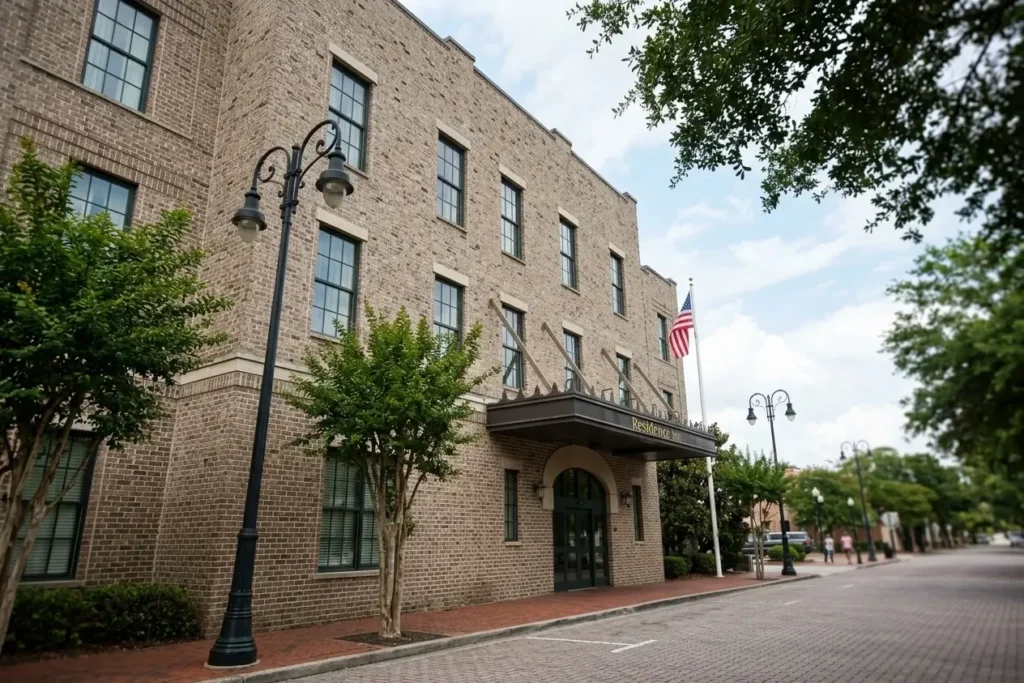
The Savannah Historic District is easier to explore when you understand its basic layout. The streets form a planned grid around public squares. Bull Street provides the clearest north to south route through the historic core. River Street follows the waterfront, while Forsyth Park anchors the southern end of the main visitor area.
You do not need to memorize every street before your visit. Instead, use a few major landmarks as reference points. Think of the district as a connected route from the riverfront through City Market and the historic squares toward Forsyth Park.
How to Read the Savannah Historic District Map
Savannah’s street plan follows the Oglethorpe Plan, which uses wards, public squares, streets, and building lots. The plan began with Savannah’s founding in 1733. Public squares became central points within the planned wards.
On a modern Savannah Historic District map, the squares help you understand where you are. Major streets connect these green spaces across the downtown grid.
Start by finding the Savannah River at the northern edge. Then locate River Street below the upper downtown streets. From there, look for City Market and the central squares. Continue south toward Forsyth Park.
This simple pattern makes the map much easier to follow:
Savannah River → River Street → City Market → Historic Squares → Forsyth Park
The official Metropolitan Planning Commission map should guide you when you need exact preservation district boundaries. A visitor map works better for planning daily routes and sightseeing.
The Main North South Route
Bull Street is one of the most useful streets for understanding Savannah’s historic layout. It runs north to south through several important public squares.
The route connects some of the city’s best known green spaces. These include Johnson Square, Wright Square, Chippewa Square, Madison Square, and Monterey Square.
This pattern shows why Savannah feels different from many American downtowns. The squares interrupt the street grid and create natural places to stop.
Bull Street also gives visitors a simple way to judge their position. If you move south along Bull Street, you pass through the central squares and move toward Forsyth Park.
You can use this route as a backbone for a self guided walking tour. Add nearby landmarks as short detours rather than crossing the district without a plan.
For first time visitors, this approach can save time. It also lets you see how Savannah’s original city plan shaped the modern downtown.
The Main East West Streets
Savannah’s historic grid also depends on streets that run east and west. These streets connect the squares with shops, homes, restaurants, churches, museums, and other landmarks.
Broughton Street is one of the main shopping and commercial streets in downtown Savannah. It crosses the central historic area and provides a useful reference when navigating the district.
Congress Street runs through the central part of downtown. It connects areas around City Market with the surrounding street grid.
Bay Street runs near the riverfront and provides access to River Street. It also gives visitors a useful point of reference when moving between the upper downtown area and the waterfront.
Oglethorpe Avenue crosses the district farther south. Its location helps visitors understand the transition between the central squares and southern parts of downtown.
You will also encounter streets such as Liberty Street, Charlton Street, and Perry Street as you move through the historic grid.
Do not try to memorize all these streets. Learn two or three reference roads first. Bull Street helps with north to south navigation, while Broughton Street and Bay Street help orient you across the district.
River Street to Forsyth Park
The easiest way to picture the Historic District is as a north to south sightseeing route.
River → River Street → City Market → Historic Squares → Forsyth Park
Start at the Savannah River and River Street. This area gives you waterfront views and access to the historic riverfront.
Move inland toward City Market. This area sits within the central visitor zone and offers restaurants, shops, galleries, and entertainment.
From City Market, continue toward the historic squares. The squares spread through the central grid and provide the clearest view of Savannah’s planned city design.
Continue south toward Forsyth Park. The park offers a large green space surrounded by historic streets and buildings.
This route does not mean every visitor should walk the entire distance in one trip. The district covers a large area, and the total walking distance can add up quickly.
Instead, use the route to understand the geography. You can choose a shorter section based on your time, interests, and energy.
For a first visit, the central squares often provide the best connection between Savannah’s architecture, history, and public spaces.
Where Are the Main Attractions?
The easiest way to plan your visit is to group attractions by area. This avoids unnecessary backtracking and helps you build a practical walking route.
Riverfront area
Look here for:
- River Street
- Historic riverfront warehouses
- Factors Walk
- Savannah River views
City Market and central area
Look here for:
- City Market
- Nearby restaurants and shops
- Galleries
- Central historic streets
Historic squares
This area includes many of Savannah’s most recognizable squares and surrounding architecture.
Important squares include:
- Johnson Square
- Wright Square
- Chippewa Square
- Madison Square
- Monterey Square
- Lafayette Square
- Reynolds Square
Each square has a different setting and collection of nearby buildings. You can combine several squares into one walking route because they sit within the same historic street network.
Southern Historic District
Look farther south for:
- Forsyth Park
- Residential streets
- Historic homes
- Southern squares
- Architectural landmarks
Forsyth Park works well as a southern reference point. It also provides a natural place to end a longer walking route.
Museum and historic home areas
Several museums and historic properties sit within the central and southern parts of the district. Their locations make them easy to combine with nearby squares and streets.
Before choosing an attraction, check its current opening hours and admission information. Historic properties can have different schedules from public spaces.
A Simple Savannah Historic District Map for First Time Visitors
If you are looking at a map for the first time, remember these five points:
1. Find the Savannah River.
This gives you the northern reference point.
2. Find River Street.
It follows the waterfront and sits below much of the upper historic area.
3. Find City Market.
It helps identify the central northern visitor area.
4. Find Bull Street and the historic squares.
This reveals the structure of Savannah’s original planned city.
5. Find Forsyth Park.
This gives you a clear southern reference point.
Once you know these five locations, the rest of the district becomes easier to understand.
For exact preservation boundaries, use the Metropolitan Planning Commission’s current district map. For sightseeing, use a visitor map that shows attractions, streets, squares, and walking connection.
Best Things to Do in the Savannah Historic District
The best things to do in Savannah Historic District involve more than checking off landmarks. The district rewards slow walks and short stops. You can move from shaded squares to historic homes, then continue toward the riverfront.
Most major sights sit close enough to combine several stops in one outing. Your best route depends on how much time you have. First time visitors should focus on the squares, River Street, City Market, Forsyth Park, and one or two historic attractions.
Walk Savannah’s Historic Squares
Savannah’s historic squares are among the city’s most distinctive features. They form part of the planned layout created during Savannah’s early history.
The squares were designed as public spaces within Savannah’s ward system. Streets and building lots surrounded each square. This layout still shapes the Historic District today.
Walking between the squares is one of the easiest ways to experience Savannah. Each square has its own monuments, trees, nearby buildings, and atmosphere.
Start with several squares rather than trying to see every one. Johnson Square, Wright Square, Chippewa Square, Madison Square, and Monterey Square offer a strong introduction to the central district.
Look beyond the greenery when you visit. The buildings around each square often tell as much history as the square itself.
For a first visit, walk slowly and use the squares as navigation points. They make it easier to understand Savannah’s original street plan.
Visit River Street
River Street gives you a different view of Savannah’s Historic District. The area follows the Savannah River and occupies the city’s historic waterfront.
Historic buildings line the riverfront, including former warehouses that reflect Savannah’s role as a major port city. Many now contain shops, restaurants, galleries, and other businesses.
The waterfront also gives you open views across the river. You can watch boats pass while exploring the historic buildings along the street.
River Street works especially well near sunset. The riverfront setting creates a natural break after walking through the central squares.
Keep in mind that River Street sits below the upper downtown streets. Factors Walk and ramps provide connections between the riverfront and the higher streets above.
If you want shopping, food, and waterfront views in one stop, River Street is an easy choice.
Explore City Market
City Market sits in the northern part of Savannah’s central visitor area. It has served as a gathering and commercial space for generations.
Today, City Market combines restaurants, shops, galleries, and entertainment. Its pedestrian friendly setting makes it easy to explore between other downtown stops.
Art is one of the area’s main draws. Galleries and studios give visitors a chance to see local and regional work.
Food also plays a major role here. You can find casual options alongside restaurants suited to longer meals.
City Market works well as a stop between the riverfront and the historic squares. Its location makes it easy to include without creating a large detour.
Visit during the day if you want to browse shops and galleries. Return later if you want to experience its evening dining and entertainment.
Visit Forsyth Park
Forsyth Park provides one of the largest green spaces near Savannah’s Historic District. It sits at the southern end of the central historic area.
The park is best known for its large fountain. Its broad walking paths and mature trees also make it a popular place to slow down after sightseeing.
Gardens and open lawns give the park a different feel from Savannah’s smaller historic squares. The surrounding streets also feature notable historic architecture.
Forsyth Park works well as the final stop on a north to south walking route. You can begin near River Street and gradually move through the squares before reaching the park.
The park also gives you access to Savannah’s southern historic areas. From here, you can continue toward nearby residential streets and the Victorian District.
You do not need to rush through Forsyth Park. Allow extra time if you want photos, a relaxed walk, or a break under the trees.
Explore Historic Homes & Museums
Historic homes and museums add context that you cannot get from walking the streets alone.
Several properties show how Savannah’s residents lived across different periods. Others focus on the city’s wider history, architecture, and cultural development.
The Owens Thomas House & Slave Quarters offers an important look at life in nineteenth-century Savannah. Its interpretation also addresses the lives of enslaved people who lived and worked on the property.
The Juliette Gordon Low Birthplace explores the life of the founder of the Girl Scouts. The house also provides a close look at historic residential architecture in Savannah.
The Davenport House Museum helps visitors understand domestic life and architecture during Savannah’s early nineteenth century period.
The Georgia State Railroad Museum offers a different experience. It focuses on railroad history and includes historic railroad equipment and structures.
Choose one or two properties based on your interests. Trying to visit every museum can take time away from walking the district itself.
See Savannah’s Historic Churches
Savannah’s churches add another important layer to the Historic District. Their architecture, history, and location make them worthwhile stops during a walking route.
The Cathedral Basilica of St. John the Baptist is one of Savannah’s most recognizable religious landmarks. Its Gothic Revival architecture and detailed interior make it a major stop for architecture and history lovers.
The First African Baptist Church also holds an important place in Savannah’s history. Its congregation traces its roots to the eighteenth century. The church’s history connects to Savannah’s African American community and the broader history of slavery and freedom in the city.
The Independent Presbyterian Church is another notable building near the historic squares. Its architecture contributes to the visual character of the surrounding district.
Church visits require more planning than public squares. Check current visiting hours before adding one to your route. Worship services and private events can affect access.
Walk Jones Street
Jones Street is worth visiting if you want to see Savannah beyond its most famous landmarks.
The street is known for its historic homes, mature trees, brick sidewalks, and residential character. It offers a quieter walking experience than busy areas such as City Market.
Jones Street also shows why Savannah’s appeal extends beyond individual attractions. The buildings, trees, sidewalks, and street layout work together as one historic streetscape.
You do not need a long itinerary for Jones Street. Add it to a walking route through the southern part of the Historic District.
It is especially useful for visitors interested in architecture and photography. The slower residential setting also gives you a break from the busier commercial areas.
If your schedule allows only a few streets beyond the main attractions, Jones Street is a strong choice.
Best Savannah Historic District Walking Routes
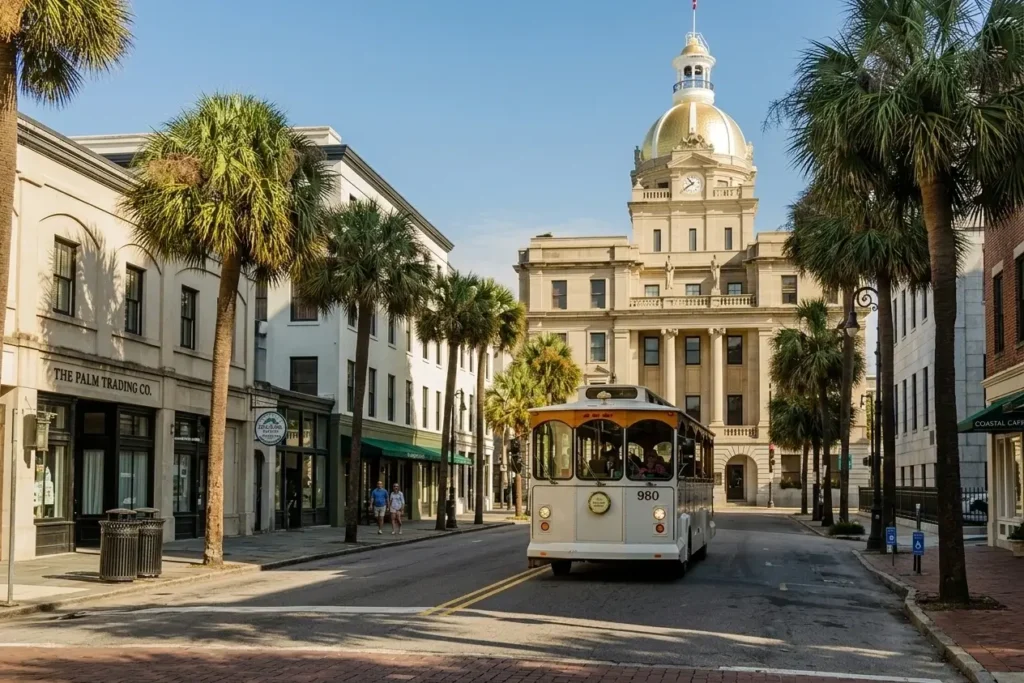
Walking is one of the best ways to understand Savannah’s Historic District. The historic squares connect many major sights across the downtown grid.
A good walking route should follow the district’s layout instead of jumping between distant attractions. Start with a clear landmark, follow a simple direction, and finish near your next activity.
The routes below suit different schedules. They also let you adjust the walk when the weather, crowds, or your energy changes.
2 Hour Savannah Historic District Walking Route
This route works well if you have limited time. It covers the riverfront, City Market, and several historic squares.
Start: River Street
↓
Stop 1: River Street waterfront
Walk: 15 to 20 minutes
Explore the riverfront, historic warehouses, cobblestone streets, and river views. You can also see Factors Walk and the upper streets from the waterfront.
↓
Stop 2: Factors Walk and Bay Street
Walk: About 10 minutes
Walk up from River Street toward Bay Street. Use the ramps or elevators if stairs are difficult. Visit Savannah notes several accessible connections between the waterfront and upper downtown.
↓
Stop 3: Johnson Square
Walk: About 5 minutes
Johnson Square gives you an immediate introduction to Savannah’s original square system. It also sits along Bull Street.
↓
Stop 4: City Market
Walk: About 8 to 10 minutes
Explore the galleries, shops, restaurants, and public spaces around City Market. Allow extra time if you want to eat or browse.
↓
Finish: Wright Square or Chippewa Square
Total: About 1.5 to 2 miles
This route gives you a useful introduction without trying to cover the entire Historic District.
Best for: Cruise visitors, short stopovers, and travelers with only a few hours.
Half Day Savannah Historic District Walking Route
A half day gives you enough time to combine the main squares with City Market and the riverfront.
Start: River Street
↓
Stop 1: River Street
Time: 20 to 30 minutes
Walk along the waterfront and explore the historic warehouses. Stop for photos and river views.
↓
Stop 2: Factors Walk
Time: 15 minutes
Continue toward Bay Street through the historic Factors Walk area. This section helps explain the connection between the riverfront and upper downtown.
↓
Stop 3: Johnson Square
Time: 10 minutes
Walk south to Savannah’s first square. From here, continue along the historic street grid.
↓
Stop 4: Wright Square
Time: 10 minutes
See the square, surrounding architecture, and Tomochichi memorial.
↓
Stop 5: Telfair Square
Time: 15 minutes
Continue toward Telfair Square and the nearby Telfair museums. This creates a natural cultural stop within the walking route.
↓
Stop 6: Chippewa Square
Time: 15 minutes
Visit the square and see the location associated with the film Forrest Gump. The original movie bench is now preserved at the Savannah History Museum.
↓
Finish: City Market
Walking time: Roughly 1.5 to 2 hours
Total visit time: About 3 to 4 hours with stops
This route works well when you want a broad introduction without spending the whole day walking.
Full Day Savannah Historic District Walking Route
A full day gives you time to slow down and visit an attraction or two.
Start: River Street
↓
Stop 1: River Street and Waterfront
Time: 30 minutes
Start with the Savannah River, historic warehouses, shops, and waterfront views.
↓
Stop 2: Factors Walk
Time: 15 to 20 minutes
Walk through the historic passageways before reaching Bay Street.
↓
Stop 3: Johnson Square
Time: 15 minutes
Use Johnson Square as your first major stop inside the historic grid.
↓
Stop 4: City Market
Time: 30 to 45 minutes
Browse shops and galleries. This is also a good place for an early lunch.
↓
Stop 5: Telfair Square
Time: 15 minutes
Continue toward the museum area.
↓
Stop 6: Wright Square
Time: 15 minutes
Pause for the square’s history and architecture.
↓
Stop 7: Chippewa Square
Time: 15 minutes
See the square and its surrounding buildings.
↓
Stop 8: Madison Square
Time: 15 minutes
Continue south along Bull Street. Look for the historic buildings around the square.
↓
Stop 9: Lafayette Square
Time: 15 minutes
Visit the square and the nearby Cathedral Basilica of St. John the Baptist.
↓
Stop 10: Monterey Square
Time: 20 minutes
See the square, Mercer Williams House, and Congregation Mickve Israel.
↓
Stop 11: Jones Street
Time: 15 to 20 minutes
Walk along one of Savannah’s best-known residential streets. Focus on the homes, trees, sidewalks, and overall streetscape.
↓
Finish: Forsyth Park
Allow at least 30 minutes for the park. See the fountain, walking paths, gardens, and surrounding architecture.
Visit Savannah’s official walking guide follows a similar north-to-south concept from River Street toward Forsyth Park. Its route also connects multiple squares along the way.
Best for: First-time visitors who want a broad overview of the Historic District in one day.
Two Day Savannah Historic District Walking Route
Two days allow you to separate sightseeing from deeper exploration. You will spend less time rushing between attractions.
Day 1: Riverfront and Central Historic District
Start: River Street
↓
Stop 1: River Street
↓
Stop 2: Factors Walk
↓
Stop 3: Johnson Square
↓
Stop 4: City Market
↓
Stop 5: Telfair Square
↓
Stop 6: Wright Square
↓
Finish: Dinner around City Market or the central Historic District
Use the first day to understand Savannah’s northern and central areas.
Day 2: Squares, Historic Homes, and Forsyth Park
Start: Chippewa Square
↓
Stop 1: Chippewa Square
↓
Stop 2: Madison Square
↓
Stop 3: Lafayette Square
↓
Stop 4: Cathedral Basilica of St. John the Baptist
↓
Stop 5: Monterey Square
↓
Stop 6: Jones Street
↓
Stop 7: Forsyth Park
↓
Finish: Forsyth Park
Use the second day for slower walks and one or two historic attractions.
You can add a historic home or museum between the squares. This works better than trying to visit several museums in one morning.
Best for: Travelers who want history, architecture, photography, food, and relaxed walking.
Best Walking Route for First Time Visitors
For most first-time visitors, I recommend a north-to-south route. It gives you a clear sense of how Savannah’s riverfront, commercial center, squares, residential streets, and parks connect.
The simplest version is:
Start: River Street
↓
Stop 1: Factors Walk
↓
Stop 2: Johnson Square
↓
Stop 3: City Market
↓
Stop 4: Wright Square
↓
Stop 5: Chippewa Square
↓
Stop 6: Madison Square
↓
Stop 7: Monterey Square
↓
Stop 8: Jones Street
↓
Finish: Forsyth Park
You do not need to stop at every location for the same amount of time. Choose two or three places for longer visits.
If history is your priority, spend more time around the squares and historic homes.
If food and shopping matter more, give City Market and River Street more time.
If photography is your priority, slow down around the squares, Jones Street, and Forsyth Park.
If mobility is a concern, shorten the route and use transportation between sections. River Street also has elevators and ramps that can help visitors reach the upper downtown area.
The official Visit Savannah walking guide also recommends a route that connects River Street, City Market, historic squares, and Forsyth Park. That makes the north-to-south route a useful framework for first-time visitors.
How to Choose the Right Walking Route
Your available time should determine the route.
Time | Recommended Route | Best For |
|---|---|---|
2 hours | River Street → City Market → central squares | Quick introduction |
Half day | River Street → City Market → several squares | First look at the district. |
1 day | River Street → squares → Jones Street → Forsyth Park | Full first visit |
2 days | Northern district on Day 1, southern district on Day 2 | Slow exploration |
Do not treat these routes as fixed tours. Savannah rewards small detours.
A restaurant, historic home, church, or shop may give you a reason to change direction.
The goal is to use the route as your framework. You can then explore the streets around it at your own pace.
Walking Tips for Savannah Historic District
Start early if you plan to cover a large part of the district. Morning walks are often more comfortable during warmer months.
Wear comfortable shoes. Some routes include cobblestones, ramps, stairs, and uneven surfaces.
Carry water, especially during hot and humid weather.
Build short breaks into longer routes. The squares provide natural places to stop without leaving the historic area.
Check attraction hours before adding museums or historic homes to your route. Public squares remain easier to visit without a fixed schedule.
If you want a completely flexible route, Visit Savannah also lists a self-guided walking option that covers River Street, City Market, Chippewa Square, and Forsyth Park.
How Long Do You Need in Savannah Historic District?
You can see part of the Savannah Historic District in two hours. A half day gives you more time for the squares and riverfront, making it easy to balance dining with key Savannah GA attections along the way.
One full day works well for a first visit. You can walk the main areas and visit a major attraction.
Two days are better if you prefer a slower pace. You can add museums, historic homes, churches, shopping, and longer meals.
Your ideal visit also depends on how much walking you enjoy. Savannah’s Historic District covers a large area, so trying to see everything quickly can feel rushed.
Is One Day Enough?
Yes, one day is enough for a strong first look at Savannah’s Historic District.
Start near River Street and walk toward the central squares. Continue south through the historic district and finish around Forsyth Park.
A practical one day route looks like this:
River Street
↓
Factors Walk
↓
City Market
↓
Johnson Square
↓
Wright Square
↓
Chippewa Square
↓
Madison Square
↓
Monterey Square
↓
Jones Street
↓
Forsyth Park
You can also visit one major attraction during the day. Choose a historic home, museum, or church based on your interests.
Do not spend equal time at every stop. Pick a few places for longer visits and treat the others as walking stops.
One day gives you the main Savannah experience. Two days let you explore without keeping a strict pace.
What Can You See in 2 Hours?
Two hours is enough for a focused introduction to the Historic District.
Do not try to walk from River Street to Forsyth Park in this timeframe. Choose one central area instead.
A practical two hour route is:
Start: City Market
↓
Stop 1: Johnson Square
Walk through the square and see the surrounding historic buildings.
↓
Stop 2: Wright Square
Continue south through the historic street grid.
↓
Stop 3: Chippewa Square
See the square and its connection with Forrest Gump.
↓
Finish: Madison Square
This route covers several historic squares without requiring a long cross district walk.
You can also choose River Street instead if waterfront views are your priority.
For a two hour visit, focus on walking rather than adding several paid attractions. A museum or historic home can use much of your available time.
What Can You See in Half a Day?
A half day gives you enough time to combine several parts of the district.
A good route starts at River Street and moves toward the central squares.
Start: River Street
↓
Stop 1: River Street Waterfront
Spend time around the historic warehouses and riverfront.
↓
Stop 2: Factors Walk
Walk toward the upper downtown streets.
↓
Stop 3: City Market
Allow time for shops, galleries, food, or a short break.
↓
Stop 4: Johnson Square
Begin your walk through Savannah’s historic squares.
↓
Stop 5: Wright Square
Continue through the central historic area.
↓
Stop 6: Chippewa Square
Take time for photos and nearby architecture.
↓
Finish: Madison Square
This route gives you a mix of waterfront scenery, commercial areas, historic squares, and architecture.
If you prefer parks and residential streets, replace some northern stops with Forsyth Park and Jones Street.
What to Do With 2 Days?
Two days give you enough time to slow down and explore the district in greater depth.
Instead of repeating the same route, divide your visit into northern and southern areas.
Day 1: Riverfront and Central Historic District
Start: River Street
↓
Stop 1: River Street
Explore the waterfront and historic warehouses.
↓
Stop 2: Factors Walk
See the historic connection between the riverfront and upper downtown.
↓
Stop 3: City Market
Browse galleries, shops, restaurants, and entertainment.
↓
Stop 4: Johnson Square
Begin exploring the historic squares.
↓
Stop 5: Wright Square
Continue through the central district.
↓
Stop 6: Chippewa Square
Explore the square and nearby historic streets.
↓
Finish: Central Historic District
Use the evening for dinner and a slower look at downtown.
Day 2: Southern Historic District
Start: Madison Square
↓
Stop 1: Madison Square
Explore the square and nearby historic buildings.
↓
Stop 2: Lafayette Square
Visit the square and the nearby Cathedral Basilica of St. John the Baptist.
↓
Stop 3: Monterey Square
See the square and surrounding historic architecture.
↓
Stop 4: Jones Street
Walk through the quieter residential streets.
↓
Stop 5: Forsyth Park
Spend time around the fountain, paths, gardens, and mature trees.
↓
Finish: Forsyth Park or nearby southern district
Use the extra time for a historic home, museum, church, or longer meal.
Two days also give you more flexibility if weather, crowds, or attraction schedules change.
Savannah Historic District Time Comparison
Time Available | Best Approach |
|---|---|
2 hours | Core squares + one major area |
Half day | Squares + City Market or River Street |
1 day | Full walking route + one major attraction |
2 days | Slower exploration + museums and historic homes |
Which Length of Stay Is Best for You?
Choose 2 hours if you have a short stop and want to see the central squares.
Choose half a day if you want the squares plus either River Street or City Market.
Choose one full day if this is your first Savannah visit and you want to cover the major areas.
Choose two days if you want historic homes, museums, churches, shopping, restaurants, and slower walks.
You do not need several days just to walk through the district. Extra time becomes valuable when you want to explore its attractions rather than only see them from the street.
How to Get Around Savannah Historic District
The easiest way to explore Savannah Historic District is usually on foot. Many major attractions, squares, restaurants, and historic streets sit within walking distance,allowing you to naturally cover primary things to do in Savannah without relying on transport.
You also have several alternatives when you want less walking. Trolley tours provide sightseeing and historical commentary. The free DOT shuttle connects major visitor areas. Biking can work for longer distances, while taxis and rideshare services help when you need a direct trip.
Your best option depends on your time, mobility, and reason for visiting.
Walking
Walking is the best choice for most visitors exploring the Historic District.
Savannah’s historic street plan connects many squares, landmarks, homes, shops, and restaurants. Walking also lets you notice details that are easy to miss from a vehicle.
You can stop at a square, enter a historic building, take photos, then continue without finding another parking space.
The main walking areas include River Street, City Market, Bull Street, the historic squares, Jones Street, and Forsyth Park.
Walking also makes it easier to change your route. If you find a restaurant, shop, church, or historic home that interests you, simply add it to your walk.
The downside is distance. A full north to south route can involve several miles of walking.
Hot and humid weather can also make long walks tiring. Start early during warmer months and carry water.
Savannah Trolley Tours
A Savannah trolley tour is a good choice when you want sightseeing with historical commentary.
Trolley tours take you through major parts of the city while guides explain landmarks, architecture, and local history. Some operators also offer hop on and hop off services, allowing you to combine transportation with sightseeing. Visit Savannah lists trolley tours as one of the main ways to explore the Historic Landmark District.
One current option is the Explore Savannah Trolley Tour, which offers a narrated sightseeing experience covering places such as Forsyth Park, River Street, the Cathedral Basilica, City Market, and Chippewa Square.
A trolley makes sense when you want to cover more ground without walking the entire district.
It also works well on your first day. You can see the major areas first, then return to the places you want to explore on foot.
Best for: Historical commentary, first time visitors, limited walking, and seeing many areas quickly.
Self Guided Walking Tour
A self guided walking tour gives you the most control over your day.
You choose where to start, which squares to visit, and how long to stay. You can also stop for lunch, shopping, photography, or a museum without following a fixed group.
A simple route is:
River Street
↓
City Market
↓
Johnson Square
↓
Wright Square
↓
Chippewa Square
↓
Madison Square
↓
Monterey Square
↓
Forsyth Park
Visit Savannah also provides a self guided route that connects River Street with City Market, historic squares, and Forsyth Park.
This approach works especially well if you already know which sights interest you.
Best for: Slow exploration, photography, architecture, flexible schedules, and independent travelers.
Horse Drawn Carriage Tours
Horse drawn carriage tours offer a slower sightseeing experience through the Historic District.
They are useful if you want to see historic streets without walking several miles. Guides can also provide stories about Savannah’s buildings, neighborhoods, and past.
A carriage ride is better viewed as a sightseeing experience than as your main transportation method.
You will still want to walk when exploring individual squares, museums, shops, and historic homes.
Check current tour times and operating conditions before booking. Weather and local conditions can affect carriage operations.
Best for: A relaxed sightseeing experience, couples, families, and visitors who want guided storytelling.
Biking
Biking can work well when you want to cover more ground than walking allows.
Savannah’s historic streets provide access to many parts of downtown. The city’s free DOT shuttle also has bike racks, according to the current CAT information.
A bicycle can help you connect the northern waterfront with the southern parts of the Historic District.
However, historic streets can be narrow. You should also watch for pedestrians, parked cars, one way streets, and uneven surfaces.
Biking works best when you already feel comfortable riding in urban traffic.
Best for: Active travelers, longer distances, and visitors who want more flexibility than walking.
Free Transportation and Shuttle Options
Savannah has a free downtown transportation option called the DOT Shuttle.
CAT currently describes the DOT as two loops that connect visitor centers, parking facilities, attractions, shops, restaurants, and hotels throughout downtown. The service is ADA compliant.
Current CAT information says the shuttle serves 18 stops throughout the Historic District and arrives about every 10 minutes. Current operating hours are generally 7 a.m. to 7 p.m. on weekdays and 10 a.m. to 6 p.m. on weekends.
Because schedules can change, check CAT’s current service information on the day of your trip.
The Savannah Belles Ferry is another free transportation option. It connects downtown Savannah with Hutchinson Island and the Savannah Convention Center.
These services can reduce the amount of walking you need to do.
They are especially useful when you park outside your main sightseeing area. You can leave the car and use public transportation for the rest of your visit.
Is a Car Necessary?
No. A car is usually not necessary for exploring the Savannah Historic District.
Walking covers many of the main visitor areas. The DOT shuttle provides another free option when you want to reduce walking. Trolley tours and other sightseeing services can cover more ground without driving yourself.
A car becomes more useful when your plans extend beyond downtown.
You may want one for trips to places outside the Historic District, including beaches, plantations, or other destinations around Savannah.
If you drive into the Historic District, parking requires more planning. Savannah has metered street parking, public garages, and surface lots. Visit Savannah currently lists seven public parking garages and more than 3,000 metered spaces downtown.
Many streets are also one way. Always follow posted signs when driving or parking.
For a historic district-focused trip, leaving the car parked and exploring on foot is often simpler.
Which Transportation Option Should You Choose?
If you… | Best option |
|---|---|
Want flexibility | Walk |
Have limited mobility | Trolley or DOT shuttle |
Want historical commentary | Guided trolley or carriage tour |
Have limited time | Trolley |
Want to explore slowly | Self-guided walk |
Want free local transportation | DOT shuttle |
Want to cover longer distances | Bike or trolley |
Are staying mainly in the Historic District | Walk plus DOT shuttle |
Plan trips outside downtown. | Car |
For most first time visitors, the best combination is walking plus the free DOT shuttle.
Walk when you want to explore. Use the shuttle when your feet need a break or when you want to move between different parts of the district.
If historical stories matter most, add a trolley or guided tour. You can then spend the rest of your visit exploring the places that interested you most.
Savannah Historic District Parking
Parking in the Savannah Historic District is possible, but location matters.
You can use street meters, public garages, and surface lots around downtown. The City of Savannah manages several public parking facilities in and around the Historic District.
For most sightseeing trips, choose parking near the first area you want to explore. Then walk or use the free DOT shuttle between other parts of downtown.
Parking rules and rates can change. Always check posted signs and the city’s current parking information before leaving your car.
Where Can You Park?
Visitors have several public parking choices around the Historic District.
The main options include
- Street parking with city meters
- Public parking garages
- Surface parking lots
- River Street parking lots
- Visitor parking areas
The City of Savannah currently lists public garages, including Bryan Street, Eastern Wharf, Liberty Street, Robert E. Robinson, State Street, and Whitaker Street.
Visit Savannah also lists the Plant Riverside District Garage among downtown parking options.
Your best choice depends on where you want to start walking.
If River Street is your first stop, choose parking near the waterfront. If you want to explore the central squares, a garage closer to the center can reduce walking.
Street Parking
Street parking is available throughout parts of downtown Savannah.
The City operates metered spaces with different zones and enforcement periods. Current city information lists separate meter zones and different enforcement times north and south of Liberty Street.
Always check the meter and nearby signs before parking.
Look for:
- Posted time limits
- Meter requirements
- Street sweeping restrictions
- Loading zones
- Residential restrictions
- Temporary event restrictions
The City also supports mobile parking payments through the ParkSavannah system.
Do not assume an empty space is free. Check the sign even when the street looks quiet.
Parking rules can also change during festivals, parades, construction, and special events.
Parking Garages
A public garage is often the simplest choice when you want to leave your car for several hours.
The City of Savannah operates multiple public garages in downtown areas. Current listings include:
- Bryan Street Parking Garage
- Eastern Wharf Parking Garage
- Liberty Street Parking Garage
- Robert E. Robinson Parking Garage
- State Street Parking Garage
- Whitaker Street Parking Garage
The City also lists the Plant Riverside Parking Garage near River Street.
Garages can be useful for visitors who plan to spend most of the day walking.
They also reduce the need to search for another space when you return from lunch or a museum.
Some garages sit near the free DOT shuttle. This gives you another way to reach different parts of the Historic District after parking.
Check the official City parking page for current rates, hours, closures, and special event rules before your visit.
Parking Near River Street
If River Street is your first destination, look for parking near the riverfront ramps.
The city operates River Street parking lots near Barnard Ramp and Abercorn Ramp. These lots provide direct access to the waterfront area.
The Plant Riverside Parking Garage is another option near the western end of River Street. The City lists it at 500 West River Street, with direct access to the Plant Riverside District and River Street.
This area works well if your plans include:
- River Street
- Factors Walk
- Waterfront restaurants
- River views
- Plant Riverside District
Remember that River Street sits below much of the upper Historic District.
After exploring the waterfront, you can use the ramps or nearby connections to reach the streets above.
Check current parking conditions before your trip. River Street lots can close for special events.
Parking Near City Market
City Market sits close to several central downtown parking options.
The Bryan Street Parking Garage is at 100 East Bryan Street. Other central garages include the Robinson and State Street garages.
This area works well if you want to combine City Market with nearby historic squares.
A typical walking route can look like this:
Parking near City Market
↓
City Market
↓
Johnson Square
↓
Wright Square
↓
Chippewa Square
You can then continue toward Madison Square or return to your car.
Parking near the center also gives you access to restaurants, shops, galleries, and several historic attractions.
Parking Near Forsyth Park
Forsyth Park sits at the southern end of the main Historic District visitor area.
Parking around the park can be useful when your main plans involve the park, Jones Street, or the southern squares.
Do not assume that every space around Forsyth Park follows the same rules. Check signs at the exact space before leaving your vehicle.
If Forsyth Park is the final stop on your walking route, consider parking farther north and walking south through the Historic District.
For example:
Central parking
↓
Johnson Square
↓
Chippewa Square
↓
Madison Square
↓
Monterey Square
↓
Jones Street
↓
Forsyth Park
This avoids returning to your car after completing a long north-to-south walk.
Should You Drive or Walk?
For a historic district sightseeing day, walking is usually the simpler approach.
You can park once and explore several attractions without moving the car. This avoids searching for another space every time you change areas.
Walking also fits Savannah’s historic layout. The squares, streets, churches, homes, shops, and museums sit within the same connected downtown grid.
If you want to reduce the walking distance, use the free DOT Shuttle. The current city transportation system connects major downtown areas and stops near city parking facilities.
Driving becomes more useful when your itinerary includes destinations outside the Historic District.
For example, you may prefer a car if you plan to visit several attractions outside central Savannah during the same day.
For a historic district-focused trip, a practical approach is:
Park once
↓
Walk the main route
↓
Use the DOT Shuttle when needed
↓
Return to your car at the end
Savannah Historic District Parking Tips
Check the official parking page before your trip. Rates, enforcement periods, closures, and event rules can change.
Read the entire parking sign before leaving your vehicle.
Do not rely on an old blog post for current parking prices.
Special events can change normal parking arrangements. The city warns that some facilities can have different access or rates during major events.
Keep valuables out of sight and lock your vehicle. The city advises visitors that vehicles are parked at the owner’s risk.
If you plan to spend most of the day downtown, choose a garage or lot near your first major stop.
If you only need a short stop, street parking may be more convenient.
The best parking strategy is simple. Choose your walking route first, then choose parking near the start of that route.
Best Historic District Areas for Different Travelers
There is no single best area for every Savannah visitor. The right area depends on what you want to do.
First-time visitors usually benefit from the central Historic District. History lovers may prefer the squares and historic homes. Couples often enjoy quieter streets and the riverfront. Families can combine City Market with Forsyth Park.
The district also changes as you move north to south. The riverfront feels more active, while the southern area has more residential streets and shaded walks.
Best Area for First Time Visitors
The central Historic District is the best area for most first time visitors.
This area puts several major sights within an easy walking route. You can reach City Market, Johnson Square, Wright Square, Chippewa Square, and nearby attractions without spending much time in transit.
It also gives you a good introduction to Savannah’s historic street plan. The squares connect naturally through the downtown grid.
Start near City Market or River Street. Then walk south through the squares toward Forsyth Park.
This area works well because you can change your plans easily. Stop for lunch, enter a museum, or continue walking when something catches your attention.
Visit Savannah describes the Historic Landmark District as a place for walking, shopping, dining, museums, tours, and River Street.
Best for: First visits, short stays, sightseeing, and travelers who want variety.
Best Area for History Lovers
The central and southern Historic Districts are the strongest choices for history lovers.
The historic squares provide the clearest connection to Savannah’s original city plan. Johnson Square, Wright Square, Chippewa Square, Madison Square, and Monterey Square each connect to different parts of Savannah’s past.
The surrounding streets also contain historic homes, churches, monuments, and museums.
For deeper history, build your route around historic properties rather than trying to see every square.
You can combine squares with places such as the Owens Thomas House, Juliette Gordon Low Birthplace, Davenport House Museum, and historic churches.
This approach gives you both the public history of Savannah’s streets and the personal stories found inside historic buildings.
Best for: History enthusiasts, architecture students, museum visitors, and travelers who want more context.
Best Area for Couples
The riverfront and southern Historic District work especially well for couples.
River Street gives you an easy evening route with waterfront views, restaurants, shops, and historic buildings.
The area also connects to Plant Riverside District, where dining, bars, and entertainment create a livelier evening setting.
For a quieter experience, head south toward Jones Street and the residential squares.
Jones Street is known for its historic homes, mature trees, brick sidewalks, and photographic streetscape. Visit Savannah specifically highlights it as one of Savannah’s prettiest streets.
A simple couples route is:
River Street
↓
City Market
↓
Historic Squares
↓
Jones Street
↓
Forsyth Park
This gives you waterfront scenery, restaurants, architecture, and quieter streets in one outing.
Best for: Couples, evening walks, photography, and relaxed sightseeing.
Best Area for Families
City Market and Forsyth Park are two of the easiest areas for families.
City Market gives families restaurants, shops, galleries, entertainment, and open public spaces. Visit Savannah also identifies City Market as a family friendly attraction.
Forsyth Park provides more room to slow down. The park has walking paths, open lawns, gardens, a fountain, and playgrounds.
Families can also use the squares as short walking stops. Children are less likely to become tired when the route includes frequent places to pause.
A practical family route is:
City Market
↓
Johnson Square
↓
Chippewa Square
↓
Forsyth Park
This avoids trying to cover the entire district in one long walk.
Best for: Families with children, flexible sightseeing, parks, and shorter walking sections.
Best Area for Architecture and Photography
The southern Historic District is one of the strongest areas for architecture and street photography.
The streets around Madison Square, Monterey Square, Jones Street, and Forsyth Park offer dense historic architecture.
Monterey Square is especially useful for photographers. The square combines mature trees, historic buildings, monuments, and nearby landmarks.
Jones Street provides a different type of scene. Its residential buildings, brick sidewalks, trees, and quieter setting create a more intimate streetscape.
Forsyth Park adds another major photographic subject. Its fountain, live oaks, open lawns, and surrounding buildings create several different views.
You can extend the route into the nearby Victorian District. It contains about 50 blocks of Victorian architecture around Forsyth Park and Whitaker Street.
Best for: Architecture lovers, photographers, Instagram creators, and travelers who prefer residential streets.
Best Area for Food and Restaurants
City Market and River Street are strong choices for visitors who want food close to sightseeing.
City Market places restaurants, shops, galleries, and entertainment within a compact area. This makes it easy to combine lunch or dinner with sightseeing.
River Street offers another useful food zone. Restaurants and pubs occupy many of the historic buildings along the waterfront.
The western end connects with Plant Riverside District. This area adds restaurants, bars, rooftop spaces, shopping, and live entertainment.
For a quieter dining experience, consider restaurants inside historic homes or buildings away from the busiest visitor areas.
That choice gives you a meal and a stronger sense of Savannah’s architecture at the same time.
Best for: Food focused trips, casual dining, waterfront meals, and evening plans.
Best Area for Nightlife
River Street, Plant Riverside District, and the central Historic District offer the strongest nightlife options.
River Street works well when you want to combine dinner, drinks, waterfront views, and evening walks.
Plant Riverside District adds a more concentrated entertainment setting. Visit Savannah describes the area as a lively destination with rooftop bars, live music, restaurants, shopping, and entertainment.
City Market is another useful choice. Its restaurants, bars, music, and entertainment make it easy to continue your evening after dinner.
If you prefer quieter evenings, choose a restaurant or bar around the central squares instead of staying directly on the riverfront.
Your choice should depend on the type of night you want.
For waterfront energy, choose River Street.
For concentrated entertainment, choose Plant Riverside District.
For restaurants, music, and a central location, choose City Market.
Best for: Evening entertainment, bars, live music, rooftop drinks, and nightlife.
Historic Homes, Museums & Landmarks
Savannah’s Historic District is more than squares and historic streets. Its museums and house museums explain the people and events behind the buildings.
You can explore colonial Savannah, the Civil War, African American history, architecture, transportation, and Prohibition.
The best attraction depends on what you want to understand. Some sites focus on one person or family. Others give you a wider view of Savannah’s history.
Juliette Gordon Low Birthplace
The Juliette Gordon Low Birthplace tells the story of the woman who founded the Girl Scouts of the USA.
Juliette Gordon Low was born in Savannah in 1860. She later organized the first Girl Scout troop in Savannah in 1912.
The house sits on Oglethorpe Square in the heart of the Historic District.
It was the first registered national historic landmark in Savannah. Today, the Girl Scouts of the USA owns and operates the property.
The tour focuses on Low’s life, family, home, and legacy.
This is a strong choice for families and visitors interested in women’s history.
It also works well for travelers who want to see a preserved Savannah townhouse rather than only view one from the street.
Owens-Thomas House & Slave Quarters
The Owens-Thomas House & Slave Quarters offers one of the clearest ways to understand Savannah’s unequal social structure.
The house was completed in 1819 and designed by architect William Jay. It represents one of the finest examples of English Regency architecture in the United States.
The property also includes an urban slave quarters.
The museum places the lives of wealthy residents and enslaved people within the same historical story. That makes the visit more complex than a traditional mansion tour.
Visitors can see the mansion, carriage house, formal garden, and surviving slave quarters.
The property is also a National Historic Landmark.
Best for: History lovers, architecture enthusiasts, and visitors who want a fuller view of 19th century Savannah.
Andrew Low House
The Andrew Low House stands beside Lafayette Square, directly across from the Cathedral Basilica of St. John the Baptist.
The three story house was built in 1849 for Scottish immigrant and cotton merchant Andrew Low and his family.
Its interiors include period furnishings, decorative plasterwork, iron balconies, and other architectural details.
The property also has an important connection to Girl Scout history. Juliette Gordon Low was Andrew Low’s daughter in law. The home’s carriage house later served as the first Girl Scout headquarters.
The historic garden is another reason to visit. It is one of Savannah’s remaining original 19th century residential gardens.
Best for: Architecture, gardens, decorative arts, and visitors interested in Juliette Gordon Low’s family connection.
Cathedral Basilica of St. John the Baptist
The Cathedral Basilica of St. John the Baptist is one of Savannah’s most recognizable landmarks.
The cathedral stands beside Lafayette Square and features French Gothic architecture. Its exterior has twin spires, while the interior includes stained glass, carvings, murals, and other detailed decoration.
It remains an active place of worship.
Visitors can admire the architecture, attend Mass, or take part in available tours.
Its location makes it easy to combine with the Andrew Low House and Lafayette Square.
You do not need to spend hours here. Even a short visit can add an important architectural and religious landmark to your walking route.
Best for: Architecture, photography, religious history, and first time visitors.
Savannah History Museum
The Savannah History Museum provides a broad introduction to the city’s past.
It is located in the former Central of Georgia Railway passenger shed on Martin Luther King Jr. Boulevard. The museum holds more than 10,000 artifacts, including photographs, documents, paintings, and household objects.
The exhibits cover Savannah’s story from its founding in 1733 through later periods.
Visitors can learn about James Oglethorpe, the city’s original plan, the American Revolution, the Civil War, and Reconstruction.
This makes the museum useful early in your trip.
You gain background that can make the historic squares and buildings easier to understand.
Best for: First time visitors, families, and anyone who wants a broad history overview.
Georgia State Railroad Museum
The Georgia State Railroad Museum explores Savannah’s role in railroad history and industrial development.
The site occupies part of the former Central of Georgia Railway complex. The railroad facilities date to the 19th century and include historic structures, locomotives, and railway equipment.
The museum offers a different experience from Savannah’s house museums.
Instead of focusing on one family or residence, it shows how transportation and industry shaped the city.
The museum can be especially appealing to families and visitors interested in trains, engineering, and industrial history.
It also sits close to the Savannah History Museum, making the two attractions easy to combine.
Best for: Families, railroad enthusiasts, and visitors interested in industrial history.
Ralph Mark Gilbert Civil Rights Museum
The Ralph Mark Gilbert Civil Rights Museum focuses on Savannah’s African American history and the civil rights movement.
The museum was established in 1996. Georgia recognized it as the state’s official civil rights museum in 2009.
Its exhibits cover three floors.
They include photographs, interactive displays, an NAACP exhibit, segregation exhibits, and a lunch counter connected to sit-in demonstrations. A fiber optic map identifies 87 important civil rights sites and events.
The museum adds an essential part of Savannah’s history that visitors can miss when they focus only on architecture and colonial history.
It is located on Martin Luther King Jr. Boulevard.
Best for: Civil rights history, African American history, and travelers seeking a deeper understanding of Savannah.
American Prohibition Museum
The American Prohibition Museum focuses on the history of Prohibition in the United States.
It is located in City Market at 209 West St. Julian Street. The museum uses exhibits and displays to explain the 18th Amendment, the temperance movement, bootlegging, and the repeal of Prohibition.
It is described by Visit Savannah as the first and only museum in the United States dedicated to Prohibition history.
The museum is more focused than the Savannah History Museum.
That makes it a better choice when you have a specific interest in American social history.
Its City Market location also makes it easy to combine with restaurants, shops, and other downtown attractions.
Best for: Adults interested in American history, Prohibition, social change, and immersive exhibits.
Which Historic Attractions Are Worth Paying For?
You do not need to pay for every historic attraction in Savannah.
The best choice depends on what you want to learn.
Attraction | Best For | Why Consider Paying |
|---|---|---|
Juliette Gordon Low Birthplace | Women’s history and families | Gives access to a preserved historic home and Low’s personal story |
Owens-Thomas House & Slave Quarters | Deep history and architecture | Connects elite life with the experiences of enslaved people |
Andrew Low House | Architecture and gardens | Combines a preserved home, decorative arts, garden, and Girl Scout history |
Cathedral Basilica | Architecture and faith | Offers exceptional French Gothic details and religious history |
Savannah History Museum | First time visitors | Provides a broad overview of Savannah’s history |
Georgia State Railroad Museum | Families and railroad fans | Shows Savannah’s industrial and transportation history |
Ralph Mark Gilbert Civil Rights Museum | Civil rights history | Explains Savannah’s African American history and local movement |
American Prohibition Museum | Prohibition history | Provides a focused look at a specific period in American history |
If you can visit only one paid historic attraction, choose based on your main interest.
For a broad introduction, choose the Savannah History Museum.
For historic architecture and a deeper social history, choose the Owens-Thomas House & Slave Quarters.
For women’s history, choose the Juliette Gordon Low Birthplace.
For civil rights history, choose the Ralph Mark Gilbert Civil Rights Museum.
For railroad history and families, choose the Georgia State Railroad Museum.
For architecture and religious history, visit the Cathedral Basilica of St. John the Baptist.
For a focused look at Prohibition, choose the American Prohibition Museum.
You can also combine attractions that sit close together. The Andrew Low House and Cathedral Basilica are both beside Lafayette Square. The Savannah History Museum and Georgia State Railroad Museum are also close to each other.
This approach helps you spend your admission budget on experiences that match your interests instead of trying to visit every museum.
River Street, City Market & Forsyth Park: How They Fit Together
River Street, City Market, the historic squares, and Forsyth Park are four major parts of the Savannah visitor experience.
They sit along a useful north-to-south sightseeing route. You can move from the Savannah River through the commercial center, across the historic squares, and into the southern part of the district.
These areas are not four unrelated attractions. They form a practical north-to-south way of understanding the visitor experience.
You can walk between many of them, although the complete route takes several hours with sightseeing stops.
River Street
River Street is the northern waterfront edge of the visitor area.
The street follows the Savannah River and occupies the lower level beneath much of downtown. Historic brick warehouses line the waterfront, many of which now contain restaurants, shops, bars, and other businesses.
The riverfront gives you a different view of Savannah than the residential streets farther south.
You can watch ships move along the river, explore the waterfront, and walk through areas such as Factors Walk.
River Street is a good starting point for visitors arriving from the waterfront. It also works well as an evening destination because of its restaurants, bars, and river views.
From River Street, you can walk uphill toward the central Historic District.
Think of River Street as the waterfront starting point.
City Market
City Market sits farther south from the riverfront and serves as one of downtown Savannah’s main gathering areas.
The area includes restaurants, galleries, shops, and entertainment. Its location also makes it a useful transition between the waterfront and the historic squares.
City Market is especially convenient when you want to combine sightseeing with food or shopping.
You can start at River Street, walk through the upper downtown streets, and reach City Market before continuing toward the squares.
This makes City Market more than a standalone attraction. It can also serve as a midpoint during a longer walking route.
Think of City Market as the commercial and entertainment center between the river and squares.
Historic Squares
The historic squares form the central structure of Savannah’s original downtown plan.
They connect through a network of streets and create natural stopping points during a walking tour.
Johnson Square sits closer to the riverfront. Wright Square and Chippewa Square continue the route south. Madison Square, Lafayette Square, and Monterey Square take you farther into the southern Historic District.
Each square has its own monuments, surrounding buildings, trees, and historical associations.
You do not need to visit every square during a short trip.
Instead, choose several squares along your route and use them to explore the surrounding streets.
Bull Street provides one of the clearest north to south routes through this part of Savannah.
Think of the squares as the historic core between City Market and Forsyth Park.
Forsyth Park
Forsyth Park marks the southern end of the main Historic District walking experience.
The 30 acre park is known for its large fountain, walking paths, gardens, open lawns, and mature trees.
Its location makes it a natural finish for a north to south walking route.
After visiting the central squares, continue toward Jones Street and then reach Forsyth Park.
The park also provides a place to rest after a long walk. You can slow down, take photos, or explore the surrounding southern streets.
Forsyth Park also connects the Historic District with Savannah’s Victorian District.
Think of Forsyth Park as the southern anchor of the visitor route.
How River Street, City Market, the Squares and Forsyth Park Connect
The easiest way to understand these areas is as a north to south sequence:
Savannah River
↓
River Street
↓
City Market
↓
Historic Squares
↓
Jones Street and Southern Historic District
↓
Forsyth Park
This sequence follows the way many visitors naturally explore downtown Savannah.
Start at the riverfront if you want waterfront views and historic warehouses.
Continue to City Market for food, shops, galleries, and entertainment.
Move south through the squares for architecture, monuments, churches, and historic homes.
Finish at Forsyth Park for gardens, open space, and a quieter southern setting.
You can also reverse the route.
Starting at Forsyth Park works well if you are staying in the southern Historic District. Walk north when you want to finish near River Street or City Market.
The important point is that these places work together.
River Street introduces the waterfront. City Market introduces the commercial center. The squares reveal Savannah’s historic plan. Forsyth Park introduces the southern district.
That relationship gives first time visitors a simple mental map without requiring them to memorize every street.
Where to Eat in the Savannah Historic District
You do not need to plan every meal around a specific restaurant. Savannah’s Historic District has dining options across several visitor areas.
River Street works well for waterfront dining. City Market suits visitors who want food near shops and entertainment. The squares offer restaurants within the historic street grid.
Forsyth Park also gives you access to restaurants around the southern Historic District and nearby Victorian District.
Choose your dining area based on your sightseeing route. This saves time and keeps you from walking across the district just for a meal.
Restaurants Near River Street
River Street is the best choice when you want your meal to include waterfront scenery.
Historic warehouses along the Savannah River now contain restaurants, pubs, shops, and other businesses. Visit Savannah describes River Street as a major dining and shopping area with more than 75 businesses in former cotton warehouses.
The riverfront works particularly well for:
- Waterfront lunches
- Casual dinners
- Seafood
- Drinks with river views
- Evening meals after sightseeing
You can also combine dinner with a walk along the Savannah River.
Keep in mind that River Street sits below much of the upper Historic District. If you plan to continue sightseeing afterward, allow time to reach the streets above.
Best for: Waterfront views, casual dining, seafood, and evening meals.
Restaurants Near City Market
City Market is one of the most convenient areas for combining food with sightseeing.
The four block area contains restaurants, galleries, shops, and entertainment. Its central location also puts several historic squares within walking distance.
This makes City Market useful when your itinerary includes several activities.
You can eat before exploring the squares. You can also return later for dinner after visiting nearby attractions.
The area suits visitors who want choices without moving the car.
Best for: Lunch breaks, casual meals, groups, shopping days, and first time visitors.
Restaurants Near the Squares
The streets around Savannah’s historic squares offer a wider mix of dining settings.
Restaurants appear in historic buildings, former commercial properties, hotels, and other downtown spaces. Visit Savannah notes that the Historic Landmark District includes restaurants in former banks, warehouses, and 19th century homes.
This area works well when food is part of a walking itinerary.
For example, you can explore Johnson Square, Wright Square, Chippewa Square, or Madison Square before stopping for a meal.
The central squares are also useful when you want to stay close to museums and historic homes.
Choose this area when you want dining to fit naturally between attractions.
Best for: Historic settings, longer meals, date nights, and travelers exploring the squares.
Restaurants Near Forsyth Park
Forsyth Park is a useful starting point for dining in the southern Historic District.
The surrounding area connects with residential streets, historic homes, and the Victorian District. Visit Savannah describes the Victorian District as a largely residential area beside Forsyth Park, with several restaurants nearby.
This area can feel different from the busier riverfront and City Market.
It works well after a morning or afternoon around Forsyth Park.
You can also combine the park with Jones Street and the southern squares before stopping for food.
The southern area gives you another option when you want to get away from the busiest visitor corridors.
Best for: Brunch, relaxed meals, neighborhood dining, and visitors exploring Forsyth Park.
Quick Meals vs. Sit Down Dining
Choose your dining style based on your sightseeing schedule.
Quick meals work better when you have a tight itinerary. City Market and the central Historic District make it easier to grab food without leaving your sightseeing route.
Sit down dining makes more sense when the meal is part of the experience. River Street works well for waterfront views, while restaurants around the squares can provide historic surroundings.
If you have only two or three hours in the district, avoid planning a long meal between distant attractions.
If you have a full day, a longer lunch can give you a useful break from walking.
For dinner, choose the area closest to your evening plans. This can reduce unnecessary walking after dark.
How to Choose Where to Eat
Use your sightseeing route to decide where to eat.
If you start at the river, consider eating around River Street.
If you are exploring the central district, City Market offers convenient dining near shops and attractions.
If your route focuses on the squares and historic homes, choose a restaurant within the central Historic District.
If you finish near Forsyth Park, look around the southern Historic District and Victorian District.
This approach keeps your meal connected to your itinerary.
You do not need to cross Savannah several times during the day just to reach a restaurant.
For a dedicated restaurant guide, create a separate page covering the best restaurants in Savannah Historic District. Link to that guide here once it is published.
Where to Stay in Savannah Historic District
Staying inside the Historic District makes it easier to explore Savannah without driving between attractions.
You can choose from full-service hotels, historic inns, boutique properties, and riverfront accommodations. Visit Savannah lists hotels and inns across the Historic District, including options near River Street, the central squares, and Forsyth Park.
The best location depends on how you plan to spend your days.
Hotels
Hotels are a practical choice for visitors who want standard amenities and a central location.
Many Historic District hotels sit within walking distance of restaurants, attractions, shops, and historic squares. Visit Savannah specifically highlights accommodations located in the center of the district.
Choose a hotel when convenience matters more than staying inside a historic building.
Historic Inns
Historic inns offer a different type of Savannah stay.
Many operate from restored historic houses or other older buildings. Visit Savannah lists historic inns throughout the district, including properties near River Street, Lafayette Square, and Forsyth Park.
Choose an inn if the building itself is part of your travel experience.
They can also put you closer to residential streets and historic squares.
Riverfront Accommodation
Riverfront accommodation works well if you want the Savannah River close to your hotel.
Properties along or near River Street provide quick access to the waterfront, restaurants, shops, and evening activities. Visit Savannah identifies several accommodations along the riverfront and notes their access to downtown attractions.
The tradeoff is location within the district. River Street sits below the main downtown grid, so reaching some squares requires walking uphill or using another connection.
Choose this area if river views and waterfront access matter most.
Best Area to Stay for Walking
For the easiest sightseeing, stay within the central Historic District.
A central location puts you closer to several squares, restaurants, museums, City Market, and other major attractions. You can leave your car parked and explore much of the district on foot.
The southern Historic District also works well if you prefer Forsyth Park, Jones Street, historic homes, and quieter residential streets.
Riverfront lodging is better if waterfront access is your priority.
There is no single best location for every traveler. Choose the area that matches the attractions you expect to visit most.
For hotel-by-hotel recommendations, neighborhoods, budgets, parking, and walking access, see our dedicated Best Hotels in Savannah Historic District guide.
Best Time to Visit Savannah Historic District
The best time to visit Savannah’s Historic District depends on how much you plan to walk.
Spring and fall are usually the most comfortable seasons for long walking days. Summer brings heat, humidity, and afternoon thunderstorms. Winter offers cooler temperatures and fewer weather-related walking concerns.
Events can also change crowd levels. Savannah’s calendar includes major festivals, parades, concerts, and seasonal events throughout the year.
Spring
Spring is one of the strongest choices for exploring the Historic District on foot.
Temperatures are generally comfortable, with Visit Savannah describing spring temperatures in the 70s. Azaleas also bloom across the city during this season.
The comfortable weather makes longer routes easier. You can walk between squares, museums, River Street, and Forsyth Park without summer’s heavier heat.
Spring also brings a busy event calendar. St. Patrick’s Day creates one of Savannah’s largest annual crowds. The Savannah Music Festival and other spring events can also increase demand.
For photography, spring offers flowers, greener parks, and longer daylight than winter.
Best for: Comfortable walking, gardens, photography, and seasonal events.
Summer
Summer is the most challenging season for long walking days.
Savannah’s summer temperatures commonly reach the 80s and 90s. Humidity can make outdoor sightseeing feel hotter than the temperature suggests. Afternoon thunderstorms are also common.
Plan shorter walking blocks during the hottest part of the day.
Start early, visit indoor attractions around midday, and return outdoors later. Carry water and use shaded squares for regular breaks.
Summer does provide long daylight hours. That gives you more time for evening walks after temperatures begin to drop.
Photography can still be excellent, especially in the early morning and late afternoon.
Best for: Longer daylight, early morning walks, evening sightseeing, and summer events.
Fall
Fall is one of the best seasons for exploring Savannah on foot.
Temperatures become more comfortable after the summer heat. Visit Savannah describes fall as a break from the heat while temperatures remain suitable for outdoor activities.
This makes longer routes around the squares and Forsyth Park easier.
Fall also brings festivals, cultural events, outdoor activities, and the SCAD Savannah Film Festival.
Crowds can increase around major events and popular weekends. Check the event calendar before choosing your dates.
The softer seasonal light can also work well for architecture and street photography.
Best for: Walking, photography, outdoor dining, festivals, and comfortable sightseeing.
Winter
Winter is a good option if you prefer cooler weather.
Visit Savannah lists typical winter highs in the 50s and 60s. Temperatures rarely fall below freezing.
Cooler conditions can make daytime walking comfortable. You may also find it easier to spend several hours outdoors without overheating.
The tradeoff is shorter daylight compared with spring and summer.
Pack layers because temperatures can change during the day. Check the forecast before planning a full walking route.
Winter also includes seasonal events and holiday activities, especially around December.
Best for: Cooler walks, architecture, museums, photography, and travelers who dislike summer heat.
What Time of Day Is Best for Walking?
Early morning is usually the best time for a long walking route.
Temperatures are generally lower than later in the day. Popular areas can also feel quieter before the busiest sightseeing period.
Morning light works especially well for photographing historic buildings, squares, fountains, and tree lined streets.
A practical schedule is to start early, walk through the central squares, then take a longer lunch break. Use the afternoon for museums, historic homes, or other indoor attractions.
In summer, early morning becomes even more important because heat and humidity can make midday walking uncomfortable.
Late afternoon is another good option. The light becomes softer, temperatures start to ease, and you can continue into an evening meal or activity.
If photography is your priority, consider early morning for quieter streets and late afternoon for warmer architectural light.
For the best overall walking experience, choose spring or fall and start your route in the morning.
Common First-Time Mistakes in Savannah Historic District
Savannah’s Historic District looks compact on a map, but sightseeing takes longer than many first time visitors expect.
The biggest mistakes usually involve pacing, transportation, footwear, weather, and route planning.
Trying to See Everything in One Day
Do not try to visit every square, museum, historic home, and major attraction in one day.
Walking between attractions takes time. Stops for food, photos, tours, and rest add even more time.
Choose a few priority attractions instead.
A focused route will usually give you a better experience than rushing through the entire district.
Driving From Attraction to Attraction
Moving your car between nearby attractions can waste time.
Parking takes time, and downtown parking rules vary by location. The Historic District is also designed around a compact street grid.
Walking often makes more sense for nearby stops.
Use the car when you need to reach a different area or when walking is not practical. Otherwise, park once and explore on foot.
Ignoring the District’s Geography
Savannah’s attractions are not evenly distributed.
River Street sits along the riverfront. City Market sits farther inland. The historic squares continue through the central street grid, while Forsyth Park anchors the southern end.
A route that looks short on a map can become a long walk once you add stops.
Plan your day from north to south or group nearby attractions together.
Wearing Unsuitable Shoes
Historic surfaces can make poor footwear especially uncomfortable.
You may encounter brick sidewalks, uneven pavement, and cobblestones during the same day.
Wear shoes with good support and a secure sole.
Your footwear matters even more if you plan to walk from River Street to Forsyth Park.
Underestimating the Heat
Savannah’s heat and humidity can make a walking route feel harder than expected.
This is especially important during summer.
Start longer walks earlier when possible. Carry water and use shaded squares for breaks.
You can also schedule museums and historic homes during the hottest part of the day.
Do not plan several hours of continuous outdoor walking without a break.
Planning Only Around the Famous Squares
The squares are central to Savannah, but they are not the entire experience.
River Street, City Market, historic homes, museums, churches, Jones Street, and Forsyth Park add different parts of the city’s story.
Some of the most useful stops are found between the famous squares.
Build your route around experiences rather than trying to collect square names.
Forgetting River Street’s Elevation Changes
River Street is physically different from the streets above it.
The riverfront sits below much of the Historic District. Access between River Street and the upper streets can involve stairs, ramps, elevators, or sloped routes.
The historic cobblestones can also make walking slower.
Visit Savannah notes several access points between River Street and the upper district, including elevators and ramps. (visitsavannah.com)
If you have mobility concerns, check your preferred route before starting.
Not Leaving Time for Historic Homes/Museums
Do not treat museums and historic homes as quick photo stops.
Many require admission, scheduled tours, or dedicated time inside the building.
Places such as the Owens Thomas House, Juliette Gordon Low Birthplace, and Savannah History Museum can add important context to what you see outside.
If history is a major reason for your visit, reserve time for at least one interior attraction.
A good plan combines outdoor walking with indoor visits.
That also gives you a useful break from Savannah’s weather.
The Better Way to Plan Your First Visit
Start with a realistic route instead of a long attraction checklist.
Pick one main walking corridor, two or three priority attractions, and a few places to stop for food or rest.
Then leave some unplanned time.
Savannah rewards slower exploration. You may want to spend longer at a square, enter an unexpected historic building, or stop for a meal.
The goal is not to see everything.
The goal is to understand how the Historic District fits together and enjoy the parts that matter most to you.
Savannah Historic District vs. Other Savannah Areas
Savannah has several named areas that visitors often confuse.
The Historic District is the main historic core, but nearby areas have different identities and boundaries.
Historic District vs. Victorian District
The Historic District is Savannah’s historic core, centered around its historic squares and older downtown streets.
The Victorian District lies south of the Historic District around Forsyth Park. It is known for Victorian-era homes and residential streets.
Choose the Historic District for major historic attractions and squares. Choose the Victorian District for architecture, Forsyth Park, and a quieter neighborhood setting.
Historic District vs. Starland District
The Historic District focuses on Savannah’s historic architecture, squares, museums, and major visitor attractions.
Starland District is farther south and has a more local, arts focused character. It is known for independent restaurants, creative businesses, galleries, and nightlife.
They are separate areas, so do not treat Starland as part of the Historic District.
Historic District vs. River Street
River Street is part of the broader Historic District experience, but it has a distinct riverfront setting.
It runs along the Savannah River below the main downtown street grid. Its former warehouses now contain restaurants, shops, hotels, and attractions.
Think of River Street as the waterfront section of your Historic District visit.
Historic District vs. Downtown Savannah
The terms are often used interchangeably, but they are not always identical.
Downtown Savannah refers to a broader central urban area. The Historic District refers to the historic core with its planned squares, historic buildings, and preservation areas.
For sightseeing, many visitors use downtown as a general location while focusing their itinerary inside the Historic District.
Historic District vs. City Market
City Market is a specific destination within the Historic District.
It covers several blocks between the riverfront and the central squares. The area combines restaurants, shops, galleries, and entertainment.
So, City Market is inside the broader Historic District area, not a separate district.
Savannah Historic District FAQ
Final: The Best Way to Experience Savannah Historic District
The best way to experience Savannah Historic District is to start in the northern or central district and explore south through the historic squares.
Begin around River Street or City Market, depending on your priorities. Follow a logical walking route through the central squares instead of jumping between distant attractions.
Allow time for one or two major attractions, such as a historic home, museum, or historic church. Then continue toward Forsyth Park if you have a full day.
If your schedule is shorter, finish around the central district or return toward the riverfront.
For a practical route with stop order and walking times, use our Savannah Historic District Walking Guide.
Planning a full day or weekend? Our Savannah Historic District Itinerary helps organize attractions, meals, and walking time.
If you are staying overnight, see our guide to the Best Hotels in Savannah Historic District.
For meal planning, use our Savannah Historic District Restaurants Guide to find dining options near your route.
Driving into downtown? Check our Savannah Historic District Parking Guide before you arrive.
Finally, use our Savannah Historic District Attractions Guide to choose the historic homes, museums, churches, and landmarks worth adding to your route.