

Savannah Historic Squares – Complete Guide, Map & Walking Tour
Savannah’s historic squares are public green spaces throughout the city’s Historic District. James Oglethorpe introduced the town layout in 1733, creating neighborhoods around central squares. Savannah eventually developed 24 traditional squares, and 22 survive today. Current visitor guides count 23 squares, including the newer Yamacraw Square.
Each square tells part of Savannah’s history through monuments, historic buildings, and public spaces. Oak trees shade many walking paths, while nearby churches and museums offer more places to explore. This guide covers all 23 squares, their locations, notable landmarks, and a self guided walking tour.
Savannah Historic Squares at a Glance
Savannah’s historic squares sit throughout downtown, mainly between the Savannah River and Forsyth Park. Most belong to the original street grid, which makes walking between nearby squares straightforward. You can explore them without paying admission, although some surrounding attractions charge entry fees.
Detail | Information |
|---|---|
Location | Downtown Savannah, Georgia |
Original squares | 24 |
Surviving historic squares | 22 |
Current visitor count | 23, including Yamacraw |
Oldest square | Johnson Square |
Famous filming site | Chippewa Square |
Admission | Generally free |
Main walking route | Bull Street |
Transportation | Walking and DOT shuttle |
First time visitor tip: Start at Johnson Square on Bull Street. Walk south through Wright and Chippewa squares before continuing toward Madison Square. This route connects several historic monuments without requiring a long walk across downtown.
Where Are Savannah’s Historic Squares? Map and Locations
Savannah’s historic squares spread across the downtown street grid, mostly south of Bay Street and north of Forsyth Park. Each square occupies part of a neighborhood surrounded by streets, homes, churches, or public buildings. Their regular layout makes them suitable for a walking tour.
How Are the Historic Squares Arranged in Downtown Savannah?
Bull Street connects Johnson, Wright, Chippewa, Madison, and Monterey squares from north to south. Barnard Street runs west of Bull Street and connects five more squares. Abercorn, Habersham, and Houston streets serve the eastern part of the Historic District.
Franklin Square sits farther west on Montgomery Street. Yamacraw Square lies near West Bay Street, outside the traditional 24 square layout. These locations help explain why some routes require more walking than others.
How to Use the Savannah Historic Squares Map
Start by finding your hotel, parking garage, or nearest attraction on the map. Then choose a group of squares within walking distance. Bull Street offers a convenient route for first time visitors because several major landmarks lie along it.
Check individual street intersections before leaving, especially if you plan to visit eastern squares. Some historic sidewalks have uneven surfaces, and street closures can change walking access. Use mobile directions to check crossings and plan shorter routes when needed.
Which Savannah Historic Squares Are Worth Visiting?
Johnson, Chippewa, Monterey, and Lafayette squares offer several well known landmarks within a manageable downtown area. Ellis Square suits families, while Taylor and Whitefield squares provide important historical context. Each location offers different reasons to stop.
Square | Main Attraction |
|---|---|
Johnson | Greene Monument |
Wright | Tomochichi memorial |
Chippewa | Forrest Gump filming site |
Madison | Jasper Monument |
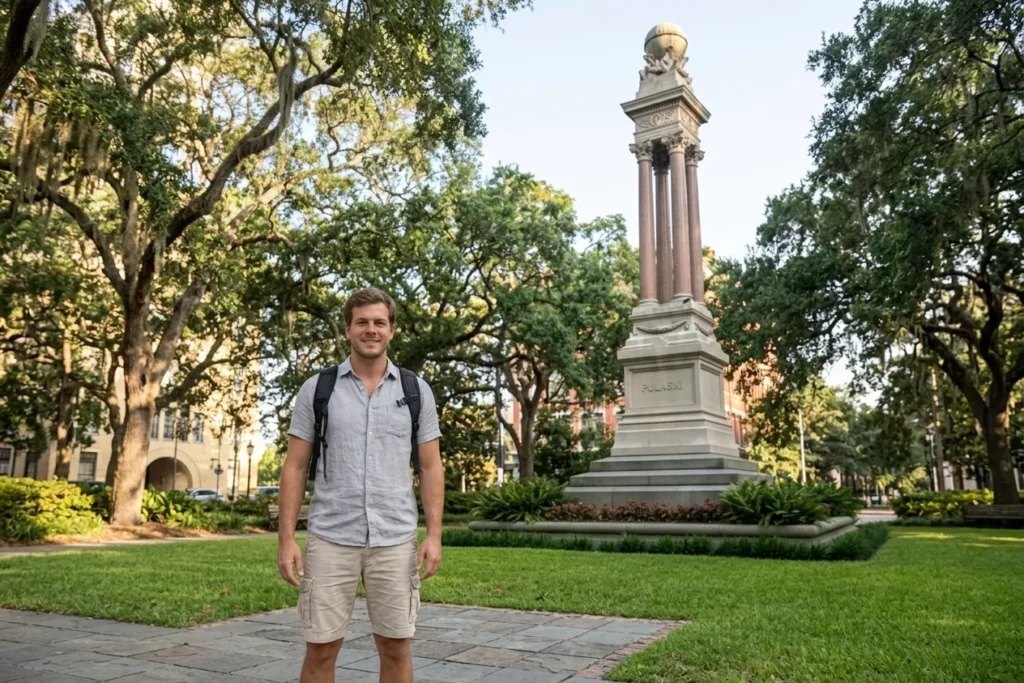
Monterey | Pulaski Monument |
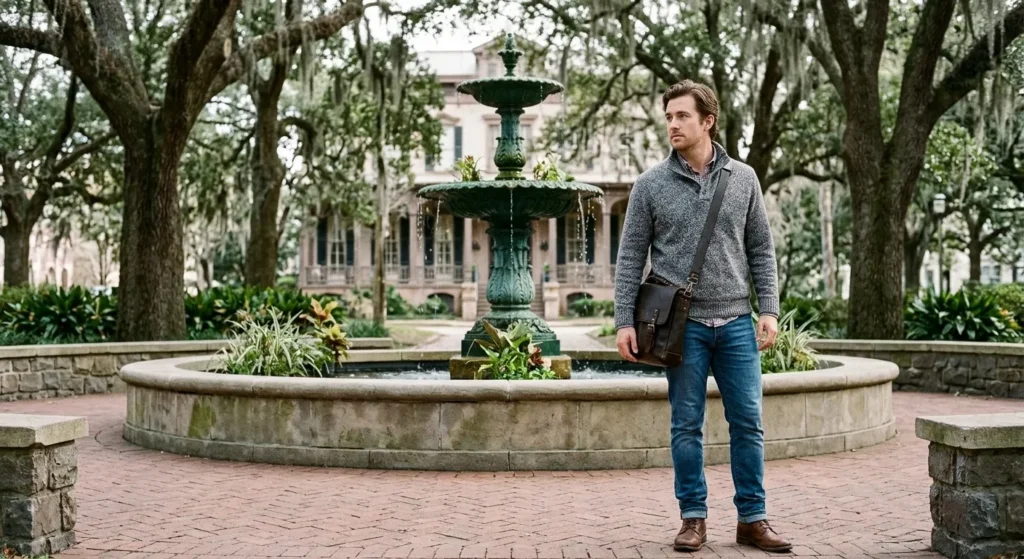
Lafayette | Cathedral and fountain |
Ellis | Fountain and City Market |
Taylor | Susie King Taylor history |
Whitefield | Gazebo and burial history |
Johnson Square: Savannah’s Oldest Square
Johnson Square dates to 1733 and stands along Bull Street near St. Julian Street. It was Savannah’s first square and remains an important part of the original town plan. Its central monument honors Revolutionary War General Nathanael Greene.
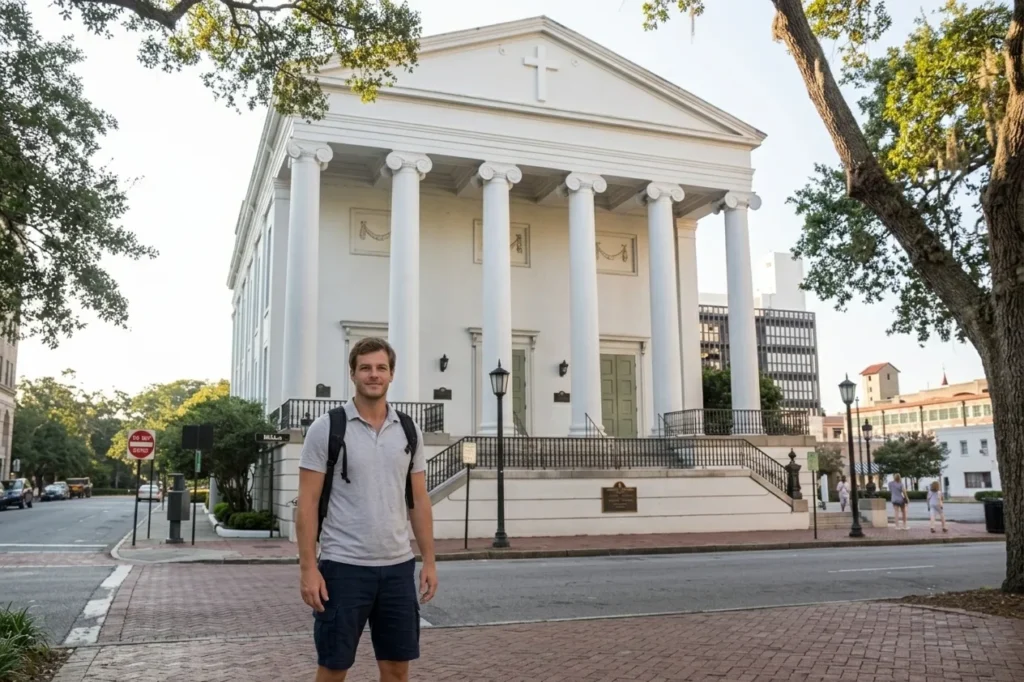
Christ Church stands beside the square, while historic buildings surround the area. Large trees shade the paths and provide a place to rest. Johnson Square makes a useful starting point for a Bull Street walking tour.
Wright Square: The Tomochichi Memorial
Wright Square sits at Bull and President streets, a short walk south of Johnson Square. A memorial marks the burial place of Tomochichi, the Yamacraw leader who worked with Savannah’s early colonists.
Another monument honors William Washington Gordon, who helped establish the Central of Georgia Railroad. The Lutheran Church of the Ascension also stands nearby. This square offers an introduction to Savannah’s Indigenous and early colonial history.
Chippewa Square: The Famous Forrest Gump Location
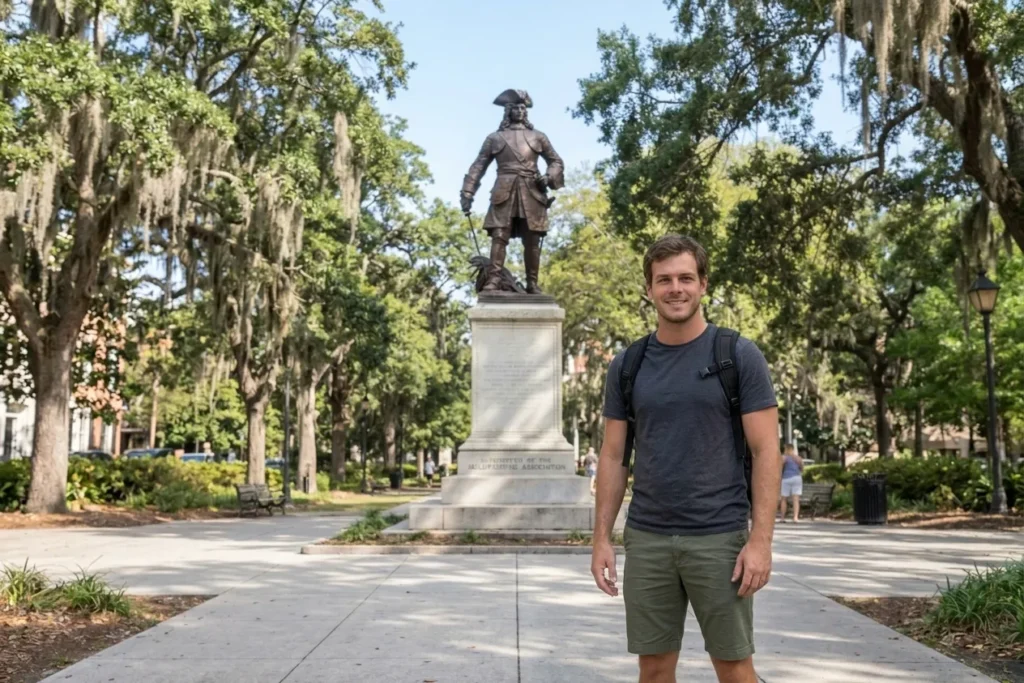
Chippewa Square sits at Bull and McDonough streets in Savannah’s Historic District. The 1994 movie Forrest Gump used the square’s northern side for its famous bus stop scenes.
The movie crew installed a temporary bench for filming and removed it afterward. A bench used in the film is now on display at the Savannah History Museum. The square also contains a bronze statue of James Oglethorpe, with the Savannah Theatre nearby.
Madison Square: Military History and Historic Homes
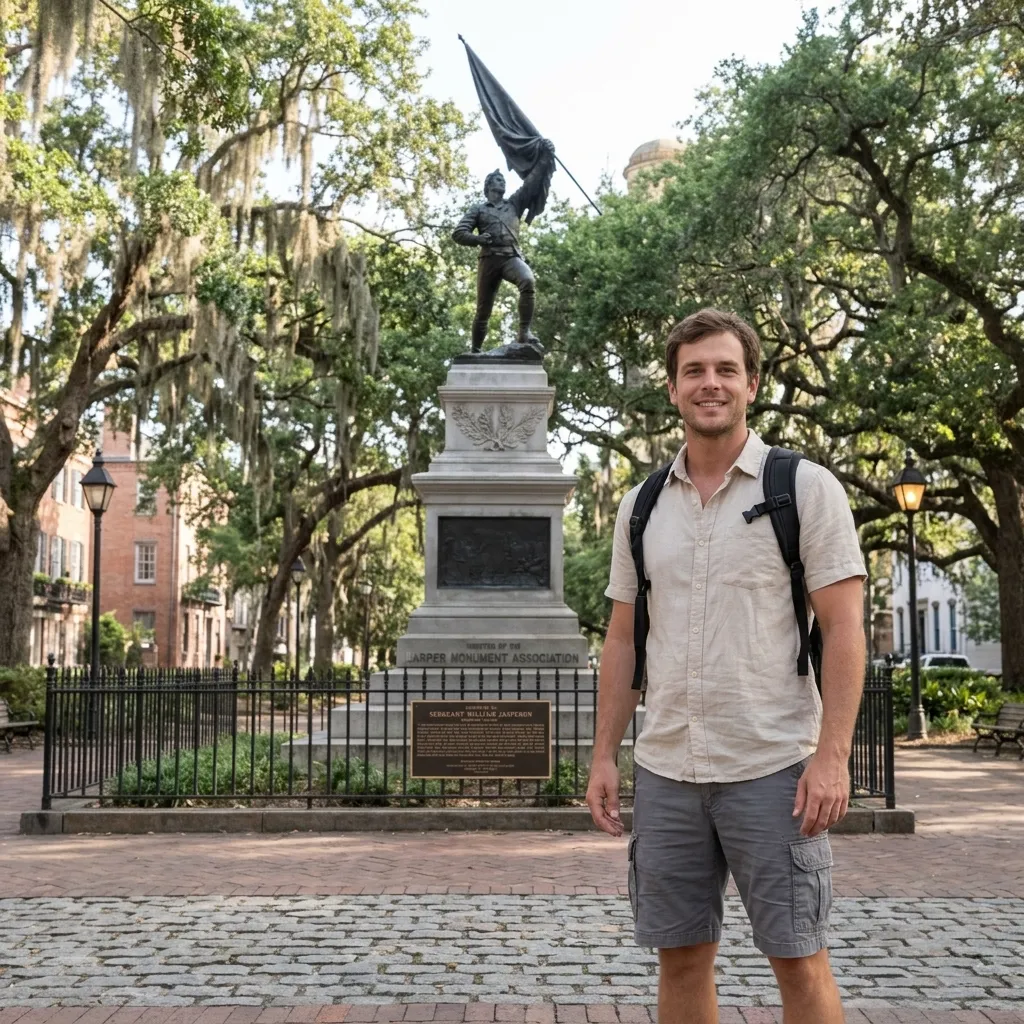
Madison Square lies along Bull Street near Macon Street. Its central monument honors Sergeant William Jasper, who died during the 1779 Siege of Savannah.
Several historic buildings stand around the square, including the Green-Meldrim House and Sorrel-Weed House. General William T. Sherman used the Green-Meldrim House as his headquarters during the Civil War. Madison Square suits visitors interested in military history and architecture.
Monterey Square: Pulaski Monument and Historic Architecture
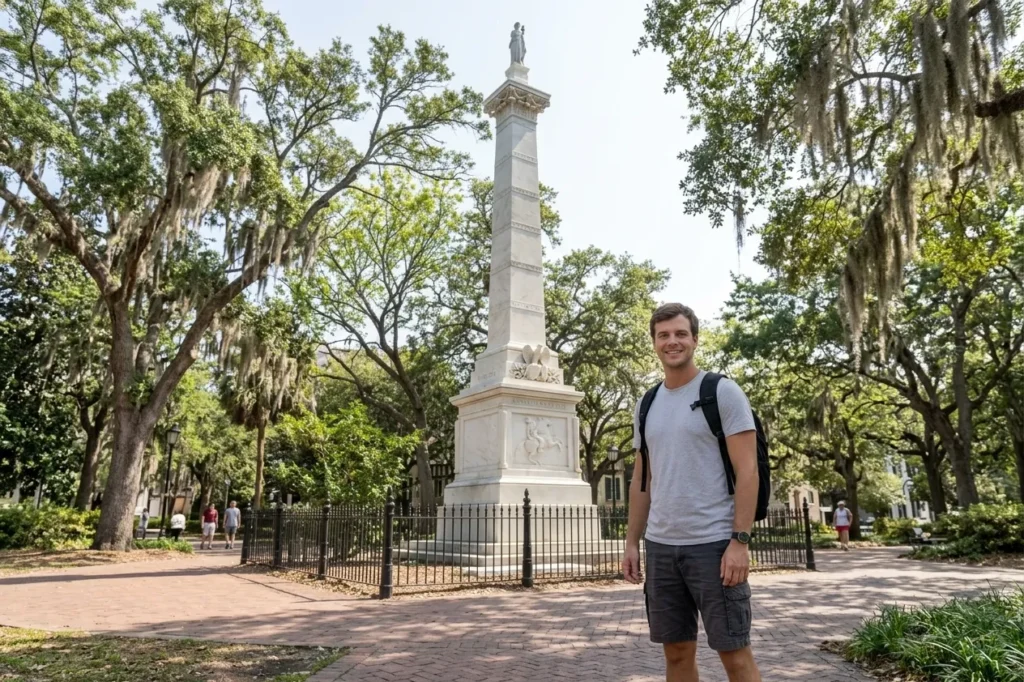
Monterey Square stands at Bull and Wayne streets, north of Forsyth Park. Its central monument honors Casimir Pulaski, a Polish military leader who fought during the American Revolution.
The Mercer Williams House Museum faces the square and has connections to Midnight in the Garden of Good and Evil. Congregation Mickve Israel is also nearby. Visitors can see historic architecture while learning about different periods of Savannah’s past.
Lafayette Square: Cathedral, Fountain and Historic Buildings
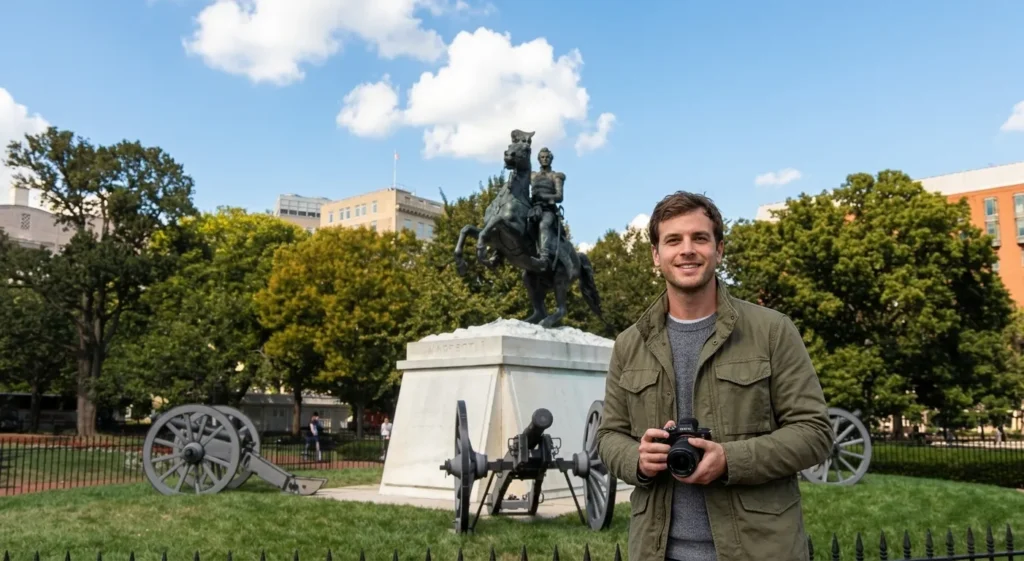
Lafayette Square sits at Abercorn and Macon streets beside the Cathedral Basilica of St. John the Baptist. A fountain occupies the square’s center, surrounded by paths and mature trees.
The Andrew Low House and Flannery O’Connor Childhood Home stand nearby. Visitors can photograph the fountain, view the cathedral’s exterior, or visit surrounding historic buildings. Check individual attraction hours before planning indoor visits
Ellis Square: City Market and Family Activities
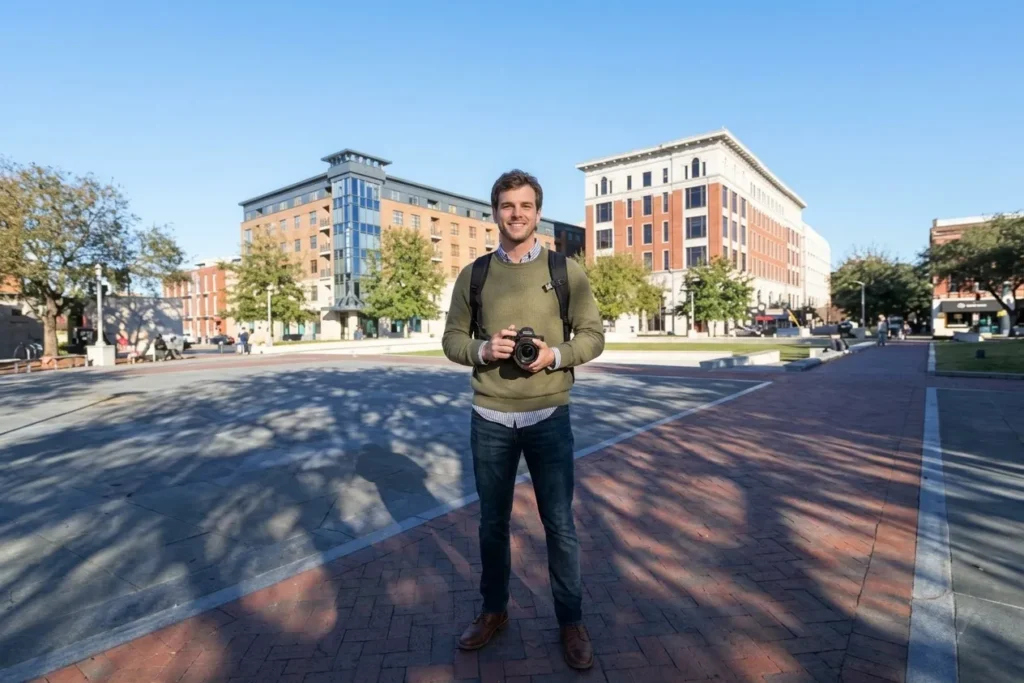
Ellis Square sits along Barnard Street beside Savannah’s City Market. It contains an interactive fountain, public seating, restrooms, and a statue of songwriter Johnny Mercer.
The square once held the old City Market building before a parking garage replaced it. Savannah restored Ellis Square as a public space in 2010. Today, families can visit the fountain and explore nearby shops and restaurants.
Taylor Square: History of Susie King Taylor
Taylor Square stands at Abercorn and Wayne streets. Savannah originally named it Calhoun Square after John C. Calhoun, who defended slavery.
The city removed that name in 2022 and renamed the square in 2023. Its new name honors Susie King Taylor, an educator, nurse, and author born into slavery. The city celebrated the new name in February 2024.
The Massie Heritage Center and Wesley Monumental United Methodist Church stand nearby. Visitors can learn more through the City of Savannah’s Taylor Square history.
Whitefield Square: Gazebo and Historic Burial Ground
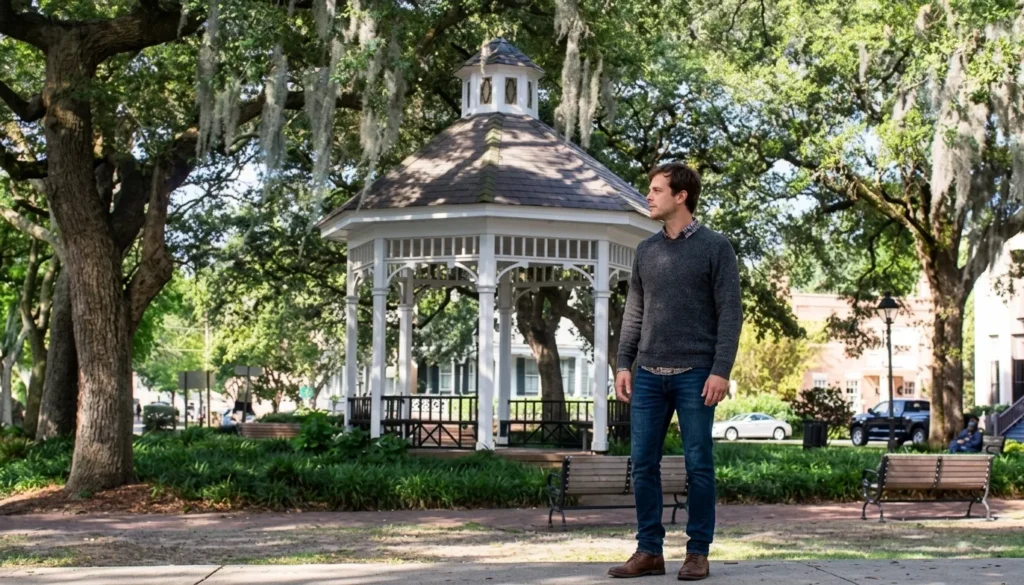
Whitefield Square sits at Habersham and Wayne streets. A white gazebo stands near its center, surrounded by historic homes and trees.
The square also overlaps part of a former burial ground for enslaved and free Black residents. Historical records indicate the burial ground operated from approximately 1763 to 1844.
In February 2026, Savannah reported more than 80 potential burial features following a radar survey. Researchers also identified two probable burial clusters. The findings do not establish that every feature contains human remains.
The city recommended treating the area as a historic burial ground. Visitors should respect the location and its cultural significance.
Complete List of Savannah’s 23 Squares by Location
Savannah has 22 surviving squares from its traditional plan, plus the newer Yamacraw Square. Most sit along six main street corridors in the Historic District. Grouping the squares by location makes it easier to plan a walking route.
Squares Along Bull Street
Bull Street connects five historic squares from the northern downtown area toward Forsyth Park. These are Johnson, Wright, Chippewa, Madison, and Monterey squares. The route passes monuments, churches, and several historic homes.
Squares Along Barnard Street
Barnard Street connects Ellis, Telfair, Orleans, Pulaski, and Chatham squares. Ellis Square offers access to City Market, while Telfair Square sits beside major art museums. The southern squares have residential streets and historic buildings nearby.
Squares Along Abercorn Street
Abercorn Street passes Reynolds, Oglethorpe, Lafayette, and Taylor squares. Reynolds Square sits near the Olde Pink House, while Oglethorpe Square faces the Owens-Thomas House & Slave Quarters. Lafayette and Taylor squares lie farther south.
Squares Along Habersham Street
Habersham Street connects Warren, Columbia, Troup, and Whitefield squares. Columbia Square sits near the Davenport House Museum, and Troup Square contains an armillary sphere. Whitefield Square stands farther south and has important burial ground history.
Squares Along Houston Street
Washington, Greene, and Crawford squares lie along Houston Street in eastern downtown Savannah. Greene Square sits near Second African Baptist Church, while Crawford Square contains a basketball court. These squares offer another route through Savannah’s residential streets.
Franklin Square on Montgomery Street
Franklin Square sits on Montgomery Street between Congress and Bryan streets, beside the western end of City Market. It dates to 1791 and takes its name from Benjamin Franklin.First African Baptist Church stands nearby and holds an important place in Black American religious history. Franklin Square also provides access to nearby shops and historic streets.
Yamacraw Square Near West Bay Street
Yamacraw Square occupies the former Yamacraw Art Park area between West Bay and West Bryan streets. It became Savannah’s 23rd square through a city renaming decision in 2022.The area contains public art, monuments, historical markers, and seating. First Bryan Baptist Church stands nearby, connecting the location with Savannah’s Black history.
Complete Savannah Historic Squares Location Table
Use this directory to find the main street location of every square.
Square | Street Location |
|---|---|
Johnson | Bull and St. Julian |
Wright | Bull and President |
Chippewa | Bull and McDonough |
Madison | Bull and Macon |
Monterey | Bull and Wayne |
Ellis | Barnard and Congress |
Telfair | Barnard and President |
Orleans | Barnard and McDonough |
Pulaski | Barnard and Macon |
Chatham | Barnard and Wayne |
Reynolds | Abercorn and St. Julian |
Oglethorpe | Abercorn and President |
Lafayette | Abercorn and Macon |
Taylor | Abercorn and Wayne |
Warren | Habersham and St. Julian |
Columbia | Habersham and President |
Troup | Habersham and McDonough |
Whitefield | Habersham and Wayne |
Washington | Houston and St. Julian |
Greene | Houston and President |
Crawford | Houston, between Hull and Perry |
Franklin | Montgomery and Congress |
Yamacraw | West Bay and Ann area |
These intersections identify the square areas rather than individual pedestrian entrances. For detailed locations, use the City of Savannah’s public square information.
How Can You Take a Self Guided Walking Tour of Savannah’s Squares?
You can visit several Savannah historic squares without joining a guided tour. The downtown street grid allows visitors to follow a simple route between nearby squares. Bull Street is a convenient starting corridor because it connects five major squares.
Choose your route based on available time, walking ability, and interest in nearby attractions.
Short Walking Route for First Time Visitors
Start at Johnson Square near Bull and St. Julian streets. Walk south toward Wright Square to see the Tomochichi memorial, then continue to Chippewa Square.
At Chippewa Square, stop beside the Oglethorpe statue and view the Forrest Gump filming area. Allow around 45 to 60 minutes for this short walk, including time for photographs and street crossings.
Bull Street Walking Tour: Johnson Square to Monterey Square
Bull Street connects five squares in a clear north to south order. This route introduces Savannah’s early history, military monuments, film locations, and historic architecture.
- Johnson Square: Start at Savannah’s oldest square and view the Greene Monument.
- Wright Square: Visit Tomochichi’s memorial and the Gordon Monument.
- Chippewa Square: See the Oglethorpe statue and Forrest Gump filming location.
- Madison Square: View the Jasper Monument and surrounding historic homes.
- Monterey Square: Finish near the Pulaski Monument and Mercer Williams House.
Allow approximately 60 to 90 minutes for these five squares with brief stops. Add more time for museums, meals, or longer photography sessions. Continue south along Bull Street if you also want to visit Forsyth Park.
Extended Walking Route to Explore More Squares
Visitors with extra time can add Lafayette, Taylor, and Whitefield squares east of Bull Street. From Madison Square, walk east along Macon Street to Lafayette Square and its fountain.
Return toward Bull Street and continue south to Monterey Square. Then walk east along Wayne Street toward Taylor and Whitefield squares. This route provides additional history and architecture without requiring visits to every square.
Can You Visit All 23 Savannah Squares in One Day?
Yes, visiting all 23 squares in one day is possible for some travelers, but it requires substantial walking. The squares spread across several downtown streets, so a complete route takes more time than Bull Street alone.
Consider dividing the area into two walking days. Cover Bull Street and Barnard Street first, then explore the eastern squares and western locations. This approach leaves more time for monuments, museums, meals, and rest stops.
For another route option, see Visit Savannah’s walking tour from River Street to Forsyth Park.
Why Does Savannah Have So Many Historic Squares?
Savannah has many historic squares because its founders built neighborhoods around shared public spaces. James Oglethorpe introduced this layout when the city began in 1733. The design shaped Savannah’s streets and allowed planners to add new neighborhoods as the population grew.
James Oglethorpe and the Original Savannah City Plan
James Oglethorpe founded Savannah in 1733 and worked with others to plan its first four wards. Each ward had a central square surrounded by streets and building lots.
The design helped organize homes, public buildings, and community activities. Early squares also served practical purposes, including gatherings and military exercises. The city kept using this basic plan as it expanded.
How Savannah’s Wards, Trust Lots and Tything Lots Worked
Each ward included a central public square, residential areas, and land for community buildings. Trust lots sat east and west of the square and provided space for churches and other public uses.
Residential groups called tythings occupied the surrounding blocks. Each tything contained ten house lots, following the planned neighborhood layout. This arrangement helped residents reach public spaces from nearby homes.
How the Squares Changed Over Time
Savannah expanded its street grid during the 18th and 19th centuries. By the middle of the 1800s, the city had developed 24 traditional squares.
Over time, trees, fountains, monuments, and walking paths changed their appearance. Historic preservation efforts later helped protect the street layout and surrounding buildings. Savannah’s Historic District received National Historic Landmark status in 1966.
For historical research, consult the National Park Service’s city planning history and the Georgia Historical Society.
What Happened to Savannah’s Lost and Restored Squares?
Savannah’s original square system changed as roads, buildings, and transportation needs expanded. Two traditional squares disappeared, while Ellis Square returned after decades without its original public space. Taylor Square also received a new name to recognize a different part of Savannah’s history.
Elbert Square and Liberty Square
Elbert and Liberty are Savannah’s two lost traditional squares. Both stood along Montgomery Street before later development changed their locations.
A small grassy area marks part of Elbert Square near the Savannah Civic Center. Liberty Square’s former site lies near the Chatham County Courthouse.
The Flame of Freedom monument stands at the former Liberty Square location. Visitors can find these sites on historical maps, although neither retains its original square layout.
How Ellis Square Was Restored
Ellis Square once served as a public gathering place beside City Market. In 1954, Savannah demolished the old market building and replaced the area with a parking garage.
The city removed the garage in 2005 and built underground parking beneath a restored public square. Ellis Square reopened in 2010 with seating, an interactive fountain, and public facilities.
Today, visitors can see the Johnny Mercer statue and explore nearby City Market. Its restoration shows how Savannah returned an important public space to downtown.
Why Calhoun Square Became Taylor Square
Savannah originally named Calhoun Square in 1851 after John C. Calhoun, who supported slavery. City Council removed his name in 2022.
In 2023, Savannah renamed the square for Susie King Taylor, a formerly enslaved teacher and Civil War nurse. The city celebrated the new name in February 2024 and dedicated a historical marker later that year.
Taylor Square now recognizes an important figure in African American history. Older maps may still use the former name, so check current city information when planning your visit.
What Historic Landmarks Can You See Near Savannah’s Squares?
Savannah’s squares sit close to historic churches, homes, museums, and monuments. Many buildings stand directly beside a square, allowing visitors to view several landmarks during one walk. Some offer indoor tours, while others are best viewed from public streets.
Historic Churches and Cathedrals
The Cathedral Basilica of St. John the Baptist stands beside Lafayette Square. Its tall towers and stained glass windows make it a notable landmark in downtown Savannah.
Christ Church faces Johnson Square and has roots reaching back to the city’s founding. First African Baptist Church stands near Franklin Square and has a congregation dating to 1777. These churches reflect different periods of Savannah’s religious and community history.
Historic Houses and Museums
The Mercer Williams House Museum faces Monterey Square and connects with Midnight in the Garden of Good and Evil. Near Oglethorpe Square, the Owens-Thomas House & Slave Quarters examines architecture and the lives of enslaved people.
Other attractions include the Davenport House Museum near Columbia Square and the Green-Meldrim House beside Madison Square. Telfair Academy also stands next to Telfair Square. Check each museum’s admission and visiting hours before planning an indoor stop.
Monuments, Statues and Public Art
Many Savannah squares contain monuments honoring figures from the city’s past. Johnson Square has the Greene Monument, while Chippewa Square features James Oglethorpe’s statue.
Wright Square includes Tomochichi’s memorial, and Monterey Square contains the Pulaski Monument. Ellis Square has a statue of Johnny Mercer. Reading nearby markers can help visitors understand each monument’s historical background.
Historic Landmarks Near Savannah’s Squares
Landmark | Nearest Square |
|---|---|
Cathedral Basilica | Lafayette |
Christ Church | Johnson |
First African Baptist Church | Franklin |
Mercer Williams House | Monterey |
Owens-Thomas House | Oglethorpe |
Davenport House | Columbia |
Green-Meldrim House | Madison |
Telfair Academy | Telfair |
Outdoor views from public streets generally do not require tickets. Indoor museum visits and guided tours may involve admission charges.
What Can You Do in Savannah’s Historic Squares?
Savannah’s historic squares offer places to walk, photograph monuments, and learn about the city’s past. Most have public paths and trees, while some feature fountains or other facilities. You can visit one square or combine several into a walking tour.
Explore Historic Monuments and Architecture
Start at Johnson Square to see the Greene Monument, then visit Wright Square for Tomochichi’s memorial. Continue toward Madison Square to view historic buildings and learn about Savannah’s military history.
Many monuments have markers explaining their subjects. Nearby churches and houses also show how Savannah’s architecture changed over time.
Take Photos of Oak Trees, Fountains and Landmarks
Chippewa Square offers views of the Oglethorpe statue beneath mature trees. Lafayette Square has a fountain with the Cathedral Basilica nearby, while Monterey Square features the Pulaski Monument.
Morning and late afternoon often provide softer light for outdoor photography. Stay on public paths and respect historic buildings when taking photographs.
Enjoy a Short Walk or Relax in the Shade
Many squares have benches and shaded areas where visitors can take a break. Walking between nearby squares also provides views of residential streets and historic architecture.
Ellis Square is useful for families because it has seating, restrooms, and an interactive fountain. Visitors seeking a quieter setting can consider Columbia Square or other residential areas away from busy shopping streets.
Are Savannah’s Historic Squares Free to Visit?
Yes, Savannah’s public historic squares are generally free to visit. You can walk through them, view monuments, and take photographs without buying admission tickets. Nearby museums, guided tours, and organized events may involve separate charges.
Do You Need Tickets to Enter the Squares?
No, ordinary visits to Savannah’s public squares do not require tickets. Visitors can walk through the spaces and view outdoor landmarks without paying an entrance fee.
Some nearby buildings charge admission for tours or exhibitions. Events may also bring temporary access restrictions, so check local notices during busy periods.
Can You Have a Picnic or Bring Your Dog?
You can enjoy a simple picnic in public squares while keeping the area clean. Respect landscaping, monuments, and any posted restrictions.
Dogs are allowed in Savannah’s public squares, but owners must keep them leashed. Bring waste bags and clean up after your pet. Avoid blocking paths or disturbing other visitors.
Can You Reserve a Savannah Square for a Wedding or Event?
Yes, Savannah allows approved reservations for weddings and other events in many public squares. Some small ceremonies without equipment may not need a permit, depending on current city rules.
Events involving chairs, tents, decorations, or reserved space generally require approval. Ellis Square is not available for weddings under the city’s square rental rules.
Review the City of Savannah’s wedding requirements before making arrangements.
When Is the Best Time to Visit Savannah’s Historic Squares?
Spring and fall usually offer comfortable conditions for walking through Savannah’s historic squares. Spring brings flowers and mild weather, while fall often has cooler afternoons. Summer requires more planning because heat and humidity can make longer walks tiring.
Visiting in Spring, Summer, Fall and Winter
Spring, March to May: Flowers bloom around downtown, and many days suit walking tours. Popular events can bring larger crowds and heavier traffic.
Summer, June to August: Hot temperatures and high humidity make early morning visits more comfortable. Carry water and allow time for shaded breaks.
Fall, September to November: Temperatures generally become more comfortable as the season progresses. This period often suits longer walking routes through downtown.
Winter, December to February: Savannah usually has mild afternoons compared with many northern cities. Cooler mornings and occasional rain still require suitable clothing.
Morning vs. Afternoon for Walking and Photography
Early morning often works well for visitors who prefer fewer crowds and cooler temperatures. It also gives photographers softer light around monuments and buildings.
Late afternoon can offer good lighting, especially around fountains and historic homes. During summer, avoid planning long walks through the hottest part of the day.
How Festivals and Events Affect the Squares
Savannah hosts festivals, parades, and community gatherings throughout the year. The St. Patrick’s Day celebration can bring large crowds and street closures to downtown.
These events may affect parking, shuttle routes, and access to certain squares. Check the City of Savannah’s event information before visiting during a major celebration.
Is Savannah’s Historic Squares Walking Tour Accessible?
Savannah’s downtown street grid makes many squares reachable on foot, but accessibility varies between routes. Some sidewalks contain uneven bricks, raised surfaces, or tree roots. Visitors using wheelchairs, walkers, or strollers should check their planned route before leaving.
Sidewalks, Street Crossings and Uneven Surfaces
Many squares contain paved paths, but the surrounding streets may present obstacles. Uneven sidewalks and missing or difficult curb connections can affect movement between locations.
Use marked crosswalks and look for suitable curb ramps. River Street also has steep access points and uneven surfaces, which require separate planning.
Visiting With Strollers or Wheelchairs
Shorter walking routes can make sightseeing easier for families and visitors with mobility needs. Johnson and Wright squares provide two nearby stops along Bull Street.
Check individual path conditions rather than assuming every square has the same access. Plan rest stops and confirm accessible entrances at any nearby museums.
Using the Free DOT Shuttle Instead of Walking the Entire Route
Savannah’s free DOT shuttle connects downtown attractions, parking areas, and visitor facilities. Chatham Area Transit operates Downtown and Forsyth loops, giving visitors alternatives to longer walks.
The transit agency reports accessible vehicles and services for passengers with mobility needs. Check the current stops and service notices before planning your route.
Where Can You Park Near Savannah’s Historic Squares?
Parking near Savannah’s historic squares includes city garages and metered street spaces. Choosing a garage near your first stop can reduce unnecessary walking. Street parking may work for shorter visits, but enforcement hours and restrictions vary by location.
Parking Near Johnson, Wright and Chippewa Squares
Bryan Street Garage, at 100 East Bryan Street, provides parking near Johnson Square. Vehicle entrances are on Drayton and Abercorn streets between Bay and Bryan streets.
State Street Garage, at 100 East State Street, is another option for visiting northern and central squares. Check the walking route before choosing a garage.
See our parking garages in Savannah guide for more details.
Parking Near Madison, Monterey and Lafayette Squares
Street parking is available around parts of the southern Historic District. Look for metered spaces near Madison, Monterey, and Lafayette squares, and read all posted signs.
Liberty Street Garage, at 301 West Liberty Street, provides another option. However, some squares are farther away, so check the walking distance before parking.
For more choices, read our parking in Savannah Historic District guide.
Street Parking Hours and Visitor Parking Passes
Savannah uses different enforcement hours north and south of Liberty Street. These schedules apply to city meters, not parking garages.
Parking Area | Meter Enforcement |
|---|---|
North of Liberty | Mon to Sat, 8 AM to 8 PM |
South of Liberty | Mon to Fri, 8 AM to 5 PM |
The city also sells visitor day passes for eligible street parking. A 24 hour pass costs $15, while a 48 hour pass costs $24.
You can purchase passes from Mobility and Parking Services at 100 East Bryan Street. The office lists weekday purchasing hours from 8 a.m. to 4:30 p.m.
Visitor passes do not cover parking garages or street sweeping restrictions. For official information, see Savannah Parking Meters and Visitor Parking Passes.
You can also compare options in our Savannah parking guide and free parking guide.
What Should You Know Before Exploring Savannah’s Squares?
Plan your starting point before arriving in downtown Savannah. Johnson Square works well for a Bull Street walking tour, while Ellis Square suits visitors beginning near City Market. Check nearby parking and choose a route that matches your available time.
Wear comfortable shoes because some historic sidewalks have uneven surfaces. Carry drinking water during warm weather and plan rest stops beneath shaded trees. Ellis Square has public restrooms, but facilities are not available at every square.
Check the weather, event schedules, and street closures before leaving. Keep dogs leashed, respect monuments, and avoid walking through planted areas. If you plan to visit museums, confirm their hours and ticket requirements separately.
Frequently Asked Questions About Savannah’s Historic Squares
Final Thoughts: How to Explore Savannah’s Historic Squares
Savannah’s historic squares offer a practical way to learn about the city’s history while exploring downtown. Start at Johnson Square and follow Bull Street through Wright, Chippewa, Madison, and Monterey squares. Add Lafayette Square, Ellis Square, or other nearby stops if your schedule allows.
Choose a walking route that matches your interests and mobility needs. Use the map to find locations, and check current parking rules, weather, and event schedules before visiting.

John Robert
Travel Writer & Founder @ Thing Savannah
John Robert is a travel writer and explorer specializing in authentic regional guides, detailed itineraries, and practical travel logistics.