

Cathedral Basilica of St John the Baptist Savannah – Hours, Tours & Visitor Guide
The Cathedral Basilica of St. John the Baptist stands at 222 East Harris Street in Savannah’s Historic District. Its tall spires, stained glass windows, and painted ceilings make it one of the city’s notable landmarks. The building also serves as an active Catholic church.
Visitors can enter for free, take a self guided tour, and learn about its history. However, sightseeing hours differ from Mass times. This guide covers visiting hours, tours, admission, parking, accessibility, and what to see inside.
Cathedral Basilica of St. John the Baptist at a Glance
The cathedral sits beside Lafayette Square, close to several historic homes and downtown attractions. You can visit without buying tickets, but religious events may interrupt normal touring hours. Check the official schedule before making a special trip.
Visitor Information | Details |
|---|---|
Name | Cathedral Basilica of St. John the Baptist |
Address | 222 E Harris St, Savannah, GA |
Location | Historic District |
Admission | Free |
Suggested donation | $3 per adult |
Monday to Saturday | 9 AM to 11:30 AM, 1 PM to 4:30 PM |
Sunday | 1 PM to 4:30 PM |
Guided tours | Volunteer docents |
Parking | Nearby street parking |
Wheelchair access | Harris Street elevator |
Visit duration | Plan 20 to 30 minutes |
Official website |
The visit duration is a planning estimate, not an official tour length. Visitors interested in architecture or religious history may want more time.
Information checked: November 10, 2026. Hours and visitor policies can change.

Is the Cathedral Basilica of St. John the Baptist Worth Visiting?
Yes, the cathedral deserves a stop if you enjoy history, architecture, or religious art. Its interior contains colorful windows, painted ceilings, marble altars, and detailed woodwork. You can appreciate these features during a short visit without booking a paid tour.
The cathedral also offers something different from Savannah’s historic house museums. It remains an active place of worship, with regular Masses and community events. That means visitors should treat the space differently from a typical tourist attraction.
Why Visit the Cathedral Basilica?
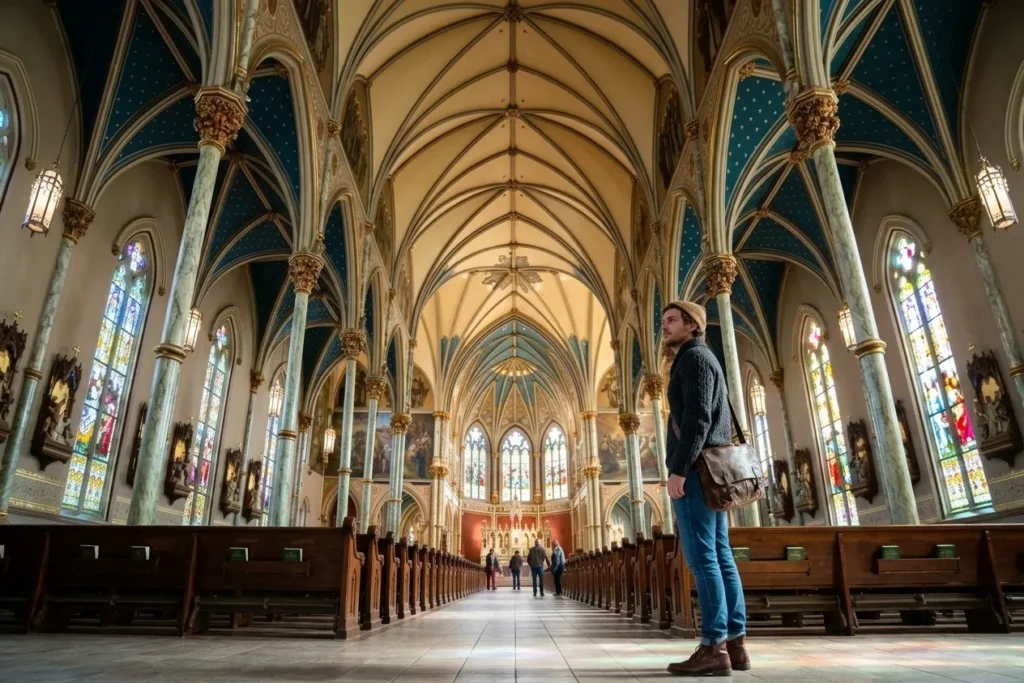
The cathedral’s Gothic Revival architecture gives it a distinct appearance among Savannah’s historic buildings. Its two spires rise above the surrounding streets, making the exterior easy to recognize. Inside, pointed arches lead your eyes toward the high ceilings and main altar.
The church also has an unusual history. A major fire nearly destroyed it in 1898, yet the congregation rebuilt the building. Many details visitors see today reflect that rebuilding and later restoration work.
Who Will Enjoy Visiting the Cathedral?
History lovers can learn about Savannah’s Catholic community and the cathedral’s survival after the fire. Architecture fans will find detailed stonework, stained glass, and Gothic design features. Catholic visitors can attend Mass or spend time in prayer.
Families can also include the cathedral in a Historic District walking tour. Its free admission makes it an easy stop for travelers watching their budgets. Children should remain with adults and respect the quiet setting.
Cathedral Basilica of St. John the Baptist Visiting Hours
The cathedral normally opens for sightseeing twice daily from Monday through Saturday. Sunday touring begins in the afternoon because the church holds morning religious services. Weddings, funerals, holidays, and other events can change these hours.
Day | Touring Hours |
|---|---|
Monday to Friday | 9 AM to 11:30 AM; 1 PM to 4:30 PM |
Saturday | 9 AM to 11:30 AM; 1 PM to 4:30 PM |
Sunday | 1 PM to 4:30 PM |
Monday Through Saturday Visiting Hours
Visitors can normally enter between 9 AM and 11:30 AM, then return from 1 PM to 4:30 PM. The midday break separates the two touring periods. Plan your arrival within these windows rather than assuming the church stays open continuously.
If you want to speak with a docent, the cathedral recommends checking availability. Guided talking tours cannot begin before 10 AM on weekdays without advance permission.
Sunday Visiting Hours
Sunday sightseeing hours normally run from 1 PM to 4:30 PM. The morning belongs to scheduled worship services, so tourists should avoid planning an interior tour then. Visitors attending Mass should follow the separate religious schedule.
Holiday Closures and Schedule Changes
The cathedral closes sightseeing access during weddings, funerals, and certain religious celebrations. Some closures may not appear on the public calendar. Major Catholic observances can also affect access.
Check the official cathedral calendar before visiting. You can also call 912-233-4709 if your schedule allows little flexibility.

Cathedral Basilica Admission, Tickets, and Donations
Admission to the Cathedral Basilica of St. John the Baptist is free. You do not need an entrance ticket to see the church during normal touring hours. The cathedral appreciates a suggested donation of $3 per adult.
Donations help support the building and its ongoing care. However, the suggested amount is voluntary and does not function as an admission charge.
Is the Cathedral Basilica Free to Visit?
Yes. Individual visitors can enter without paying an admission fee. You can view the interior, examine its architectural details, and spend time in quiet reflection during permitted visiting hours.
This makes the cathedral a useful stop for travelers looking for free things to do in Savannah. Remember that parking nearby may still cost money.
Do You Need Tickets or Reservations?
Individual visitors do not need tickets or advance reservations for normal sightseeing. The cathedral states that it does not sell admission tickets. You can enter during published touring hours when no service or event blocks access.
Organized groups follow different rules. Schools, tour companies, and other visiting groups must contact the cathedral before arriving.
Cathedral Basilica Tours: Self Guided and Guided Options
Visitors can tour the cathedral independently or ask a volunteer docent for information. Both options let you see its main architectural and religious features. A guided visit may help you understand details that are easy to miss.
Self Guided Cathedral Visits
A self guided visit works well for travelers with limited time. You can enter during touring hours and move through the public visitor areas at your own pace. Start with the main aisle, then look toward the altar and stained glass.
Take time to examine the ceiling paintings and side chapels. Follow any posted signs and instructions from staff. Some areas may remain unavailable during preparations for religious events.
Volunteer Docent Led Tours
Volunteer docents explain the cathedral’s history, religious artwork, and architectural features. They can also answer questions about the building and its restoration. Availability varies, especially on Sundays.
The cathedral normally has docents during touring periods, but it does not promise every visitor a private tour. Ask a volunteer when you arrive or contact the tour coordinator beforehand.
Group Tours and School Visits
All organized groups need advance permission to tour or hold classes inside the cathedral. This rule applies even when a group brings its own guide. The cathedral’s 2026 policies also require advance arrangements for groups seeking a guaranteed docent.
Groups of five or more should arrange docent availability before visiting. The 2026 guidance lists these contact details:
Tour email: cathedralbasilicatour@gmail.com
Tour coordinator phone: 706-302-8388
What to See Inside the Cathedral Basilica of St. John the Baptist
The cathedral’s interior rewards visitors who look beyond the main aisle. Its windows, murals, altars, and carved furnishings help tell the building’s story. Several features also explain how Catholics use the space for worship.
Stained Glass Windows and the Great Rose Window
The cathedral contains 81 stained glass windows across its upper and lower levels. Many show biblical scenes, saints, and other religious subjects. The windows bring color into the interior while illustrating important Catholic beliefs.
Look for the Great Rose Window above the pipe organ. It measures 20 feet across and features St. Cecilia, the patron saint of music. Smaller figures appear around the central image, including heavenly musicians.
The large windows in the transepts deserve attention, too. They depict the Ascension of Christ and the Assumption of Mary. Each measures about 28 feet high.
Painted Ceilings and Religious Murals
Look upward after entering the main aisle. Blue ceiling panels, decorative patterns, and painted details cover the high vaulted spaces. The ceiling rises about 66 feet above the church floor.
The cathedral also contains 34 religious murals. Artist Paul Gutsche painted them on canvas before workers installed them inside the church. Their scenes and decorative borders form an important part of the interior design.
The building’s 1912 reopening followed major work on its decoration. You can learn more about the paintings through the cathedral’s official special features guide.
The Main Altar and Italian Marble Details
The main altar stands at the front of the cathedral and serves as the central focus during Mass. Workers carved it from Carrara marble in Italy. According to the cathedral, the altar weighs about 9,000 pounds.
Religious carvings and Latin inscriptions decorate the altar. Its placement also helps visitors understand the church’s layout and the importance of Catholic worship.
Look at the surrounding furnishings without entering restricted areas. The marble surfaces, carved details, and painted walls form a clear picture of the building’s craftsmanship.
Blessed Virgin Mary Chapel
The Blessed Virgin Mary Chapel contains religious artwork dedicated to Mary. One window has particular historical importance because it survived the 1898 fire.
The cathedral identifies this window as the largest of three surviving stained glass windows. Its deep red upper section makes it different from the surrounding glass.
This chapel provides a direct connection to the building that stood before the fire. Visitors interested in local history should pay attention to this detail.
Pipe Organ, Bishop’s Chair, and Other Features
The pipe organ sits in the gallery above the main entrance. The cathedral’s instrument contains 2,308 pipes arranged across 34 ranks. Its wooden case includes white oak, while the console features black walnut.
The bishop’s chair also carries special meaning. A cathedral serves as the principal church of a bishop’s diocese, and the chair represents his role. Other features include the baptismal font, pulpit, and Stations of the Cross.
These objects are not simply decorations. They serve religious purposes and connect the cathedral’s artwork with everyday Catholic worship.

Cathedral Basilica Architecture and Exterior Design
The Cathedral Basilica of St. John the Baptist follows a Gothic Revival design with strong French influences. Architect Ephraim Francis Baldwin designed the present church during the nineteenth century. Its shape, arches, and towers reflect this architectural style.
French Gothic Revival Architecture
Gothic Revival buildings often use pointed arches, tall windows, and steep roofs. These elements create a strong sense of height. The cathedral uses them throughout its exterior and interior.
The church has a Latin cross floor plan. Its long central nave meets shorter sections called transepts. This arrangement follows a traditional Christian church design.
Twin Spires, Pointed Arches, and the Facade
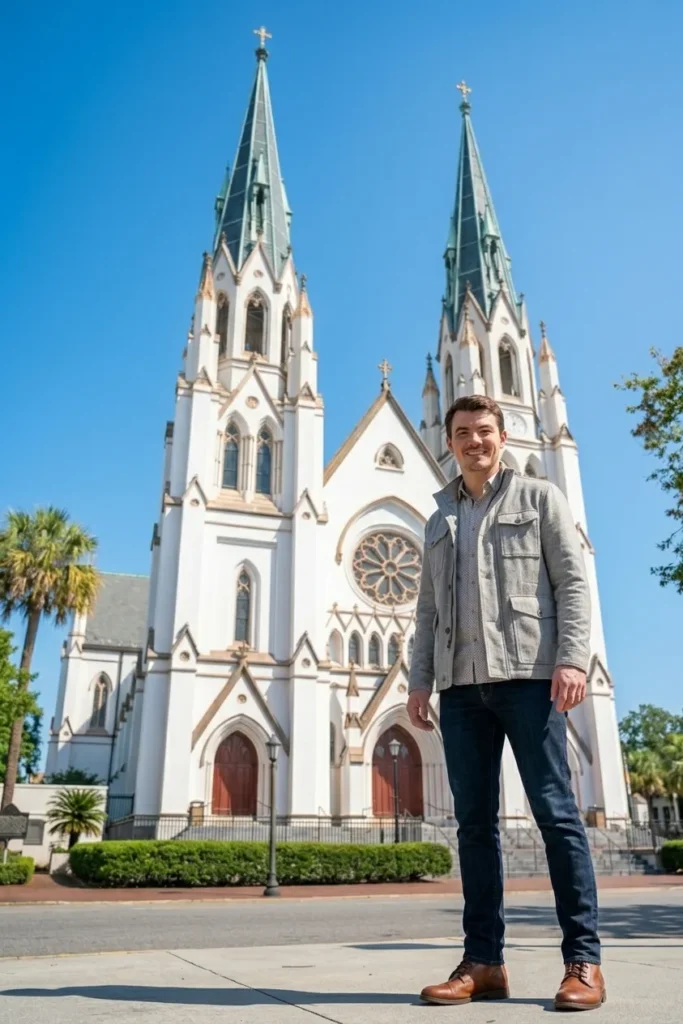
The cathedral’s two spires are its most recognizable exterior features. Workers completed them in 1896, years after the main church opened. The spires reach 207 feet, with crosses adding another seven feet.
Pointed entrances, decorative stonework, and the central rose window shape the front facade. These details make the building easy to recognize from Lafayette Square and nearby streets.
Architectural Details Worth Noticing
Look closely at the window frames, rooflines, and pointed openings before entering. The building also includes decorative terra cotta elements and gargoyles near the towers.
Inside, slender columns support the vaulted spaces. The repeated arches draw attention toward the sanctuary. Together, these features show why Gothic Revival design remains an important part of the cathedral’s identity.
History of the Cathedral Basilica of St. John the Baptist
The cathedral’s history began before the present building existed. French and Haitian immigrants helped establish Savannah’s early Catholic congregation during the late eighteenth century. Their community eventually grew into the parish that built today’s cathedral.
Early Catholic Congregations in Savannah
The Congregation de Saint Jean Baptiste formed near the end of the 1700s. Its members included Catholics who had fled political unrest in Haiti and France. They established a lasting religious community in Savannah.
The congregation used earlier church buildings before moving to its present site. In 1850, Pope Pius IX established the Diocese of Savannah. St. John the Baptist then became its cathedral.
Construction of the Present Cathedral
Bishop William H. Gross laid the cornerstone for the present building on November 19, 1873. Construction followed Baldwin’s Gothic design, with French architectural influences.
The new cathedral opened on April 30, 1876. Its original dedication honored Our Lady of Perpetual Help. The church later returned to the name St. John the Baptist, with Mary remaining a secondary patron.
Workers added the twin spires in 1896. These additions helped create the exterior visitors recognize today.
The Devastating Fire of 1898
On February 6, 1898, a major fire swept through the cathedral. The flames destroyed much of the building, including its interior. The outer walls and twin spires survived.
The loss affected Savannah’s Catholic community, but rebuilding began soon afterward. Bishop Thomas A. Becker supported the work before his death in 1899.
The fire remains a central event in the cathedral’s story. It also explains why some interior features date from the twentieth century.
Rebuilding and Restoration
The congregation celebrated Mass in the rebuilt basement chapel on Christmas Eve in 1899. The cathedral received its formal rededication on October 28, 1900.
Workers installed stained glass from the Austrian Tyrol around 1904. Savannah artist Christopher Murphy later directed decorative work, and the refurbished cathedral reopened in May 1912.
Additional renovations followed during the twentieth century. A major restoration, completed in 2000, repaired windows, decorative paintings, roofing, and other features.
Why It Became a Minor Basilica in 2020
Pope Francis granted the cathedral the title of minor basilica in January 2020. The honor recognized its historical, architectural, and religious importance.
A cathedral and a basilica are not the same designation. The cathedral title reflects its role as the bishop’s principal church. The basilica title recognizes its special connection with the Pope and the wider Catholic Church.
Visitors can read the full historical timeline on the cathedral’s official history page.
Mass Times and Religious Services at the Cathedral Basilica
The cathedral holds regular Catholic Masses throughout the week. Worship schedules differ from sightseeing hours, so visitors should plan according to their purpose.
Day | Regular Mass Times |
|---|---|
Monday to Friday | 7:30 AM and noon |
Saturday | Noon and 5:30 PM |
Sunday | 8 AM, 10 AM, 11:30 AM |
The Saturday evening service is the Sunday vigil Mass. Special holidays and religious events may bring schedule changes.
Weekday and Weekend Mass Schedule
Weekday Mass normally takes place at 7:30 AM and noon. Saturday includes a noon Mass and an evening vigil at 5:30 PM.
Sunday has three regular morning Masses. The cathedral uses incense during the 10 AM service and lists nursery availability for that Mass.
Confession and Reconciliation Times
The cathedral normally offers reconciliation on Saturdays from 11 AM to 11:45 AM. Another session runs from 4:15 PM to 5 PM.
Can Tourists Visit During Mass?
Tourists cannot tour the interior during Mass or other religious services. The cathedral reserves these periods for worship and prayer. Visitors who wish to attend Mass may do so respectfully.
If you want to photograph the interior or study its architecture, choose a normal touring period instead. This avoids interrupting people attending services.

Cathedral Basilica Visitor Rules and Etiquette
The Cathedral Basilica of St. John the Baptist remains a working Catholic church. Visitors should respect people attending services, praying, or preparing for religious events.
The cathedral also maintains rules that protect its interior and support daily operations.
Dress and Respectful Behavior
Wear comfortable clothing suitable for a religious setting. The cathedral does not publish a detailed tourist dress code in its general visiting guidance. Respectful clothing is a sensible choice.
Keep conversations quiet and silence your phone when entering. Avoid blocking aisles or approaching areas reserved for clergy and religious services. Follow directions from volunteers and church staff.
Photography and Video Rules
The cathedral restricts professional photography, organized photo shoots, and videography without advance permission. Contact the tour coordinator before planning any professional filming or photography.
For casual visitor photographs, follow current signs and staff instructions. Avoid flash, tripods, or other equipment unless the cathedral permits them. Never photograph people praying without their permission.
Children, Pets, and Service Animals
Families may visit with children during normal touring hours. Adults should supervise younger visitors and help them respect the quiet environment. The cathedral does not permit scavenger hunts inside.
Pets cannot enter the cathedral. The church makes an exception for service dogs. Travelers with other animals should arrange suitable care before visiting.
Where Is the Cathedral Basilica in Savannah?
The Cathedral Basilica of St. John the Baptist stands at 222 East Harris Street in Savannah, Georgia. It faces the Lafayette Square area within the Historic District. The main surroundings include historic houses, shaded streets, and several public squares.
Exact Address and Location
Cathedral Basilica of St. John the Baptist
222 East Harris Street
Savannah, GA 31401
You can use Google Maps directions to locate the entrance. The cathedral sits near the intersection of Harris and Abercorn Streets.
Walking Directions Through the Historic District
Walking is a practical option if you are already sightseeing downtown. The cathedral stands beside Lafayette Square, near several historic homes and museums.
Plan your route using the Savannah Historic District guide. Downtown blocks are relatively compact, but walking conditions vary. Watch for uneven pavement, street crossings, and seasonal heat.
Getting There by Car or Trolley
Drivers can approach the cathedral through the Historic District street network. Set the cathedral’s address as your destination rather than searching only for its name. Nearby streets may have one way traffic patterns.
If you use a sightseeing trolley, check the operator’s current stop map. Routes and stops differ between companies. Do not assume every trolley stops directly outside the church.
Parking Near the Cathedral Basilica of St. John the Baptist
The cathedral does not operate a public visitor parking lot. Most drivers use nearby street parking or a public garage. Parking availability depends on the time, local restrictions, and events.
Street Parking Around the Cathedral
You can look for marked street parking near Harris Street and Lafayette Square. Read each sign before leaving your car. Meter rules and temporary restrictions can differ by street.
Savannah generally enforces paid meters south of Liberty Street from 8 AM to 5 PM, Monday through Friday. North of Liberty Street, standard enforcement runs from 8 AM to 8 PM, Monday through Saturday.
These schedules do not override individual parking signs, reserved spaces, or temporary restrictions.
Nearby Public Parking Garages
State Street Parking Garage is one option for visitors who cannot find suitable street parking. It stands at 100 East State Street, near Abercorn Street. The garage operates around the clock.
The city’s published weekday daytime rate is $2 per hour or portion of an hour. Evening, weekend, and event charges can differ. You can also compare other options in our Savannah parking garage guide.
Free Parking Hours and Restrictions
Some nearby street spaces become free outside normal enforcement hours. However, free meter hours do not cancel posted restrictions. Street cleaning, reserved zones, and temporary closures can still apply.
Drivers planning a short visit should check the nearest legal space first. If parking looks limited, use a garage rather than circling the same blocks.
For more details, read our free parking in Savannah guide and Historic District parking guide.
Accessibility and Family Visits
The cathedral provides wheelchair access through an elevator on Harris Street. This entrance allows visitors to avoid relying only on the front steps. Staff and volunteers can help explain which entrance to use.
Because the building is historic, visitors with specific mobility needs should contact the cathedral before arriving.
Wheelchair Access and the Harris Street Elevator
The cathedral identifies its Harris Street elevator as the wheelchair accessible entrance. Visitors who need step free access should use that entrance rather than assuming the front steps offer access.
Call 912-233-4709 if you need help with entry arrangements. Ask about accessible seating, restrooms, and the route from your chosen parking space.
Visiting With Children and Strollers
The cathedral can fit into a family sightseeing day, especially when children enjoy looking at buildings and artwork. A shorter visit may work better for younger children.
Keep strollers clear of aisles and entrances. Ask volunteers about any access limits or stroller instructions. Families should also avoid touring during worship services.
What to Confirm Before Visiting With Limited Mobility
Check the current elevator availability and entrance instructions before visiting. You should also confirm accessible parking options and the route from the street.
Nearby historic sidewalks may have uneven surfaces. Allow extra time if you use a wheelchair, walker, or mobility aid. This can make the visit more comfortable and less rushed.
Best Time to Visit and How Long to Spend
A weekday touring period is a practical choice for visitors who want to see the interior. Morning and afternoon visits both work, provided no church event interrupts access.
Choose your arrival time around the published schedule rather than expecting unrestricted entry throughout the day.
Best Time for Sightseeing and Photography
For general sightseeing, consider arriving after 10 AM on a weekday or during the afternoon touring period. This gives you time to view the interior before the scheduled closing.
Weekday mornings may offer a quieter experience, but visitor numbers can vary. The cathedral does not guarantee a crowd free period. Sunday afternoons are another option for travelers staying over the weekend.
How Long Does a Cathedral Visit Take?
Plan around 20 to 30 minutes for a basic visit. That usually allows time to view the main aisle, altar, windows, and ceiling. This estimate does not include Mass or a detailed docent tour.
History lovers and architecture fans may prefer 45 minutes or more. Allow extra time if you want to ask questions or examine the artwork closely.
Tips for First Time Visitors
Check touring hours before leaving your hotel. Bring a small donation if you wish, and keep your phone quiet inside. Start with the exterior, then enter during a permitted touring period.
If the cathedral closes unexpectedly, visit Lafayette Square or another nearby attraction. You can return later if the day’s schedule allows.
Things to Do Near the Cathedral Basilica in Savannah
The cathedral sits near several attractions in Savannah’s Historic District. You can combine a cathedral visit with historic homes, public squares, and a cemetery walk.
These nearby stops help make better use of your sightseeing time.
Lafayette Square
Lafayette Square sits beside the cathedral and offers views of its twin spires. The square has paths, trees, benches, and a central fountain.
Visit the square before or after touring the cathedral. It provides a useful place to pause and view the building’s exterior. It also works as a starting point for a walk through Savannah’s historic squares.
Andrew Low House Museum
The Andrew Low House Museum stands at 329 Abercorn Street, close to Lafayette Square. The historic house dates to the nineteenth century and contains period interiors and furnishings.
It also has connections to Juliette Gordon Low, the founder of the Girl Scouts. The museum offers a different view of Savannah history. Check tour hours and admission charges before visiting.
Flannery O’Connor Childhood Home
The Flannery O’Connor Childhood Home stands at 207 East Charlton Street. The museum examines the early life of the American writer, who grew up in Savannah.
Visitors interested in literature and local history may enjoy combining this home with the cathedral. Both sites share the same neighborhood, making them easy to include in one walking plan.
Colonial Park Cemetery
Colonial Park Cemetery sits farther north along Abercorn Street. Established in 1750, it preserves part of Savannah’s early burial history.
Visitors can walk through the grounds and examine old grave markers and memorials. Check seasonal gate hours before planning your stop. Treat the cemetery with the same respect you would show any historic burial ground.
A Short Historic District Walking Route
Start at the Cathedral Basilica during its touring hours. Walk through Lafayette Square, then visit the nearby historic homes if their schedules allow. Continue north toward Colonial Park Cemetery.
This route combines religious architecture, Savannah history, literature, and public spaces. Adjust the order around museum tour times and accessibility needs.
Frequently Asked Questions About the Cathedral Basilica
Final Thoughts: Planning Your Cathedral Basilica Visit
The Cathedral Basilica of St. John the Baptist is a worthwhile stop while visiting Savannah’s Historic District. Its free admission, detailed interior, and central location make it easy to include in a sightseeing day.
Plan your visit around the official touring schedule, especially on Sundays and religious holidays. Check parking rules, allow time for the surrounding historic streets, and respect the church’s daily services.
A short visit works well for most travelers. Those interested in art, architecture, or Catholic history may want additional time.
John Robert
Travel Writer & Founder @ Thing Savannah
John Robert is a travel writer and explorer specializing in authentic regional guides, detailed itineraries, and practical travel logistics.