
Owens-Thomas House & Slave Quarters Savannah: Tickets, Tours & History
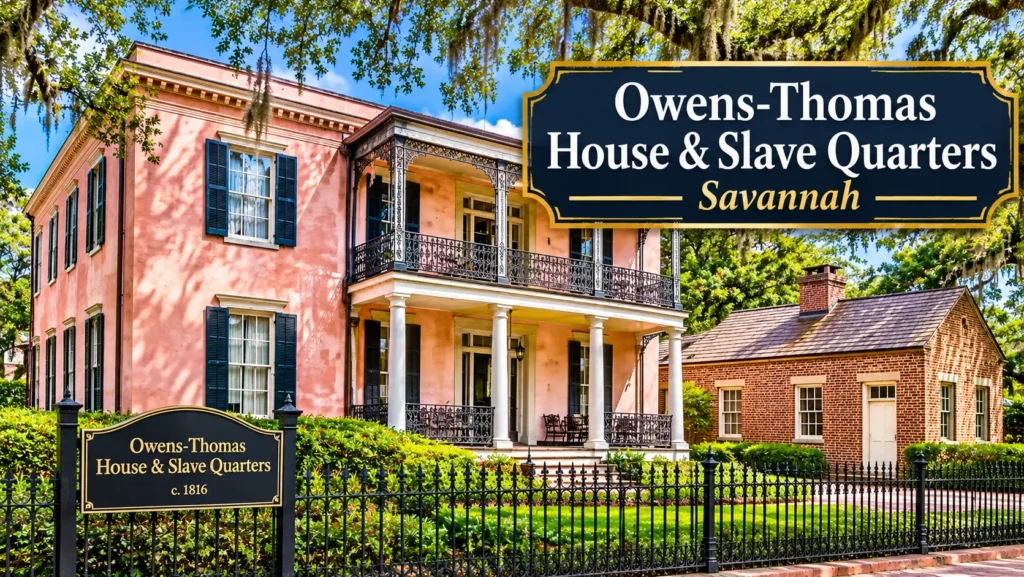
The Owens-Thomas House & Slave Quarters stands at 124 Abercorn Street in Savannah’s Historic District. Built in 1819, the house preserves the history of wealthy families and the enslaved people who served them.
Today, Telfair Museums operates the property as a historic house museum. Visitors can explore its original slave quarters, period rooms, service areas, and courtyard garden. Tours explain how architecture, wealth, and slavery shaped daily life in early Savannah. This guide covers ticket prices, tour schedules, history, parking, accessibility, and what to expect before your visit.
Owens-Thomas House & Slave Quarters at a Glance
Visitor Information | Details |
|---|---|
Address | 124 Abercorn St., Savannah, GA 31401 |
Location | Oglethorpe Square, Historic District |
Built | 1816 to 1819 |
Architect | William Jay |
Operated by | Telfair Museums |
Opening days | Tuesday through Sunday |
Hours | 10 a.m. to 5 p.m. |
Monday | Closed |
Adult ticket | $30 |
Tour duration | 45 to 60 minutes |
Tour frequency | Every 15 minutes |
Last tour | 4 p.m. |
Nearby garage | State Street Garage |
Main house accessibility | Stairs, no elevator |
Official website |
Visitor information checked November 10, 2026. Hours, admission prices, and tour arrangements may change during special events or holidays.

Is the Owens-Thomas House Worth Visiting?
Yes, the Owens-Thomas House is worth visiting if you enjoy history, architecture, or learning about Savannah’s past. Its original slave quarters make the experience different from many historic house tours. The museum explains how wealthy households depended on enslaved labor. Visitors also learn about the building’s unusual design and early plumbing system. Plan around an hour for the tour, plus any waiting time.
Why Visitors Choose This Historic House
Three parts of the property make it an important place to visit. First, the original slave quarters provide evidence of urban slavery in Savannah. Second, the mansion preserves rooms and building features from the early nineteenth century. Third, museum interpretation connects these spaces to the people who occupied them. The property also holds National Historic Landmark status. Its history extends beyond the families whose names appear on the building.
Who Will Enjoy the Visit Most?
History enthusiasts can learn about Savannah’s development, slavery, and household life before the Civil War. Architecture lovers can study William Jay’s English Regency design and the building’s unusual construction features. First-time visitors can use the tour to understand the city’s early history. Families with older children may also appreciate the educational experience. However, parents should prepare children for serious discussions about slavery.
Who Should Consider the Tour’s Limitations?
The historic mansion contains several staircases and has no elevator. Visitors with mobility limitations cannot access every interior area. Tours also follow scheduled entry times and have limited capacity. If you prefer unrestricted sightseeing, this format may not suit your schedule.
The museum discusses enslavement, forced labor, and unequal power. These subjects deserve attention and may be difficult for younger children.

Owens-Thomas House Tickets and Admission Prices
Telfair Museums sells a combined ticket covering three museum sites. The ticket includes the Owens-Thomas House & Slave Quarters, Telfair Academy, and Jepson Center. Admission remains valid for seven days from purchase. You can visit the participating museums during their regular operating hours. Owens-Thomas House tours still require an available entry time.
Current Ticket Prices
Ticket Type | Price |
|---|---|
Adults | $30 |
Seniors, 65 and older | $27 |
Active military with ID | $27 |
Students, ages 13 to 25, with ID | $20 |
Children, ages 6 to 12 | $10 |
Children, ages 5 and younger | Free |
Museum members | Free |
What Does the Telfair Museums Ticket Include?
Your ticket covers three separate museums in downtown Savannah.
Owens-Thomas House & Slave Quarters: Learn about early Savannah households, architectural design, and the experiences of enslaved residents.
Telfair Academy: Explore a historic mansion containing American and European artwork, sculpture, and decorative arts.
Jepson Center: Visit galleries featuring modern and contemporary art. The building also houses the Telfair Children’s Art Museum.
The three sites are within walking distance. You can visit them on the same day or spread your visits across seven days.
Can You Buy an Owens-Thomas House-Only Ticket?
No. Telfair Museums currently offers a combined admission ticket rather than a separate ticket for this house. This matters if you only have time for one attraction. The ticket offers more value when you also visit Telfair Academy or Jepson Center.
Where to Buy Official Tickets
You can purchase tickets through the Telfair Museums website or at a museum admission desk. Online booking lets you select an available Owens-Thomas House tour date and time. Booking opens up to four weeks before your planned visit. Keep your ticket confirmation available. You must still check in at the museum’s ticket booth before your tour.

Owens-Thomas House Hours and Best Time to Visit
The Owens-Thomas House & Slave Quarters normally opens Tuesday through Sunday, from 10 a.m. to 5 p.m. The museum closes on Mondays and certain holidays. The published last tour time is 4 p.m. However, guided and audio tour arrangements differ later in the afternoon.
Regular Opening Hours and Closed Days
Day | Hours |
|---|---|
Monday | Closed |
Tuesday | 10 a.m. to 5 p.m. |
Wednesday | 10 a.m. to 5 p.m. |
Thursday | 10 a.m. to 5 p.m. |
Friday | 10 a.m. to 5 p.m. |
Saturday | 10 a.m. to 5 p.m. |
Sunday | 10 a.m. to 5 p.m. |
The museum also lists closures for major holidays, including Thanksgiving, Christmas Day, and New Year’s Day. Christmas Eve and New Year’s Eve have shortened hours.
Guided Tour Times and Last Entry
Tours normally begin at 15 minute intervals and last approximately 45 to 60 minutes. Telfair Museums lists the final tour start at 4 p.m. Its published schedule also separates daytime guided tours from later audio tour sessions. Because the site’s official pages show different guided tour cutoff times, confirm your preferred tour format before arriving. An available 4 p.m. entry does not necessarily mean a standard guided tour.
Holiday Closures and Schedule Changes
Special programs, private events, and holidays can affect visitor access. A regular opening day does not guarantee that every tour time will operate. Check the museum’s schedule before leaving your hotel. If you have limited time, choose an available tour slot before planning other attractions.
When Should You Arrive to Avoid Missing a Tour?
Arrive before your scheduled entry time and allow time for ticket booth check-in. The museum asks visitors to arrive at least five minutes before their tour. An earlier arrival can help if you need to park or collect tickets. It does not guarantee immediate entry, since each tour has a capacity limit. For a fixed itinerary, reserving an available time ahead of your visit is the safer choice.
How to Book an Owens-Thomas House Tour
You can reserve an Owens-Thomas House tour through the official Telfair Museums ticket portal. Visitors may select an available date and entry time up to four weeks ahead. The museum also accepts walk-in visitors when tour spaces remain available. However, purchasing a general admission ticket does not guarantee an unscheduled tour opening.
Can You Reserve a Tour in Advance?
Yes. The museum allows advance tour reservations, subject to available spaces. Each tour group has a maximum capacity of 12 visitors. Spaces can fill before the museum closes, especially when several groups arrive together. Select your preferred time when booking. If your Savannah itinerary has little flexibility, secure a confirmed reservation before arranging other activities.
Online Booking vs. Walk-In Admission
Online booking helps you plan around a scheduled tour. Walk-in visitors must ask staff about available entry times. You may need to wait even after purchasing a ticket. The museum manages entry to protect the historic building and keep groups organized. If staff report that all tours have sold out, an existing general admission ticket will not provide entry.
Where to Check In Before Your Tour
All visitors must check in at the onsite ticket booth. This requirement also applies to museum members and visitors who purchased tickets online. After checking in, staff will explain where to wait. The Orientation Gallery has exhibits and limited indoor seating. Visitors can also use courtyard benches when available. Return before your assigned tour time. Late arrivals risk missing their scheduled entry.
What Happens If Tours Sell Out?
If the museum reaches its daily capacity, visitors without confirmed tour assignments cannot join another group. You can ask staff about availability on a different day. Your combined museum ticket also provides access to Telfair Academy and Jepson Center. Check the official Owens-Thomas House visitor information for current booking instructions.

What to Expect on the Owens-Thomas House Tour
The Owens-Thomas House tour explores both the mansion and the buildings where enslaved people lived and worked. Visitors learn how the property functioned as one connected household. The experience includes historical interpretation, architectural details, and exhibits about the people who lived there. The exact route and tour format may change.
Orientation Gallery and Introduction
Your visit begins with check-in and an introduction to the property’s history. The Orientation Gallery occupies part of the original carriage house. Displays provide information about Savannah during the early nineteenth century. They explain the Richardson and Owens families and the people they enslaved. The gallery also introduces the wider economic system that supported wealthy Savannah households.
Inside the Historic Mansion
The mansion contains formal rooms, private family spaces, and service areas. Each room shows a different part of household life. The drawing room and dining room contain period furnishings and decorative features. Families used these spaces to entertain guests and display their wealth.
Bedrooms, the library, and family rooms reveal more about everyday routines. Museum interpretation also examines the labor required to maintain these spaces. Not every object belonged to the original families. Telfair Museums displays both family possessions and period objects from its collection.
Basement Kitchen and Service Areas
The basement holds some of the property’s most useful historical evidence. Visitors can examine the original kitchen, scullery, cistern, and other workspaces. Enslaved cooks prepared meals using equipment that included a cast iron range and ovens. Other workers washed clothing, cleaned rooms, and carried out household tasks.
The large cistern stored water for domestic use. These service areas explain how the mansion operated beyond its formal rooms. Telfair Museums provides further research in The Hearth and the Hands Who Worked It, a study of cooking at the property.
Original Slave Quarters and Carriage House
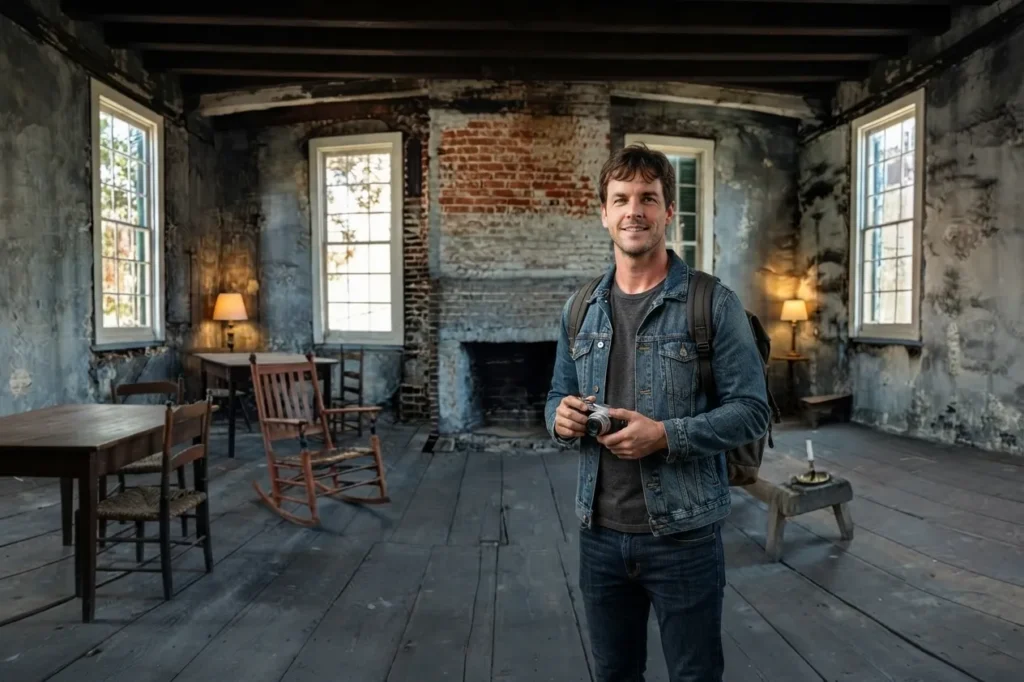
The original slave quarters occupy the northern section of the outbuilding. The structure contains rooms that housed enslaved workers during the nineteenth century. The southern section served as a carriage house and stable. Together, these buildings show how closely domestic service and family life operated. The museum uses the quarters to discuss living conditions, labor, and the experiences of enslaved residents.
Courtyard and Parterre Garden
A formal garden now separates the mansion from the carriage house. Its planted beds follow a planned geometric layout. However, this garden did not exist during the property’s earliest years. Enslaved workers used the space as a working yard.
The yard likely supported laundry, food preparation, small animals, and other household activities. In 1956, landscape architect Clermont H. Lee redesigned it as a formal garden. Remember this difference when viewing the grounds. Today’s appearance does not fully represent the yard’s original function.
How Long Does the Entire Tour Take?
Most guided tours last 45 to 60 minutes. Visitors should also allow time for ticket check-in and any waiting period. A reasonable planning allowance is 75 to 90 minutes if your schedule permits. This gives you extra time for parking and arrival. Tour length may vary with group size, questions, and daily museum arrangements.

The Slave Quarters and the Lives of Enslaved People
The Owens-Thomas House & Slave Quarters preserves evidence of slavery within Savannah’s nineteenth century urban households. Its original quarters offer insight into the people who lived and worked on the property. The museum’s interpretation includes those residents rather than focusing only on wealthy owners. Their labor supported the household and its daily activities.
What Were the Slave Quarters Used For?
The slave quarters provided living space for people whom the Richardson and Owens families enslaved. The original building had three rooms on each of its two floors. Historical records suggest that between five and fourteen enslaved people lived on the property at different times.
Many residents were women, children, or teenagers. The surviving rooms help visitors understand the limited living space available to them. The quarters also show how closely these workers lived to the families they served. Their physical location reflected the household’s dependence on forced labor.
Who Lived and Worked on the Property?
Enslaved residents performed many jobs required to operate the home. Their work included cooking, cleaning, washing clothes, caring for children, and maintaining the grounds. Some also cared for horses, managed carriages, or served meals during formal gatherings. These responsibilities often extended from early morning into the evening.
The Owens family controlled their labor and freedom. Household records reveal only parts of their personal experiences. Telfair Museums continues researching these residents through letters, wills, census records, and other historical documents.
Daily Life and Labor in Urban Savannah
Urban slavery involved many forms of work within homes, businesses, and public spaces. At this property, enslaved residents maintained the household of a wealthy family. Cooking required starting fires, preparing ingredients, and cleaning equipment. Laundry involved carrying water, washing clothing, and drying fabric.
Workers also prepared formal rooms and attended to guests. Their labor allowed the owners to maintain their social position. Their daily routines involved coercion and a lack of personal freedom. Even trusted household roles did not change their legal status under slavery.
The Stories of Peter, Diane, and Other Enslaved Residents
Historical records preserve some names connected with the Owens household.
Peter: Museum researchers believe Peter served as an enslaved butler. He likely organized dining service and supervised parts of the household’s domestic work.
Diane: Historical interpretation identifies Diane as an enslaved cook. She prepared meals for the household and worked in the basement kitchen.
Emma: Emma worked as a nursemaid for the Owens children. Surviving family documents also identify her daughter, Harriet.
Kate: Kate served as a nursemaid and helped care for children in the household.
Fanny: Historical records identify Fanny as an enslaved child living on the property.
These records offer limited information about their personal lives. Most surviving documents came from the families who enslaved them. Their stories should not depend on assumptions about personal feelings or relationships. The available evidence deserves careful interpretation. Telfair Museums discusses these residents in its historical research on slavery at the house.
The Wall of Names and the Museum’s Interpretation of Slavery
The Orientation Gallery includes a Wall of Names. It recognizes people enslaved by the Richardson and Owens families. This display connects the Savannah residence to slavery beyond its walls. Richard Richardson participated in the domestic slave trade. George Welshman Owens also enslaved hundreds of people across his agricultural properties.
The museum uses historical records to explain these connections. Its interpretation examines the wealth, power, and forced labor that shaped the household. The current approach developed through extensive research and changes introduced in 2018. Visitors now encounter the experiences of enslaved people throughout the property.

History of the Owens-Thomas House & Slave Quarters
The Owens-Thomas House has served as a private residence, boarding house, and museum. Its ownership changed several times after construction. The building’s history also connects Savannah to international trade, political life, slavery, and historic preservation.
Richard Richardson and the Construction of the House (1816 to 1819)
Shipping merchant Richard Richardson commissioned the house around 1816. English architect William Jay prepared the design, and builder John Retan supervised construction. The Richardson family moved into the completed mansion in 1819. The property included a carriage house, slave quarters, and service yard.
Richardson earned wealth through shipping and other business interests, including the slave trade. Economic losses and family tragedies later contributed to his departure from Savannah. The family left the property only a few years after moving in.
Mary Maxwell’s Boarding House and Lafayette’s 1825 Visit
The Bank of the United States eventually acquired the house. Mary Maxwell then operated an upscale boarding house on the property. In March 1825, the Marquis de Lafayette stayed there during his Savannah visit. Lafayette had served alongside American forces during the Revolutionary War.
Historical accounts describe him addressing local residents from the house’s balcony. His stay became one of the property’s best-known events. The building continued serving as lodging before another change in ownership.
George Welshman Owens and His Family (From 1830)
George Welshman Owens purchased the property in 1830 for $10,000. He was a lawyer, politician, landowner, and enslaver. Owens lived in the house with his wife, Sarah, and their six children. Enslaved workers maintained the household and cared for family members.
Owens also held extensive agricultural property supported by enslaved labor. His business interests connected the house to plantations elsewhere in Georgia. The Owens family retained the property for more than a century.
Margaret Thomas and the Donation to Telfair Museums
Margaret Gray Thomas was a granddaughter of George Welshman Owens. She inherited the family property through later generations. When she died in 1951, she left the house and its contents to Telfair. Her gift called for a museum honoring her grandfather and father. The donation helped preserve the house and its historic interiors.
How the Property Became a Museum in 1954
The Owens-Thomas House opened as a museum in 1954. Early exhibits focused heavily on architecture, decorative arts, and the owners’ family history. Over time, researchers examined the records of enslaved residents more closely. The museum changed its interpretation to reflect their experiences.
In 2018, Telfair introduced major updates to the slave quarters and service areas. These changes gave greater attention to slavery and the people who sustained the household. The property now operates as the Owens-Thomas House & Slave Quarters.

Architecture and Unique Features of the Owens-Thomas House
William Jay designed the Owens-Thomas House in the English Regency style. The building includes classical details, carefully arranged rooms, and unusual features for its period. Its architecture reflected the wealth and social position of its original owners.
William Jay and English Regency Architecture
William Jay trained in England before working in Savannah. His designs reflected classical architectural ideas popular during the early nineteenth century. The Owens-Thomas House features balanced proportions, decorative columns, curved walls, and formal interior spaces.
Jay also designed the building that now houses Telfair Academy. Both properties provide examples of his influence on Savannah’s architecture. The Owens-Thomas House remains one of the best preserved examples of his work.
The Cast-Iron Balcony and Historic Exterior
The exterior includes stucco walls, tall windows, classical details, and prominent entrance steps. The building also features iron railings and balconies. Its location beside Oglethorpe Square helped establish the residence as a major property. Visitors can examine its street-facing design before entering.
Indoor Plumbing, Cistern, and Early Technology
The mansion incorporated an advanced water system for its time. A large cistern stored collected rainwater for household use. The basement preserves evidence of bathing, washing, cooking, and water storage. These features helped the owners maintain a level of comfort uncommon in many homes. However, the technology still depended on human labor. Enslaved workers operated and maintained much of the household system.
The Indoor Bridge and Decorative Interiors
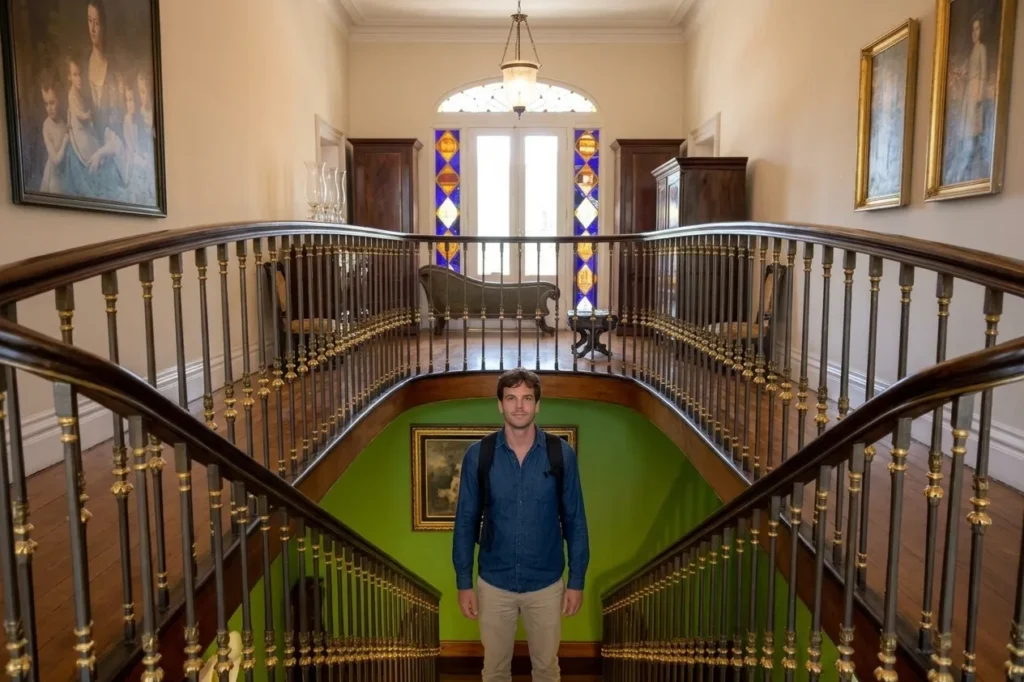
The upper floor includes an indoor bridge connecting sections of the house. This feature forms part of the building’s unusual interior design. Visitors can also see period furniture, decorative plasterwork, and carefully finished rooms.
The formal dining spaces include curved architectural details. Other rooms contain objects reflecting household life during the nineteenth century. The interiors show how wealthy families presented themselves to visitors. They also reveal the work required to maintain that appearance.
Haint Blue Paint in the Original Slave Quarters
The slave quarters preserve historic blue paint that visitors often associate with the Southern tradition of haint blue. Haint blue refers to blue paint linked with regional beliefs about spirits and protection. Its wider cultural history includes African American traditions.
However, the paint at this property should not automatically establish what individual residents believed. Such interpretations require supporting historical evidence. Telfair Museums’ research and displays provide a better basis for understanding the surviving paint and rooms. Telfair’s paint research identifies the blue coating as synthetic ultramarine limewash, rather than traditional haint blue paint. The museum discusses its possible connection to West African spiritual traditions.
Owens-Thomas House Location, Directions, and Parking
The Owens-Thomas House & Slave Quarters is at 124 Abercorn Street in Savannah’s Historic District. It faces Oglethorpe Square and sits within walking distance of several downtown attractions. Visitors arriving by car can use nearby metered parking or a public garage.
Where Is the Owens-Thomas House Located?
The museum stands on the eastern side of Abercorn Street, beside Oglethorpe Square. Its central location makes it convenient for visitors already exploring downtown Savannah. The property is also near Broughton Street and other historic squares. Use the museum’s street address for navigation rather than searching for a general Historic District entrance.
Best Parking Near the Owens-Thomas House
State Street Garage is one of the most convenient parking options. It stands at 100 East State Street, near the intersection of State and Abercorn Streets. Telfair Museums recommends this garage because it sits across Oglethorpe Square from the property.
The garage operates 24 hours daily. The City of Savannah lists a regular weekday daytime rate of $2 per hour, with additional rate rules. Special events can change parking charges.
Street Parking and Payment Rules
Metered spaces are available on streets around the Historic District. However, finding an empty space depends on traffic and nearby events. North of Liberty Street, Savannah enforces parking meters Monday through Saturday, from 8 a.m. to 8 p.m. Regular meter enforcement does not apply on Sundays. City holidays and temporary restrictions may affect parking rules.
Check the nearest meter or payment station for current rates. You can also use the ParkSavannah app in supported parking areas. For additional details, read our Savannah parking guide or free parking in Savannah guide.
Walking Directions From Downtown Savannah
If you are staying downtown, walking may be easier than moving your car. From Broughton Street, head toward Abercorn Street and continue south toward Oglethorpe Square. The museum stands beside the square. Visitors coming from River Street can walk south through the Historic District. Allow extra time for the waterfront’s uneven surfaces and changes in elevation. Telfair Academy and Jepson Center are each about a seven minute walk from the Owens-Thomas House.
Owens-Thomas House Map and Entrance Information
The map below shows the museum, State Street Garage, and nearby museums. The museum’s entrance and ticket booth are identified on its official property map. Use that map to locate the admission area and wheelchair ramp. You can review the Owens-Thomas House property map before arriving.
Accessibility, Family Visits, and Museum Rules
The Owens-Thomas House has accessibility limitations because of its original staircases and historic layout. However, visitors can access several areas without entering the main mansion. Check your group’s needs before booking. This is especially useful for wheelchair users, families with strollers, and visitors who cannot manage stairs.
Is the Owens-Thomas House Wheelchair Accessible?
The main mansion is not wheelchair accessible. Its original staircases connect different floors, and the building has no elevator. However, the Orientation Gallery, Slave Quarters, garden, and public restrooms offer wheelchair access. A designated accessible parking space is available near the entrance on President Street. Visitors should contact the museum before arriving to discuss individual access needs.
Stairs, Seating, and Accessible Areas
Visitors entering the main house must use stairs. Some parts of the tour require moving between several floors. The museum provides benches and chairs in certain areas. Guests who cannot complete a staircase may wait while their group continues.
Wheelchair access to the Slave Quarters does not mean every upper room is accessible. The museum’s guidance identifies ramps and separate historic stairways.
Is the Tour Suitable for Children?
Children can visit the Owens-Thomas House, but parents should consider their age and interests. The tour discusses slavery, forced labor, and historical inequality. Older children who enjoy history may find the experience educational.
Prepare younger visitors for the subject before arriving. Explain that the tour describes real people and difficult parts of American history. Families should also consider the tour length and limited opportunities to leave their group.
Photography, Strollers, and Service Animals
Telfair Museums allows handheld photography without flash for personal use, unless signs state otherwise. Flash photography, tripods, and selfie sticks are not permitted. Commercial photography requires different authorization. Visitors should not assume that personal admission permits business or promotional photography.
Strollers are allowed in the Orientation Gallery, Slave Quarters, garden, and public restrooms. They are not permitted inside the main house. The museum allows service dogs required for a disability. Other pets cannot enter.
Restrooms and Language Assistance
Public restrooms are available within the museum property. Telfair lists these facilities among its wheelchair accessible areas. The museum also provides Spanish paper transcripts of its audio tour upon request. Ask a historical interpreter for assistance. Visitors needing specific accommodations should contact Telfair Museums at 912-790-8800 before their visit.
Nearby Attractions to Visit After the Owens-Thomas House
The museum sits near several attractions in Savannah’s Historic District. You can visit other museums, walk around nearby squares, or continue toward River Street. Your Telfair admission ticket already includes two additional museums. Consider visiting those before purchasing another attraction ticket.
Oglethorpe Square
Oglethorpe Square sits directly across from the Owens-Thomas House. It forms part of Savannah’s historic street and square layout. You can walk around the square before or after your tour. Its location also makes it a useful landmark when finding the museum. For more information about downtown’s public spaces, read our Savannah historic squares guide.
Telfair Academy
The Telfair Academy stands at 121 Barnard Street. The building was also designed by William Jay and now contains an art museum. Visitors can explore traditional artwork, sculpture, and historic interiors. It provides another opportunity to study Savannah’s early architecture. Your combined Telfair Museums ticket covers admission during its regular opening hours.
Jepson Center
The Jepson Center is located at 207 West York Street. It focuses on modern and contemporary art. The building also houses the Telfair Children’s Art Museum. Families can explore its exhibitions and child focused spaces. Because admission is included with your Telfair ticket, this museum can fit into the same visit.
Davenport House Museum
The Davenport House Museum offers another historic house tour near the Owens-Thomas House. Its public entrance is at 323 East Broughton Street, inside the Historic Kennedy Pharmacy. The museum explores early Savannah life, slavery, and historic preservation. Davenport House requires a separate ticket. It does not form part of the Telfair Museums admission package.
River Street and the Historic District
River Street is another nearby destination for visitors exploring downtown Savannah. The waterfront has restaurants, shops, historic buildings, and views of the Savannah River. You can reach it on foot from the Owens-Thomas House. However, some approaches involve steep slopes, steps, or uneven pavement. Visitors who prefer a slower schedule can explore nearby squares before continuing toward the waterfront.
Practical Tips for Visiting the Owens-Thomas House
A little planning can help you avoid booking problems and make better use of your museum ticket.
Plan Your Arrival and Tour Check-In
Reserve an available tour time if your itinerary is fixed. Arrive early enough to park, locate the entrance, and check in. Keep your ticket confirmation ready. Online buyers and museum members must also report to the ticket booth.
Allow Enough Time for the Museum
Set aside approximately an hour for the tour itself. Add extra time for walking, parking, and any waiting period. Avoid scheduling another paid tour immediately afterward. A delay could leave you rushing between attractions.
Prepare for Historic Stairs and Walking Surfaces
Wear comfortable shoes suitable for stairs and older walking surfaces. Some interior areas have limited accessibility. If you cannot use stairs, ask staff which parts of the property you can visit.
Check the Official Schedule Before Leaving
Review current hours, ticket availability, and possible closures before heading to the museum. Savannah hosts events that can affect parking and downtown traffic. Give yourself additional travel time when necessary.
Use Your Three-Site Ticket Efficiently
Visit the Owens-Thomas House at your reserved time. Then consider exploring Telfair Academy or Jepson Center. Both sites are within walking distance. You do not need to visit all three on the same day. The seven day admission period allows flexibility during a longer Savannah trip.
Frequently Asked Questions About the Owens-Thomas House
Final Thoughts: Should You Visit the Owens-Thomas House?
The Owens-Thomas House & Slave Quarters offers an opportunity to understand Savannah’s history beyond its historic buildings and public squares. Its original slave quarters, preserved mansion, and museum exhibits explain the lives of people who occupied the property. The visit suits travelers interested in architecture, slavery, and early Savannah history. Before arriving, check tour availability, admission prices, parking, and accessibility arrangements through Telfair Museums.

John Robert
Travel Writer & Founder @ Thing Savannah
John Robert is a travel writer and explorer specializing in authentic regional guides, detailed itineraries, and practical travel logistics.