
Savannah Facts: 30+ Interesting & Fun Facts About Savannah
Savannah, Georgia, began in 1733 under the leadership of James Oglethorpe. The settlement grew beside the Savannah River on a high bluff.
Oglethorpe planned Savannah around streets, wards, and public squares. This layout still shapes much of the city today. The city became Georgia’s first settlement and later grew into a major coastal port.
Savannah is also known for its historic architecture and tree lined streets. Its history includes the colonial era, American Revolution, Civil War, slavery, and African American heritage. The city also has strong connections to literature, film, food, and popular culture.
In this guide, you’ll find interesting Savannah facts with historical context. You’ll also learn about the Savannah River, historic squares, famous people, unusual stories, and local landmarks. Where a story comes from local tradition, we’ll separate it from documented history.
Savannah Facts at a Glance
Savannah is one of Georgia’s oldest and most historic cities. James Oglethorpe founded Savannah in 1733 beside the Savannah River.
The city followed a planned layout of wards, streets, and public squares. Savannah began with 24 original squares, and 22 still exist today.
Fact | Savannah, Georgia |
|---|---|
Founded | 1733 |
Founder | James Oglethorpe |
State | Georgia |
Region | Coastal Georgia |
River | Savannah River |
Original city plan | Wards and public squares |
Original squares | 24 |
Surviving historic squares | 22 |
Historic designation | Savannah Historic District, National Historic Landmark |
Nickname | Hostess City of the South |
Major nearby beach | Tybee Island |
Airport | Savannah/Hilton Head International Airport |
Why These Savannah Facts Matter
Savannah’s city plan still shapes the downtown area. The public squares remain a key part of the historic landscape.
The Savannah Historic District preserves the city’s original plan and historic buildings. The National Park Service lists the district as a National Historic Landmark.
Tybee Island sits near the mouth of the Savannah River. Its location has long connected the island with Savannah’s coastal history.
Savannah also uses the nickname Hostess City of the South. Visit Savannah uses this name in its visitor materials.
Discover more local attractions, dining spots, and travel experiences with these things to do in Savannah.
What Is Savannah, Georgia Known For?
Savannah, Georgia, is known for its historic squares, old buildings, and tree lined streets. The city was founded in 1733 beside the Savannah River. Its Historic District preserves much of the original city plan and historic architecture. Savannah is also known for Lowcountry food, its major port, ghost stories, literature, and films such as Forrest Gump and Midnight in the Garden of Good and Evil.
Visitors often notice the city’s live oaks and Spanish moss first. The live oaks form shaded streets and parks across the coastal city. Spanish moss hangs from many trees and adds to Savannah’s familiar landscape. It is an air plant, not a true moss.
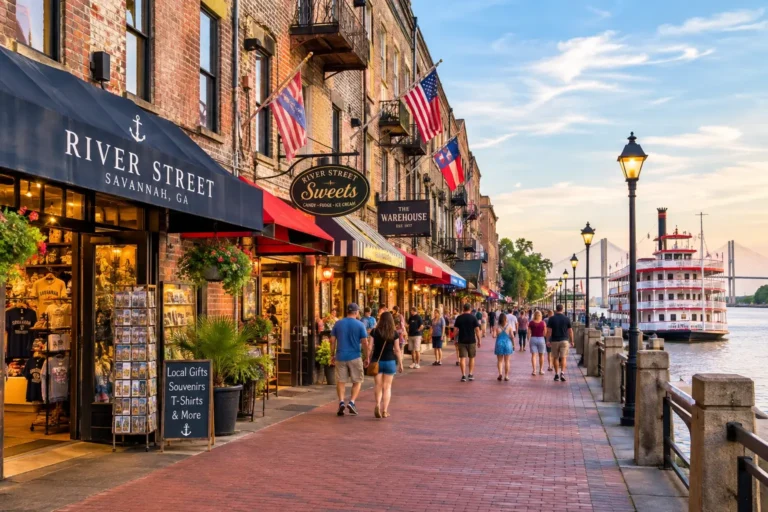
The Savannah River also shaped the city’s growth. River Street follows the waterfront below the historic bluff. The Port of Savannah remains an important part of the city’s economy and identity.
Savannah’s food culture reflects its coastal location and Southern roots. Seafood, shrimp, grits, and other Lowcountry dishes are common local favorites. The city also has a strong connection with stories of ghosts and haunted buildings.
Savannah’s cultural reach extends into books and movies. John Berendt’s Midnight in the Garden of Good and Evil brought the city’s people and places to a wider audience. Chippewa Square also became famous through Forrest Gump.
Why Is Savannah Called the Hostess City of the South?
Savannah is called the Hostess City of the South because hospitality became closely tied to the city’s identity. Local tourism sources connect the nickname with Savannah’s long tradition of welcoming visitors. The City of Savannah also continues to use the name today.
The nickname fits Savannah’s long relationship with visitors. Historic hotels, restaurants, public squares, cultural sites, and walking areas have helped shape that reputation. The city has also built much of its tourism identity around Southern hospitality.
For travelers, the nickname is more than a slogan. It reflects a city where historic places, local food, public spaces, and visitor culture meet.
Visitors can plan their dining experience by exploring the best restaurants in Savannah, GA.
Interesting Facts About Savannah, Georgia
Savannah’s history is closely tied to its river, city plan, and coastal location. The city began in 1733 under James Oglethorpe. Its original layout still shapes the Historic District today. These facts explain how Savannah developed from a colonial settlement into a major Georgia city.
Savannah Was Founded in 1733
Savannah was founded in 1733 by James Edward Oglethorpe and the first Georgia colonists. They reached the area in February 1733. The settlement stood on Yamacraw Bluff beside the Savannah River.
The river helped make the site useful for trade and settlement. The bluff also gave the new town a higher position above the surrounding lowlands. Oglethorpe saw the location as a strong site for Georgia’s first settlement.
Savannah’s founding also marked the start of Georgia’s colonial settlement. Georgia had received its royal charter in 1732. Savannah became the first town established in the new colony.
Savannah Was Georgia’s First City
Savannah is recognized as the oldest city in Georgia. Colonists established the settlement in 1733 along the Savannah River. It became the first major settlement in the colony of Georgia.
The city’s role went beyond its age. Savannah served as an early center for government, trade, and settlement. Its location also supported commerce with nearby coastal and inland areas.
The settlement formed the starting point for Georgia’s colonial development. From Savannah, the colony expanded toward other parts of the region.
Savannah Was Planned Around Public Squares
Savannah was planned before it grew into the city visitors see today. James Oglethorpe used a repeated system of wards, streets, lots, and squares.
A ward formed the basic unit of the plan. Each ward centered on an open public square. Residential and public lots surrounded these spaces.
The plan also included trust lots and tything lots. Trust lots supported public buildings and churches. Tything lots provided space for settlers’ homes.
This design gave Savannah a clear structure from the beginning. It also created shared public spaces within each neighborhood.
The National Park Service describes Savannah as one of America’s few surviving colonial city plans. Much of the original framework remains visible today.
Savannah Originally Had 24 Squares
Savannah’s original plan included 24 public squares. These squares formed the center of the city’s early wards. Twenty two of the original squares still exist today.
The squares were more than green spaces. They served as meeting places for people living within each ward. They also helped organize movement through the growing city.
Today, these spaces remain central to Savannah’s Historic District. Visitors can walk between many of them while exploring the downtown area.
The surviving squares are one reason Savannah’s original city plan remains easy to recognize.
Savannah’s Historic District Is a Major Preservation Area
Savannah’s Historic District protects one of America’s best known historic city plans. The district contains historic streets, squares, homes, churches, and public buildings.
The district follows the framework created after Savannah’s founding. Historic buildings from several periods now stand within that plan.
Preservation became especially important during the twentieth century. Some historic buildings faced demolition before local preservation efforts gained strength. The Historic Savannah Foundation formed in 1955 after concerns about losing important buildings.
The district is also recognized as a National Historic Landmark District. Its significance comes from both its buildings and its unusual city plan.
For visitors, this means Savannah’s history is not limited to individual landmarks. The streets and public spaces are part of that history too.
Savannah’s Streets Are Famous for Live Oaks and Spanish Moss
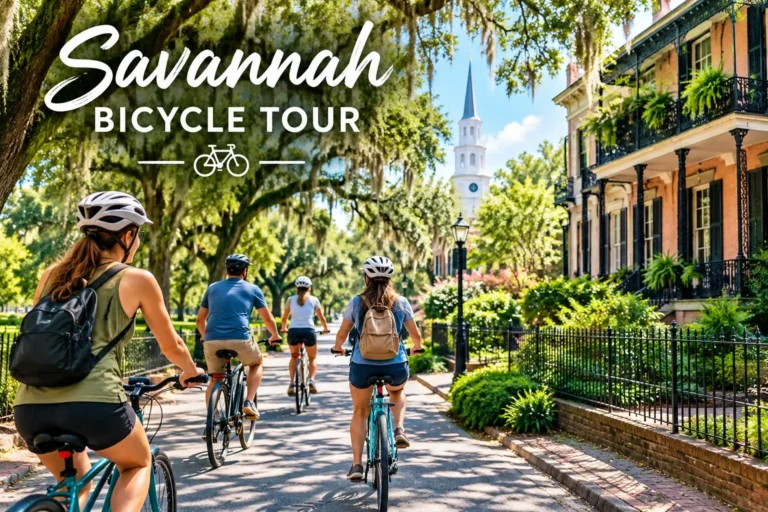
Live oak trees are a familiar part of Savannah’s streets and public spaces. Their broad branches create the shaded streetscape associated with the city.
Spanish moss adds another recognizable feature. Despite its name, Spanish moss is not a true moss. It is an air plant that grows on trees and takes moisture and nutrients from the surrounding environment.
The two are often seen together across coastal Georgia. Their combination helps create the landscape many visitors associate with Savannah.
Spanish moss also appears throughout other parts of the Southeast. It is not unique to Savannah, but it has become strongly linked with the city’s visual identity.
Savannah Has One of America’s Important Historic Ports
Savannah’s connection with the Savannah River helped shape its commercial history. The river gave the settlement access to coastal trade and later supported a major shipping industry.
Cotton and rice became important crops during Georgia’s colonial and early American periods. Savannah later became a major cotton shipping port.
The river also connects Savannah with a much larger trade network. Today, the Port of Savannah handles international cargo through the Georgia Ports Authority.
This creates a direct link between Savannah’s geography and its economy:
Savannah River → waterfront access → trade → port growth → city development
The port remains an important part of Savannah’s identity. It also shows why the Savannah River mattered from the city’s earliest days.
History lovers can explore the architecture, squares, and landmarks of the Savannah Historic District
Historical Facts About Savannah, Georgia
Savannah’s history began with Georgia’s founding in 1733. The city later became important during the American Revolution and Civil War. Its history also includes slavery, emancipation, Reconstruction, and African American community life. Understanding these periods explains why Savannah has such a layered historic landscape today.
Savannah’s Colonial Beginnings
Savannah began in 1733 as the first settlement of the new Georgia colony. James Edward Oglethorpe led 114 colonists from England aboard the Anne. They reached Yamacraw Bluff on February 12, 1733.
The site stood beside the Savannah River, about 15 miles from the Atlantic Ocean. The river gave the settlement access to coastal trade and transportation. The bluff also offered higher ground above the surrounding lowlands.
Georgia itself received its charter from King George II in 1732. Savannah became the practical starting point for the new colony.
Early Savannah also had a diverse population. English settlers arrived alongside Jewish families and Salzburgers from Central Europe. Their communities helped shape the city’s early religious and cultural life.
James Oglethorpe and the Founding of Savannah
James Edward Oglethorpe played the leading role in establishing Savannah. He was one of the trustees responsible for Georgia’s early settlement.
Oglethorpe arrived with the first group of colonists in 1733. He chose the high ground near the Savannah River for the new settlement.
He also introduced a planned city design. The plan used wards, streets, lots, and public squares. This design made Savannah different from many other colonial settlements.
Oglethorpe’s original plan still shapes Savannah’s Historic District. Visitors can see parts of that early layout while walking through the city’s squares and streets.
Savannah During the American Revolution
The American Revolution changed Savannah’s political and military role. British forces captured the city on December 29, 1778. They held Savannah until 1782.
The British occupation made Savannah a major base in the Southern Campaign. Georgia was briefly restored to British control during this period.
The war also created new opportunities for enslaved people seeking freedom. Some escaped from plantations and moved toward Savannah or British controlled areas. Others joined British forces in exchange for promises of freedom.
This period shows that Savannah’s Revolutionary history involved more than battles between armies. The war also changed the lives of enslaved and free Black residents.
Savannah and the Siege of 1779
The Siege of Savannah began in September 1779. American and French forces tried to remove the British from the city.
French forces arrived near Tybee Island before moving toward Savannah. Their army joined American troops under General Benjamin Lincoln.
The allied forces launched a major assault on October 9, 1779. British defenders held their positions and defeated the attack. The allies suffered 752 casualties. British losses were much lower.
Count Casimir Pulaski and Sergeant William Jasper died during the fighting. The failed assault left Savannah under British control.
The Siege of Savannah remains one of the most important Revolutionary War events in Georgia.
Savannah During the Civil War
Savannah played an important role during the Civil War. Confederate forces took control of Fort Pulaski in early 1861. Union forces captured the fort in April 1862.
Union troops then blockaded Savannah from the sea. The blockade made life harder for civilians and restricted trade.
Savannah remained under Confederate control until December 1864. Union General William T. Sherman reached the city after his March to the Sea from Atlanta.
Sherman’s army captured Savannah late that year. The event marked a major turning point in the city’s Civil War history.
Sherman’s March to Savannah
William T. Sherman began his March to the Sea from Atlanta in November 1864. His army moved through Georgia toward Savannah.
The campaign aimed to damage Confederate resources and weaken the South’s ability to continue the war. Sherman reached the Savannah area in December.
Confederate General William Hardee withdrew his forces from Savannah. The city then surrendered to Union forces.
Sherman sent a famous telegram to President Abraham Lincoln on December 22, 1864. He offered Savannah as a Christmas gift, along with military supplies and about 25,000 bales of cotton.
The Famous “Christmas Gift” Story
The Christmas gift story comes from a real wartime telegram. Sherman did not literally present Savannah as a personal gift.
On December 22, he informed Lincoln that Savannah had fallen. His message described the city and its captured supplies as a Christmas present.
The phrase later became one of the best known stories from Savannah’s Civil War history.
The documented event is the telegram itself. The idea that Sherman simply handed the city to Lincoln as a symbolic present comes from the wording of that message.
Savannah’s History of Slavery
Slavery forms a major part of Savannah’s history. Georgia’s founders initially banned slavery in the colony. That ban ended in the 1750s.
The growth of rice and cotton production increased the demand for enslaved labor. Savannah became an important center for coastal trade and plantation commerce.
Enslaved people worked in plantations, homes, workshops, docks, and other parts of the local economy. Some enslaved workers were also hired out by their enslavers in Savannah.
The city’s port connected local commerce with wider Atlantic and coastal markets. This connection helped support the plantation economy across coastal Georgia.
Savannah’s slavery history also includes resistance. Enslaved people escaped, formed communities, sought freedom through wartime alliances, and challenged the system in many ways.
The Weeping Time
The Weeping Time took place in Savannah on March 2 and 3, 1859. It was one of the largest sales of enslaved people in United States history.
Pierce M. Butler sold 436 enslaved men, women, and children at the Ten Broeck Race Course. The sale helped satisfy debts connected with his plantations.
Families were separated during the sale. The event became known as the Weeping Time because of the grief surrounding the forced separation of families.
Newspapers reported on the sale across the country. The event also became part of the growing national debate over slavery before the Civil War.
The site is now marked by a Georgia Historical Society historical marker in Savannah.
Savannah’s African American History
African American history is central to Savannah’s story. Black residents shaped the city’s religious, educational, economic, and political life across several centuries.
The First African Baptist Church traces its roots to the late eighteenth century. The congregation grew from Black worship communities connected with the Savannah area.
The church became an important community institution. Its current building was completed in 1859.
Savannah also became an important center for Black education after emancipation. The Beach Institute opened in 1867 as the first school in Savannah built specifically to educate African Americans.
During Reconstruction, Black community leaders organized schools and educational groups. Churches played an important role in this work.
Savannah’s African American history also includes the fight for freedom during slavery. People such as March Haynes and Susie King Taylor show how local Black residents took active roles during the Civil War.
The story continued through Reconstruction and the Civil Rights era. First African Baptist Church hosted important speakers and remained a major community institution.
For visitors, places such as First African Baptist Church and the Beach Institute help connect Savannah’s historic streets with the people who lived through these events.
Travelers looking for a coastal escape can find ideas for things to do at Savannah Beach
Savannah River Facts
The Savannah River is central to the city’s history, geography, and economy. It helped James Oglethorpe choose Savannah’s original settlement site in 1733. The river also connects Georgia and South Carolina and supports one of the nation’s major port facilities. Its lower reaches include tidal wetlands and marshes with important coastal wildlife.
Where Is the Savannah River?
The Savannah River runs along the border between Georgia and South Carolina. It flows southeast toward the Atlantic Ocean and reaches the coast near Savannah. The river begins farther inland at the meeting point of the Seneca and Tugaloo rivers.
The river’s lower section passes through the Savannah area. The city sits about 17 miles upstream from the river’s mouth.
The river is part of the larger Savannah River Basin. Its watershed covers parts of Georgia, South Carolina, and North Carolina.
Why Was Savannah Founded Along the River?
James Oglethorpe chose a high bluff beside the Savannah River for Georgia’s first town. The site stood about 18 miles upstream from the Atlantic Ocean.
The location offered several practical benefits. The river provided access to transportation and trade. The bluff also gave the settlement higher ground above nearby marshes.
The river soon became part of Savannah’s economic life. Rice plantations developed along nearby riverbanks and marshes during the colonial period.
This connection shaped Savannah from its earliest days:
Savannah River → settlement site → transportation → trade → port growth
The Savannah River Forms Part of the Georgia and South Carolina Boundary
The Savannah River forms much of the boundary between Georgia and South Carolina. The state line follows the river for a large part of its course.
This makes the river an important geographic feature for both states. It also explains why Savannah sits directly across the river from South Carolina.
The river’s islands and channels add another layer to this border landscape. Its lower section changes as freshwater meets tidal influences near the coast.
The River Helped Make Savannah an Important Port
Savannah’s river location helped the city develop into a major seaport. The river connects the city with the Atlantic Ocean and provides a route for commercial shipping.
The lower river becomes tidal near Savannah. USGS research notes that the river is tidal for about 50 miles above its mouth.
Today, the Port of Savannah is operated by the Georgia Ports Authority. The port handles container cargo and other goods moving through international trade routes.
The river remains closely tied to Savannah’s economy. Modern shipping continues a relationship that began with colonial trade.
River Street and Savannah’s Waterfront
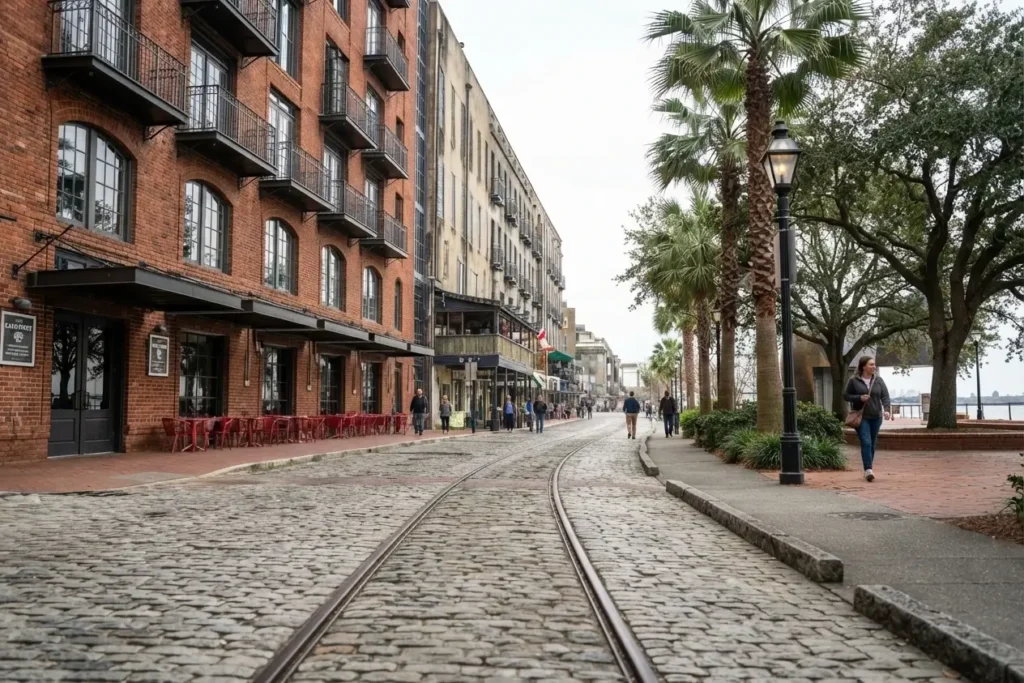
River Street sits along Savannah’s historic waterfront. It runs beside the Savannah River below the city’s historic bluff.
The waterfront became an important commercial area as Savannah’s port expanded. Warehouses and shipping facilities once lined parts of the riverfront.
Today, River Street is also a major visitor area. Travelers can walk along the waterfront, view ships, and explore restaurants, shops, and historic buildings.
The location also helps visitors understand Savannah’s geography. The Historic District sits above the river on the bluff. River Street runs below it along the water.
Savannah River Wildlife and Ecology
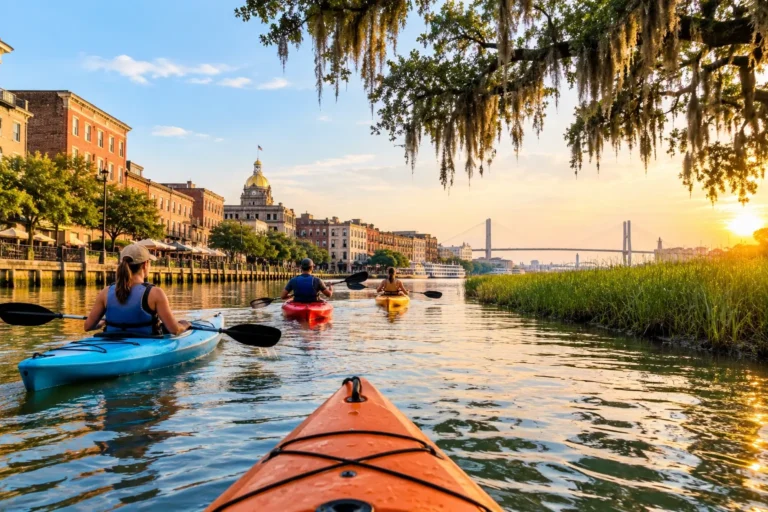
The lower Savannah River changes as freshwater moves toward the Atlantic. Tides influence the river near Savannah, creating a freshwater tidal environment.
The Savannah River estuary includes tidal freshwater marshes. These wetlands provide habitat for many plant and animal species. The Savannah National Wildlife Refuge protects a large area of this ecosystem.
The river also supports a wider coastal ecosystem. Marshes, wetlands, tidal channels, and nearby waterways connect the river with coastal Georgia.
This ecology matters to Savannah beyond tourism. The river supports wildlife habitat, water resources, transportation, and the city’s working waterfront.
Nature lovers can add a visit to the Savannah wildlife refuge to their itinerary for opportunities to enjoy local wildlife and natural habitats.
Savannah’s Famous Squares & City Planning Facts
Savannah’s public squares are one of the clearest signs of its original city plan. James Oglethorpe organized the town around wards, streets, lots, and central squares. The plan began with four wards in 1733 and expanded as Savannah grew. Much of that pattern remains visible in the Historic District today.
How Savannah’s Original Square System Worked
Savannah’s original plan used a repeating system called a ward. Each ward had a central public square surrounded by streets and building lots.
The basic pattern worked like this:
Ward → Public Square → Trust Lots → Residential Lots → Streets
Each ward contained four groups called tythings. Each tything included ten residential lots. Larger trust lots stood near the square and were reserved for public buildings and other important uses.
The square gave residents a shared public space. It also helped organize movement through the growing settlement.
As Savannah expanded, planners repeated this basic pattern. New wards extended the original system while keeping its main design features.
How Many Squares Does Savannah Have?
How many historic squares are in Savannah?
Savannah originally had 24 public squares. 22 of those original squares remain, according to the National Park Service.
Visit Savannah currently states that 23 of the original 24 squares remain. This difference comes from how current tourism materials count the surviving spaces.
For historical accuracy, the National Park Service’s figure of 22 surviving original squares is the safer figure for this facts article. If you discuss the current visitor experience, explain the counting difference rather than presenting conflicting numbers as fact.
The squares remain important public spaces in downtown Savannah. Many contain monuments, fountains, mature trees, pathways, and historic buildings.
Johnson Square
Johnson Square is the oldest square in Savannah. It was established as part of the city’s first ward in 1733. The square honors Robert Johnson, who served as colonial governor of South Carolina.
Its central location helped make it an important part of Savannah’s early city plan. The square also contains the monument to General Nathanael Greene, a major American Revolutionary War figure.
Johnson Square remains a useful starting point for understanding how Savannah’s original wards worked.
Chippewa Square
Chippewa Square was laid out as part of Savannah’s expanding ward system. The square takes its name from the Battle of Chippewa during the War of 1812.
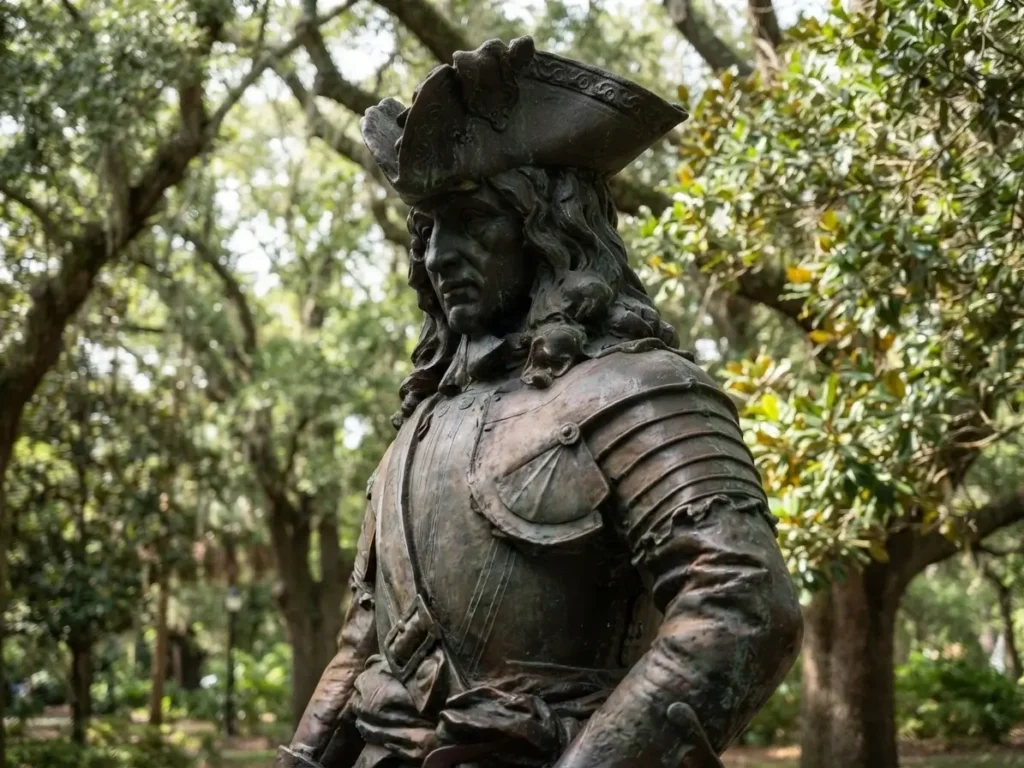
A statue of James Oglethorpe stands in the square. The location also became famous through popular culture.
The opening scenes of Forrest Gump were filmed in Savannah. Chippewa Square became closely associated with the movie after its release.
The famous bench from the film was a movie prop. It was not a permanent feature of the square.
Madison Square
Madison Square sits within Savannah’s Historic District. It was named for President James Madison.
The square contains the Sergeant William Jasper Monument. Jasper was a South Carolina soldier who died during the Siege of Savannah in 1779.
Madison Square also sits near several important historic buildings. Its location makes it useful for seeing how Savannah’s squares connect with streets, churches, homes, and public buildings.
Monterey Square
Monterey Square was created in 1847. It honors the American victory at the Battle of Monterrey during the Mexican American War.
The square is known for its central monument to Casimir Pulaski. The Polish military officer fought alongside American forces during the Revolutionary War.
Monterey Square also has strong architectural connections. Historic homes surround the square, including the Mercer Williams House.
Its location makes the square a good example of how Savannah’s public spaces work together with historic architecture.
Lafayette Square
Lafayette Square was created in 1879 and honors the Marquis de Lafayette. The French military officer supported the American cause during the Revolutionary War.
The square sits near the Cathedral Basilica of St. John the Baptist. Historic homes and buildings also surround the park.
Its central fountain adds another recognizable feature to the Historic District.
Forsyth Park
Forsyth Park is different from Savannah’s smaller ward squares. It is a large urban park at the southern edge of the Historic District.
The park covers about 30 acres. Its most recognizable feature is the Forsyth Park Fountain, installed in 1858.
Forsyth Park also shows how Savannah’s public green spaces expanded beyond the original ward system.
Visitors can walk beneath live oaks, see historic monuments, and reach several important parts of downtown from the park.
Why Savannah’s Squares Still Matter
Savannah’s squares are not simply decorative parks. They are surviving pieces of an eighteenth century city plan.
The National Park Service describes Savannah’s plan as one of the few surviving colonial city plans in the United States. The relationship between squares, streets, lots, and buildings remains visible across the Historic District.
That makes the squares useful for understanding Savannah’s history. Instead of viewing each square as a separate attraction, visitors can see them as connected parts of one larger urban design.
For more travel inspiration, browse these Savannah travel blogs covering attractions, activities, and experiences around the area.
Savannah Architecture Facts
Savannah is known for its historic buildings, but the architecture is not from one period. The Historic District contains buildings from the late eighteenth century through the twentieth century. More than 1,100 residential and public buildings stand within the historic plan.
The city also contains several major American architectural styles. Federal, Greek Revival, Gothic Revival, Italianate, and Victorian buildings appear throughout the historic area.
Savannah’s architecture also reflects its economic history. Wealth from trade, cotton, shipping, and other businesses helped finance many large homes and commercial buildings. Enslaved and free workers also built and maintained many properties.
Why Savannah Has So Many Historic Buildings
Savannah’s original city plan helped protect its architectural character. Streets, squares, and building lots followed a planned pattern established in 1733. Much of that framework remains visible today.
The city’s buildings changed as Savannah grew. Early homes used Federal and related classical designs. Greek Revival became common during the nineteenth century. Italianate and Gothic Revival styles followed as tastes changed.
Savannah also avoided losing all of its historic buildings to modern development. That outcome was not automatic. Preservation groups and local residents fought several major demolition efforts during the twentieth century.
Federal Architecture
Federal architecture became popular in the United States between the 1780s and about the 1840s. The style favors symmetry, balanced proportions, and relatively restrained decoration.
Savannah has several important examples. The Davenport House, built in 1821, is considered the district’s best example of a freestanding Federal mansion.
The Federal style is easy to spot when compared with later Savannah homes. Look for balanced windows, simple classical details, and a strong sense of symmetry.
Greek Revival Architecture
Greek Revival became especially popular in Savannah during the nineteenth century. The style drew inspiration from ancient Greek temples.
Common features include columns, triangular pediments, broad cornices, and symmetrical facades.
The Owens-Thomas House is an important Savannah example. William Jay designed the house, which was built between 1816 and 1819. The Georgia Historical Society identifies its period as English Regency and its style as Greek Revival.
The building also has an important connection to Savannah’s history of slavery. Enslaved workers helped construct the house and its associated buildings. The property includes preserved slave quarters.
Gothic Revival Architecture
Gothic Revival brought a different look to Savannah’s streets. The style used pointed arches, decorative tracery, steep rooflines, and other medieval inspired details.
Savannah’s Gothic Revival buildings often appeared alongside Italianate and Greek Revival architecture. This mix gives many streets their varied appearance.
Architect John Norris helped introduce more picturesque Gothic Revival and Italianate designs to Savannah. His work included the Green Meldrim House, which the National Park Service identifies as a distinctive Gothic Revival residence.
Italianate Architecture
Italianate architecture became popular in Savannah during the middle of the nineteenth century. The style often features low pitched roofs, wide overhanging eaves, decorative brackets, and tall windows.
Savannah has several important Italianate homes. The Mercer-Williams House is one of the best known examples. Architect John Norris designed the house in the 1860s.
The Andrew Low House and several other Savannah mansions also show Italianate influences. Some buildings combine Italianate details with elements from other styles.
This architectural mix is important. Historic buildings do not always fit neatly into one style.
Victorian Architecture
Victorian architecture appears in Savannah’s Historic District and surrounding neighborhoods. The term covers several styles used during the later nineteenth century.
Savannah’s Victorian era buildings include decorative details, varied rooflines, colorful materials, and more complex facades. The city’s Victorian District became a separate historic district through preservation work during the twentieth century.
Late Victorian architecture also changed Savannah’s skyline and streetscape. New buildings used styles such as Romanesque Revival, Renaissance Revival, and other late nineteenth century designs.
Savannah’s Historic Preservation Movement
Savannah’s preservation movement became especially important during the 1950s. Many historic buildings had already been demolished for parking lots and new development.
The Davenport House became a turning point. In 1955, local women organized to save the 1821 house from demolition. Their efforts helped lead to the creation of the Historic Savannah Foundation.
The preservation movement later helped secure stronger protections. Savannah received authority for historic zoning in 1968. A Historic Review Board followed in 1973.
The Savannah National Historic Landmark District was designated in 1966. Its significance includes both the historic buildings and the surviving city plan.
Historic Homes and Mansions
Savannah’s historic homes show how architectural styles changed over time. They also reveal how wealth, commerce, slavery, and social status shaped the city.
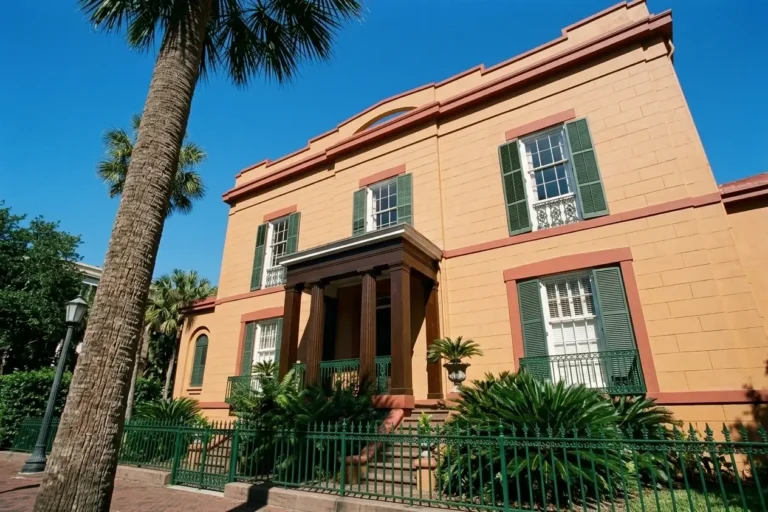
The Mercer-Williams House is associated with John Norris and Savannah’s Italianate architecture. Its location on Monterey Square makes it one of the city’s best known historic residences.
The Owens-Thomas House represents an earlier period of Savannah architecture. William Jay designed the house in the English Regency style. Its surviving slave quarters provide important evidence about the people who lived and worked there.
The Davenport House is an important Federal style example. Its rescue from demolition also became a major event in Savannah’s preservation history.
The Juliette Gordon Low Birthplace adds another layer to Savannah’s architectural history. Built in 1818 and later altered, the house includes Italianate features associated with architect John Norris. Juliette Gordon Low was born there in 1860 and later founded the Girl Scouts of the USA.
These homes are more than attractive old buildings. Each one connects architecture with a different part of Savannah’s history. Together, they help explain why the city’s Historic District remains such an important preservation area.
Travelers planning a visit can review these tips on whether Savannah is a safe city.and discover interesting Savannah facts before exploring the city.
Fun Facts About Savannah
Savannah has plenty of facts that go beyond its founding date and historic squares. The city connects to Girl Scout history, Irish traditions, movies, literature, ghost stories, and local drinking rules.
These fun facts also show why Savannah has such a distinct cultural identity.
Spanish Moss Isn’t Actually Moss
Spanish moss is not a true moss. It is an air plant called Tillandsia usneoides. It belongs to the bromeliad family, which includes pineapples.
The plant grows on tree branches and collects moisture from the air. It does not normally take nutrients from the trees where it grows.
Spanish moss is common across the Southeast. It has become strongly linked with Savannah’s live oaks and historic streets.
It also has practical uses. Birds use it for nesting material, while people once used it for stuffing and other materials.
Savannah Has a Famous Girl Scouts Connection
Savannah has a major connection to the history of the Girl Scouts. Juliette Gordon Low brought together the first group of Girl Scouts in Savannah in March 1912.
Low, known as Daisy, was born in Savannah in 1860. Her childhood home is now the Juliette Gordon Low Birthplace.
The first group included 18 girls. They learned outdoor skills, played sports, and took part in community activities.
This gives Savannah a direct connection to one of America’s best known youth organizations.
Savannah Has Strong Irish Heritage
Savannah has a long history of Irish immigration and Irish American culture. The city’s St. Patrick’s Day tradition dates back to the early nineteenth century.
The first documented public invitation for a St. Patrick’s Day celebration in Savannah appeared in 1824. The Hibernian Society organized the event.
Earlier private processions took place in 1813 and 1818. The tradition later grew into Savannah’s large annual St. Patrick’s Day parade.
The city’s Irish heritage is therefore more than a modern festival tradition. It has documented roots going back more than two centuries.
Savannah Appears in Famous Movies
Savannah has been used as a filming location for many movies and television productions. Its historic streets and architecture can stand in for several different time periods and Southern locations.
The City of Savannah lists productions that include Forrest Gump, Midnight in the Garden of Good and Evil, The General’s Daughter, The Gingerbread Man, and The Legend of Bagger Vance.
Savannah’s film history is also tied to real locations. Some scenes were filmed in public squares, historic homes, streets, and other recognizable places.
Forrest Gump Was Filmed in Savannah
Forrest Gump made Chippewa Square one of Savannah’s most recognizable movie locations.
The bus stop scenes were filmed on the north side of the square in 1993. The famous bench was brought in as a filming prop.
The bench was not originally part of Chippewa Square. One of the filming benches was later given to the City of Savannah. It is now housed at the Savannah History Museum.
Chippewa Square still attracts visitors looking for the movie location. The square itself dates to 1815 and contains a statue of James Oglethorpe.
Savannah’s Literary History Is Surprisingly Strong
Savannah has connections to several important writers and works of literature.
Flannery O’Connor was born in Savannah in 1925. She later became one of the most important American fiction writers of the twentieth century.
John Berendt’s Midnight in the Garden of Good and Evil created another major literary connection. The nonfiction book was published in 1994 after Berendt spent years researching Savannah and interviewing local residents.
The book became closely linked with Savannah’s identity. It also brought large numbers of visitors to locations connected with the story.
The 1997 film adaptation was shot partly in Savannah. Several scenes used the city’s historic squares and the Mercer Williams House.
Savannah Has a Long Ghost Story Tradition
Ghost stories are a major part of Savannah’s popular culture. Historic cemeteries, old homes, former hospitals, and wartime sites have all inspired local stories.
Some stories are based on documented events. Others belong to local folklore and have changed through retelling.
That distinction matters. A building being associated with a ghost story does not prove that a haunting occurred.
Savannah’s ghost tradition has also become part of its tourism industry. Ghost walks and evening tours now use historic locations to tell stories about the city’s darker past. Visit Savannah itself highlights ghost tours as part of the city’s visitor experience.
For a facts article, it is better to describe these stories as legends or local traditions unless historical evidence supports the claim.
Savannah Has an Unusual Open Container Tradition
Savannah has a special rule that allows certain alcoholic drinks to be carried outside in approved cups within a defined downtown area.
The rule does not mean that open alcohol containers are legal everywhere in Savannah. The allowance applies within a specific area and under specific conditions.
City materials state that an alcoholic drink may be removed from a licensed establishment in an approved cup. The cup must meet the city’s requirements, and the drink cannot be carried in glass or a can.
A City of Savannah ordinance summary also states that only people age 21 and older may possess the drink. It limits the allowance to one drink per person and sets a 16 ounce maximum.
The exact boundaries and event rules matter. Savannah can also create special rules during major events. For example, the city’s 2026 St. Patrick’s Day rules changed the boundaries of the designated To Go Cup Zone.
So the useful Savannah fact is simple: some downtown areas allow approved drinks to go, but the permission has limits.
Check the current City of Savannah rules before publishing or relying on this information for a trip.
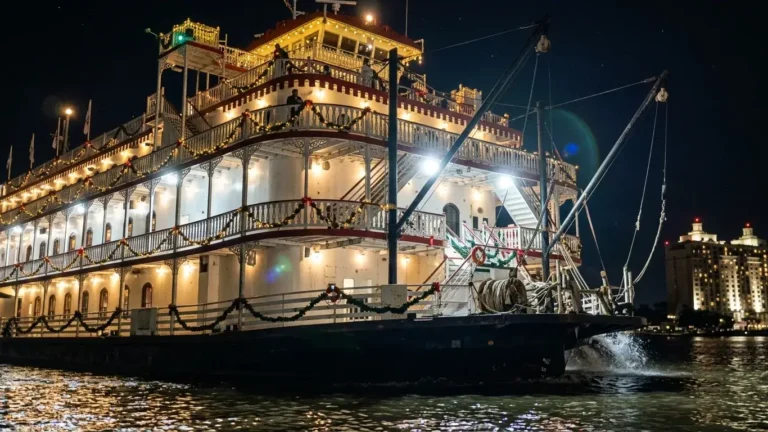
For a memorable evening, consider a Savannah boat dinner along the waterfront.
Famous People Connected to Savannah
Savannah has connections to founders, writers, musicians, inventors, military leaders, and social reformers. Some were born in the city. Others spent important parts of their lives nearby.
These people help explain different parts of Savannah’s history. Their connections also reach into Georgia’s founding, literature, music, war, and American culture.
James Oglethorpe
James Edward Oglethorpe founded Savannah in 1733. He led the first group of Georgia colonists to Yamacraw Bluff beside the Savannah River.
Oglethorpe also helped create Savannah’s unusual city plan. He worked with William Bull to lay out wards, streets, lots, and public squares.
His relationship with Tomochichi, leader of the Yamacraw, was also important. The two developed a working relationship during Savannah’s early settlement.
Oglethorpe’s name remains visible across Savannah. Oglethorpe Square and the statue in Chippewa Square are two examples.
Juliette Gordon Low
Juliette Gordon Low was born in Savannah in 1860. She later founded the Girl Scouts of the United States of America.
Low returned to Savannah in early 1912 after becoming interested in the scouting movement in Britain. She formed several Girl Scout troops in Savannah that March.
Her Savannah connection is easy to see today. The Juliette Gordon Low Birthplace stands in the Historic District.
Low also lived on Lafayette Square after her marriage. She spent part of each year in Savannah and remained connected to the city throughout her life.
Flannery O’Connor
Flannery O’Connor was born in Savannah in 1925. She spent her first thirteen years in the city.
Her family lived on Lafayette Square. She attended local Catholic schools and worshiped at the Cathedral Basilica of St. John the Baptist.
O’Connor later became one of the major American short story writers of the twentieth century. Her best known works include A Good Man Is Hard to Find and Wise Blood.
Her Savannah childhood influenced the setting and religious culture that appear throughout her writing.
Today, visitors can learn about her early life through sites connected with her Savannah years.
Johnny Mercer
Johnny Mercer was born in Savannah in 1909. His family had lived in the city for several generations.
Mercer became one of America’s most successful songwriters. He wrote more than 1,000 songs during his career.
His songs included “Moon River” and “Days of Wine and Roses.” Four of his songs won Academy Awards for Best Song.
Mercer’s Savannah childhood shaped his musical identity. He heard Southern speech, Black musical traditions, church music, jazz, and popular songs while growing up in the city.
Mercer also maintained a home near Savannah later in life. He is buried in Bonaventure Cemetery.
Eli Whitney
Eli Whitney has a surprising Savannah connection. He did not grow up in Georgia and spent only a short period in the state.
In 1793, Whitney stayed at Mulberry Grove, a plantation near Savannah owned by Catharine Greene. He worked as a tutor to the Greene children. During his stay, he developed the cotton gin. (
The cotton gin made it much faster to remove seeds from short staple cotton. The invention helped make cotton more profitable and encouraged its expansion across the South.
That connection also has a darker historical consequence. Cotton expansion increased dependence on enslaved labor across the South.
So Whitney’s Savannah connection belongs in a facts article about both invention and slavery. The cotton gin changed the region’s economy in lasting ways.
William Tecumseh Sherman
William Tecumseh Sherman is closely connected with Savannah’s Civil War history.
Sherman led the Union army during the March to the Sea. His campaign began in Atlanta in November 1864 and ended at Savannah in December.
Union forces reached Savannah on December 21, 1864. Confederate General William J. Hardee had already withdrawn from the city. This prevented a major battle inside Savannah.
On December 22, Sherman sent President Abraham Lincoln his famous telegram. He presented Savannah, along with 150 heavy guns and about 25,000 bales of cotton, as a “Christmas gift.”
Sherman later used the Green-Meldrim House as his headquarters in Savannah.
His connection to the city is therefore tied to one of the most important campaigns of the American Civil War.
Other Notable Savannah Connections
Savannah’s history includes many other people whose stories add depth to the city.
Tomochichi was the Yamacraw leader who developed a relationship with Oglethorpe during the founding of Savannah. His role is central to understanding the city’s earliest colonial years.
Mary Musgrove served as an interpreter and intermediary between English colonists and Native peoples. Her work helped communication between Oglethorpe’s group and the region’s Native communities.
William Jasper and Casimir Pulaski became associated with Savannah through the failed American and French assault during the Siege of Savannah in 1779. Both died during the attack.
Ralph Mark Gilbert became a major civil rights leader in Savannah. He led the local NAACP during the 1940s and 1950s and helped organize a major voter registration campaign.
These connections show that Savannah’s famous people are not limited to celebrities. They include founders, Native leaders, artists, military figures, inventors, and civil rights leaders who shaped different periods of the city’s history.
History enthusiasts can also experience the city’s Southern Gothic atmosphere through Bonaventure Cemetery tours
Savannah Film, Literature & Pop Culture Facts
Savannah has become closely linked with American movies and literature. Its historic squares, old homes, and distinctive streets have attracted filmmakers and writers for decades.
Some connections are especially strong. Chippewa Square is tied to Forrest Gump. Monterey Square is tied to Midnight in the Garden of Good and Evil. Flannery O’Connor adds another major literary connection.
Forrest Gump and Chippewa Square
Chippewa Square became internationally recognizable after appearing in Forrest Gump. The 1994 film starred Tom Hanks as the title character.
The movie’s famous bus stop scenes were filmed in Savannah. A bench was placed on the square for filming. The bench was later moved to the Savannah History Museum.
The actual Chippewa Square remains in its original location. The filming bench is not permanently located there.
This creates one of Savannah’s clearest pop culture connections:
Savannah → Chippewa Square → Forrest Gump → Tom Hanks
The square itself has a much older history. It was laid out in 1815 and named after the Battle of Chippewa during the War of 1812.
Midnight in the Garden of Good and Evil
Midnight in the Garden of Good and Evil is one of the works most closely associated with modern Savannah.
The nonfiction book was written by John Berendt and published in 1994. Berendt had moved to Savannah in 1985 and spent years interviewing residents and researching the city.
The book centers on the 1981 killing of Danny Hansford by Savannah antiques dealer Jim Williams. Williams faced four murder trials before his final acquittal.
The story also introduced readers to many Savannah personalities. These included Emma Kelly, Joe Odom, Minerva, Sonny Seiler, and The Lady Chablis.
The book became a major part of Savannah’s tourism history. It brought large numbers of visitors interested in the people and places described in the story.
John Berendt and Savannah
John Berendt was born in New York, not Savannah. His connection to the city came later in life.
He first moved to Savannah in 1985 while researching his book. He lived in the city on and off for about eight years. During that time, he interviewed residents and studied local stories.
Berendt’s approach matters because he wrote about real people and real places. The book is classified as nonfiction, but it uses a narrative style that reads like a novel.
The book’s success changed how many outsiders viewed Savannah. It also created a strong tourism connection between the city and its literary history.
The resulting entity chain is:
Savannah → John Berendt → Midnight in the Garden of Good and Evil → Jim Williams
Flannery O’Connor
Flannery O’Connor was born in Savannah on March 25, 1925. She began her education in the city’s Catholic schools. Her family moved to Milledgeville when she was thirteen.
O’Connor later became one of America’s major twentieth century fiction writers. Her works include Wise Blood and A Good Man Is Hard to Find.
Her Savannah connection is important even though she spent most of her adult life in Milledgeville. Her early years in Savannah formed part of her Georgia background and literary identity.
Visitors can still find places connected with her childhood in the Historic District.
O’Connor gives Savannah another literary connection that differs from Berendt’s work. Her connection comes from her birth and childhood, while Berendt’s came from years spent researching and living in the city.
Savannah’s Film Locations
Savannah’s historic architecture has made the city useful for film production. Historic squares, houses, churches, streets, and waterfront locations can provide settings for different periods.
Forrest Gump is one of the best known examples. Midnight in the Garden of Good and Evil was another major Savannah production. The 1997 film adaptation was directed by Clint Eastwood and filmed extensively in the city. (
Other productions connected with Savannah include Glory, The General’s Daughter, The Gingerbread Man, and The Legend of Bagger Vance. Savannah’s film history also forms part of Georgia’s larger film industry.
One important detail often gets lost in movie tourism. A film can be strongly associated with Savannah without every scene being filmed there.
Forrest Gump, for example, was filmed in several locations outside Georgia. Savannah’s Chippewa Square became one of its most memorable locations even though the entire movie was not filmed in the city.
That distinction helps separate actual filming locations from places that became famous through a movie’s story.
Visitors can plan their waterfront transportation by checking the Savannah Belles Ferry schedule before exploring the city.
Savannah Food & Drink Facts
Savannah’s food culture reflects its coastal location, Southern history, and connections to the Lowcountry. Seafood, rice, grits, sweets, and regional cooking all have deep roots here.
Food also connects Savannah to larger stories about trade, slavery, immigration, and Prohibition.
Savannah and Lowcountry Cuisine
Savannah is part of Georgia’s Lowcountry food region. The area’s cooking reflects its coastal geography and Southern agricultural history.
Rice became an important crop in the coastal Georgia economy during the colonial period. Enslaved Africans brought important agricultural knowledge to rice production. Their skills shaped the foodways of the Lowcountry.
Lowcountry cooking often combines rice, seafood, vegetables, and simple seasonings. Local dishes developed around ingredients that were available along the coast.
Savannah’s food traditions also reflect African, European, and Caribbean influences. That mix is part of what makes Lowcountry cuisine distinct.
Shrimp and Grits
Shrimp and grits is one of Savannah’s best known regional dishes. It combines coastal shrimp with ground corn grits.
The dish has roots in the broader Southern and Lowcountry food tradition. Shrimp were readily available along the Georgia coast, while corn was an important Southern crop.
The modern restaurant version can look quite different from older home cooking. Chefs may add bacon, sausage, cheese, herbs, or other ingredients.
For Savannah travelers, shrimp and grits is more than a menu item. It connects the city’s coastal environment with Southern agricultural traditions.
Savannah’s Praline Tradition
Pralines are another familiar part of Savannah’s food culture. These sweets usually combine sugar, pecans, butter, and milk or cream.
Savannah’s praline tradition reflects the city’s long connection with Southern sweets and pecans. Local candy shops have sold pralines to visitors for generations.
Pecans also have a strong connection with Georgia agriculture. The state remains one of the country’s important pecan producing regions.
For visitors, pralines are often associated with River Street and the Historic District. They are commonly sold as gifts because they travel well.
Savannah’s Seafood Culture
Savannah’s location near the Atlantic gives seafood an important place in local food culture.
Shrimp are especially important along the Georgia coast. Blue crab, oysters, fish, and other coastal species also appear in regional cooking.
The Savannah River and nearby tidal marshes connect the city with a much larger coastal ecosystem. Those waterways helped support fishing and seafood commerce long before modern tourism.
Seafood also connects Savannah’s food history with its port. The city’s waterfront linked coastal Georgia with markets farther inland and overseas.
Today, seafood remains common on Savannah restaurant menus. Local cooking often combines seafood with rice, grits, vegetables, and other Southern ingredients.
Savannah’s Open Container Rules
Savannah is known for allowing alcoholic drinks to be carried outside in approved cups within designated areas. This rule is more limited than the phrase “open container city” suggests.
The city’s To Go Cup Zone has defined boundaries. Alcohol must meet the city’s container and serving requirements. Special events can also change the rules or expand designated areas.
Savannah amended its To Go Cup Zone boundaries in 2024. The city also used expanded boundaries for the 2026 St. Patrick’s Day event.
This makes the rule worth checking before a trip. The legal boundaries and event restrictions can change.
The important Savannah fact is simple. Some downtown areas permit approved drinks to go, but the permission has limits.
Savannah During Prohibition
Savannah had a distinctive relationship with Prohibition. The national Prohibition era began in 1920 after the 18th Amendment took effect.
Savannah’s position as a coastal port affected the local story. The city’s river, waterfront, and access to coastal waterways made liquor smuggling easier to conceal.
Rum runners and bootleggers moved alcohol through coastal routes during the era. Speakeasies also operated as hidden drinking establishments.
The American Prohibition Museum in City Market documents this period. Its exhibits cover temperance, the 18th Amendment, bootlegging, moonshine, and speakeasy culture.
The museum also operates Congress Street Up, a Prohibition themed speakeasy connected to the museum experience.
Savannah’s Prohibition history also shows how geography shaped the city’s economy. The same waterways that supported legal trade could also support illegal liquor traffic.
The connection can be summarized simply:
Savannah River → port → coastal access → rum running → bootlegging → speakeasies
Prohibition ended nationally in 1933 with the repeal of the 18th Amendment. Its legacy remains visible in Savannah through museums, historical interpretation, and the city’s modern drinking culture.
Choosing the best time to visit Savannah can help travelers make the most of the weather, seasonal events, and outdoor activities.
Savannah Nature & Geography Facts
Savannah sits in Georgia’s coastal plain near the Atlantic Ocean. The Savannah River borders the city and connects it with the coast.
Its landscape includes tidal rivers, salt marshes, barrier islands, maritime forests, and sandy beaches. These natural features shape Savannah’s climate, wildlife, history, and appearance.
Savannah’s Coastal Georgia Location
Savannah is in Chatham County on Georgia’s southeastern coast. The city sits on the western bank of the Savannah River.
The surrounding coastal plain is relatively flat. Tidal waterways and marshes extend across much of the region.
Savannah is also part of Georgia’s larger coastal ecosystem. The state’s coastline includes barrier islands, tidal creeks, salt marshes, and estuaries.
This location gives Savannah a different landscape from inland Georgia cities. Ocean tides influence waterways many miles inland through connected rivers and creeks.
Savannah River and Atlantic Coast
The Savannah River is one of the city’s defining geographic features. It flows southeast toward the Atlantic and forms much of the Georgia and South Carolina border.
Near the coast, the river divides around islands and channels before reaching the Atlantic. Fort Pulaski National Monument sits near this transition. The monument lies only a few miles from the river’s junction with the ocean.
The river also explains Savannah’s long history as a port. Ships can move between the Atlantic and the city’s waterfront through the river system.
This creates a direct geographic link:
Savannah → Savannah River → coastal waterways → Atlantic Ocean
Spanish Moss and Live Oaks
Live oaks are one of the most recognizable trees in Savannah. Quercus virginiana grows naturally along the southern coast and tolerates sandy soils, heat, humidity, and salt exposure.
Spanish moss often hangs from these trees. Despite its name, Spanish moss is neither Spanish nor a true moss.
It is an air plant called Tillandsia usneoides. It belongs to the bromeliad family and grows on tree branches without rooting into the soil.
Live oaks and Spanish moss are common across the Southeast. They are not unique to Savannah, but they have become strongly linked with the city’s landscape.
Coastal Marshes
Salt marshes are a major part of the Savannah area. Georgia has hundreds of thousands of acres of coastal marshland. These wetlands are shaped by daily tides and salt tolerant vegetation.
The marshes provide habitat for fish, shrimp, crabs, birds, and other wildlife. Many marine species use shallow marsh waters during part of their life cycle.
Marshes also help protect the coast. They can reduce flooding, slow storm impacts, and filter water.
The Savannah area contains both tidal marshes and maritime forests. Together, these ecosystems create much of the landscape seen outside the downtown core.
Tybee Island
Tybee Island is Savannah’s closest developed beach community. It sits at the mouth of the Savannah River where the river meets the Atlantic Ocean.
Tybee is a barrier island. Georgia’s barrier islands separate the Atlantic from mainland areas and are shaped by waves, tides, currents, and wind.
Tybee also has a long connection with Savannah’s maritime history. James Oglethorpe recognized the island’s strategic location near the river entrance. A lighthouse was built there in 1736 to help guide ships.
The island is therefore more than a nearby beach. Its location helped protect and guide access to Savannah’s port.
Savannah’s Climate
Savannah has a humid subtropical climate. Winters are generally short and mild, while summers are long, hot, and humid.
The nearby coast moderates temperatures compared with many inland locations. Sea breezes can reduce some temperature extremes.
Rain occurs throughout the year. Summer often brings thunderstorms, while tropical systems can affect the coast later in the year.
Savannah’s coastal location also creates hurricane and storm risks. Storm surge can affect barrier islands, tidal marshes, and low lying coastal areas.
Why Savannah Looks So Green
Savannah’s greenery comes from its warm climate, rainfall, and coastal vegetation. Live oaks, palms, magnolias, pines, and other plants thrive in the region.
The city’s historic squares add another layer of green space. Mature trees line many streets and shade public parks.
Outside the urban core, marshes and maritime forests dominate large parts of the coastal landscape. Maritime forests can include live oaks, palmettos, magnolias, hollies, and Spanish moss.
The result is a city surrounded by several connected ecosystems. Historic parks, riverfront wetlands, coastal marshes, barrier islands, and maritime forests all contribute to Savannah’s green appearance.
History enthusiasts can discover when Savannah, GA, was founded and learn about the city’s early history.
Weird, Unusual & Lesser Known Savannah Facts
Savannah has plenty of unusual stories, but not every story has the same level of evidence.
Some facts come from city records and historical research. Others come from local tradition, folklore, or tourism storytelling.
That distinction matters when discussing Savannah’s stranger history. The following examples identify the difference.
Savannah Once Banned Slavery, Rum, and Lawyers
Documented fact: Early Georgia had several unusual restrictions.
The Trustees initially banned slavery in the colony. They also restricted distilled spirits and prohibited paid lawyers from practicing.
These rules did not last.
The ban on slavery was lifted in 1750. The restriction on distilled spirits ended earlier, in 1742. Lawyers were allowed by 1755.
This is one of the stranger facts about early Savannah. The colony’s original rules looked very different from the plantation economy that developed later.
Savannah Has an Archive of Old City Laws
Documented fact: Savannah still preserves historical city code books.
The earliest published Savannah City Code dates to 1854. The city’s archives also hold later code books from 1858, 1871, 1888, 1907, 1918, 1936, 1945, 1958, 1976, and 2003.
These records reveal everyday rules from different periods. They also document discriminatory laws that regulated enslaved people and free people of color.
That makes the old codes useful historical sources. They show how city government worked at different points in Savannah’s history.
Savannah’s Historic Plan Has a Strange Level of Survival
Documented fact: Savannah still preserves much of its original colonial city plan.
James Oglethorpe established the first wards, squares, streets, and lots in 1733. The plan expanded as the city grew. Much of the original structure remains visible today.
That means Savannah’s unusual feature is not just its old buildings. The layout itself is historic.
A modern visitor can still walk through spaces shaped by an eighteenth century planning system.
Savannah Has a Long History of Unusual Public Spaces
Documented fact: Savannah’s public squares were built into the city’s original plan.
The squares were not added centuries later as decorative parks. They formed the center of each ward and helped organize the surrounding streets and lots.
The system also created unusual urban spaces for its time. Homes, public buildings, churches, and businesses developed around shared green spaces.
That design still affects how people experience downtown Savannah today.
Haint Blue Has a Long Southern Tradition
Local tradition: Blue painted ceilings and porch elements are often called “haint blue” in the South.
The tradition is especially associated with the coastal South and Gullah Geechee culture. Some traditional explanations say the blue color helped confuse or repel spirits known as haints.
The historical meaning is more complicated than a simple ghost story. Blue pigments also had practical uses, including limewash and paint mixtures.
The claim that haint blue universally kept spirits away is best treated as folklore, not established scientific fact.
In Savannah, the color remains part of the visual language associated with Southern homes and coastal traditions.
Savannah’s Ghost Stories Mix History and Legend
Legend and tourism story: Savannah has hundreds of ghost stories connected with old buildings, cemeteries, battle sites, and historic neighborhoods.
Some stories begin with real historical events. Others have been passed down through oral tradition or expanded by tour guides.
That does not make the stories meaningless. Folklore is part of Savannah’s cultural history.
It does mean readers should separate a documented death from a claim about a supernatural encounter.
For example, a historic building can have a documented connection to a person who died there. Claims that the person’s ghost remains inside belong to a different category.
Savannah Has a Forgotten Revolutionary War Story
Documented fact: Savannah’s Revolutionary War history includes the Battle of the Rice Boats in 1776.
British warships entered the Savannah River in March 1776 to seize merchant vessels carrying rice. Local Patriots burned several of their own vessels to prevent the British from taking them.
The event receives less attention than the later Siege of Savannah.
It shows how the Savannah River affected military strategy. Control of the river meant control of shipping and supplies.
Savannah’s Liberty Pole Had a Political Role
Documented fact: Savannah’s Liberty Pole became a symbol of Patriot resistance before American independence.
The Liberty Boys erected a Liberty Pole near Tondee’s Tavern in 1775. It became a gathering point for revolutionary activity.
In 1776, Georgia’s Provincial Council President Archibald Bulloch read the Declaration of Independence aloud in Savannah near the Liberty Pole.
The pole itself is gone, but its story remains part of Savannah’s Revolutionary War history.
Savannah Has Forgotten Stories Beneath Its Streets
Documented fact: Savannah’s history includes infrastructure that is easy to overlook.
The city archives preserve research on nineteenth century cisterns, wells, pumps, water mains, municipal wharves, street lighting, and other infrastructure.
These systems supported daily life before modern utilities existed.
Savannah’s historic landscape therefore extends below and behind its famous architecture. Old infrastructure can reveal how residents actually lived in the city.
Some Savannah Stories Come From Tourism
Tourism story: Savannah’s ghost tours, movie tours, and historic walks often repeat stories that have become part of the city’s visitor culture.
A story appearing on a tour does not automatically make it historical fact.
The same applies to claims about haunted buildings, secret tunnels, curses, hidden rooms, and supernatural events.
For this article, the useful approach is simple:
Documented fact: Supported by records, archaeology, or reliable historical research.
Local tradition: A story preserved by residents and passed through generations.
Legend: A popular story without enough evidence to establish it as historical fact.
Tourism story: A story commonly used in tours or visitor marketing.
This distinction helps readers enjoy Savannah’s unusual stories without confusing folklore with documented history.
Savannah’s Strange History Is Part of Its Appeal
Savannah’s unusual facts are not limited to ghosts. The city has strange early laws, surviving colonial planning, forgotten wartime events, old infrastructure, and layers of local folklore.
Some stories can be proven. Others remain traditions.
That mixture is part of what makes Savannah interesting. The key is knowing which kind of story you are hearing.
Families looking for indoor entertainment can add a trampoline park in Savannah, GA to their list of activities.
Savannah Myths vs. Facts
Savannah has no shortage of unusual stories. Some are supported by historical records. Others come from local tradition, folklore, or tourism.
Separating those categories makes Savannah’s history easier to understand. It also prevents popular stories from being presented as proven facts.
Is Savannah Really One of America’s Most Haunted Cities?
Fact: Savannah has a long tradition of ghost stories connected with historic homes, cemeteries, churches, battle sites, and other locations.
Legend: Stories about apparitions, haunted buildings, restless spirits, and supernatural encounters are part of Savannah folklore. Tourism organizations actively promote the city’s reputation as one of America’s most haunted cities. Visit Savannah itself uses the phrase “America’s Most Haunted City” in its visitor material.
What visitors can actually experience: Visitors can take ghost tours, visit historic cemeteries, and hear stories tied to specific buildings and people. The historical location may be documented, but a supernatural claim is a matter of legend or personal belief.
The useful distinction is simple. Savannah’s ghost-story tradition is real. The existence of ghosts is not an established historical fact.
Was Savannah Really Given to Lincoln as a Christmas Present?
Historical record: Savannah came under Union control in December 1864 after General William T. Sherman’s March to the Sea. Confederate General William Hardee withdrew his forces from the city.
Popular story: Savannah was “given” to President Abraham Lincoln as a Christmas present.
What actually happened: Sherman sent Lincoln a telegram on December 22, 1864. He wrote that he presented the city of Savannah as a Christmas gift, along with 150 heavy guns, ammunition, and about 25,000 bales of cotton. The original telegram is preserved in the Abraham Lincoln Papers at the Library of Congress.
So the Christmas gift story is based on a real historical document. It was Sherman’s symbolic description of a military victory, not a literal gift in the modern sense.
Is Spanish Moss Actually Moss?
Fact: No. Spanish moss is not a true moss.
Spanish moss is Tillandsia usneoides, an air plant in the bromeliad family. It grows on tree branches and gets moisture and nutrients from the surrounding air and environment.
The name is misleading in two ways. The plant is not Spanish, and it is not moss.
Spanish moss is common across the southeastern United States. Its association with live oaks has also become one of Savannah’s most recognizable landscape features.
Was the Forrest Gump Bench Really in Chippewa Square?
Fact: The famous bench scene from Forrest Gump was filmed in Savannah’s Chippewa Square.
Myth: The bench seen in the movie is still sitting in the square.
What actually happened: The production brought a bench to Chippewa Square as a movie prop. It was removed after filming. A bench associated with the production is displayed at the Savannah History Museum. Visit Savannah also confirms that the filming used a bench brought into the square.
Chippewa Square itself is real and remains in the Historic District. The movie bench is not an original feature of the square.
That distinction explains why visitors can stand at the famous filming location but cannot sit on the original movie bench.
Are Savannah’s Historic Streets Really Original?
Fact: Much of Savannah’s historic city plan survives from the eighteenth century.
James Oglethorpe established Savannah’s ward and square system in 1733. The original plan used wards, public squares, streets, and residential lots.
Myth: Every historic street and building in downtown Savannah dates directly to 1733.
What actually happened: The city’s planning framework survived, but the buildings changed over time. Many early structures were replaced, rebuilt, or altered as Savannah grew.
The National Park Service describes the original plan as remaining the city’s framework. Architectural styles changed across the eighteenth and nineteenth centuries, while new wards repeated the basic planning system.
This is an important distinction. Savannah’s historic character comes partly from old buildings, but also from the survival of the underlying city plan.
What Is Fact and What Is Legend in Savannah?
Savannah’s unusual reputation comes from several layers of history.
Documented fact: Historical records, government documents, archaeology, and primary sources can support a claim.
Local tradition: A story may have been passed through generations without enough evidence to prove every detail.
Legend: A supernatural or unusual story may be widely known without being historically verified.
Tourism story: A story may be repeated by tours, museums, websites, or visitor businesses because it has become part of Savannah’s tourism culture.
That distinction does not make the legends less interesting. It gives readers a clearer picture of what Savannah’s history actually tells us.
For a facts article, the strongest approach is to enjoy the stories while keeping the evidence separate from the folklore.
Visitors interested in Savannah’s spooky side can explore these haunted houses in Savannah, GA for eerie attractions and chilling experiences during their stay.
Savannah Facts Travelers Should Know
Savannah is easy to explore once you understand how the Historic District, parking system, airport, and nearby coast fit together.
These practical facts can save time, especially on a first visit.
Is Savannah Walkable?
Yes. Savannah’s Historic District is highly walkable.
The downtown area has a compact street layout with historic squares, restaurants, museums, shops, and landmarks close together. The City of Savannah specifically describes downtown as easy to explore on foot.
Visit Savannah describes the Historic District as roughly two square miles. Many major attractions can be reached without a car.
Comfortable walking shoes are useful. Savannah’s sidewalks can also include uneven surfaces, historic paving, steps, and areas with heavy pedestrian traffic.
The free DOT shuttle provides another option when you want to reduce walking. It serves the Historic District and connects several downtown areas.
Do You Need a Car in Savannah?
You usually do not need a car if you are staying in the Historic District.
Many downtown attractions are within walking distance. The airport also notes that visitors staying downtown generally do not need their own transportation unless they plan to visit places outside the central area.
A car becomes more useful for trips to Tybee Island, Fort Pulaski, coastal areas, and attractions outside downtown.
Rideshare services and local transit can also cover some trips without a rental car.
For a short Historic District stay, keeping the car parked can be simpler than moving it between attractions.
How Does Parking Work in Downtown Savannah?
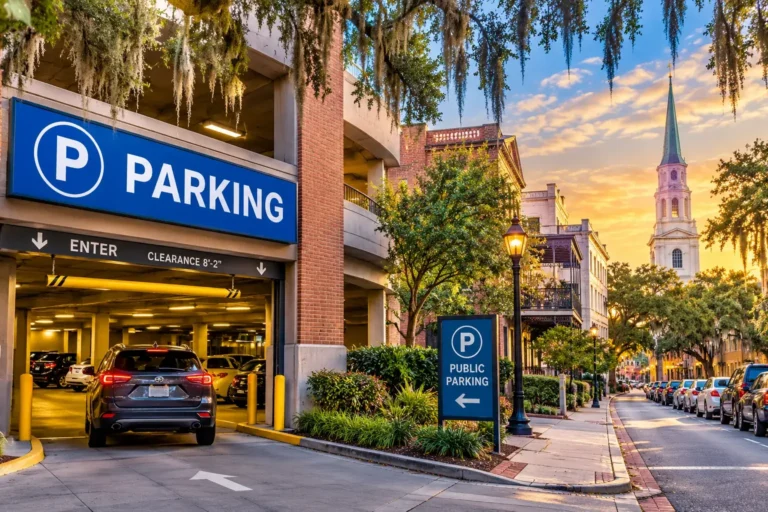
Downtown Savannah has metered street parking, public garages, and surface lots.
The City of Savannah currently lists two meter zones. Zone 1 has a maximum rate of $2.50 per hour, while Zone 2 has a maximum rate of $1.50 per hour. Enforcement varies by location. North of Liberty Street, meters are enforced Monday through Saturday from 8:00 AM to 8:00 PM. South of Liberty Street, enforcement is Monday through Friday from 8:00 AM to 5:00 PM.
Drivers can pay through the ParkSavannah app.
The city also operates several public garages, including Bryan Street, Eastern Wharf, Liberty Street, Robinson, State Street, and Whitaker Street garages.
Parking rules and rates can change. Always check posted signs and the city’s current parking information before leaving your vehicle.
Where Is Savannah’s Historic District?
Savannah’s Historic Landmark District covers much of the city’s central historic area.
It extends from the riverfront toward Forsyth Park and includes historic squares, churches, museums, restaurants, shops, and residential streets. Visit Savannah describes the district through its northern, southern, and MLK Boulevard areas.
The district is the main area most visitors mean when they talk about historic downtown Savannah.
River Street sits along the waterfront below the bluff. Forsyth Park marks the southern end of the central historic area.
How Far Is Savannah Airport From Downtown?
Savannah/Hilton Head International Airport is about 10 miles from Savannah’s Historic District by location. The airport and tourism authorities commonly describe the drive to Historic Savannah as about 20 minutes, although traffic can change the travel time.
The airport is west of downtown near Interstate 95 and Interstate 16.
Taxis, rideshare services, rental cars, and other ground transportation options are available at the airport.
How Far Is Tybee Island From Savannah?
Tybee Island is about 18 miles from Historic Downtown Savannah by road. It is Savannah’s closest major beach community.
The drive usually takes around 25 to 35 minutes, depending on traffic and your starting point.
Tybee is a separate city and manages its own parking system. Visitors should not assume that downtown Savannah parking rules apply on the island.
What Is Savannah Like in Different Seasons?
Spring: Spring brings mild temperatures, flowering plants, and comfortable conditions for walking. It is also a busy visitor season.
Summer: Summers are hot, humid, and often wet. Afternoon thunderstorms are common. Early morning and evening walks can be more comfortable.
Fall: Fall generally brings a gradual drop in heat and humidity. October and November are popular months for outdoor sightseeing.
Winter: Winters are relatively mild compared with much of the United States. December can still have cool mornings and evenings, while daytime temperatures are often comfortable for sightseeing.
Savannah’s coastal position influences its temperatures, but weather can change quickly. Travelers should check the forecast close to their visit.
Can You Walk Around Savannah With an Alcoholic Drink?
Yes, but only under Savannah’s specific open container rules.
Savannah has a designated To Go Cup Zone where eligible alcoholic drinks can be carried outside in approved containers. The rules apply to specific areas and have limits.
The city amended its To Go Cup Zone boundaries in 2024. Special events can also have different boundaries or additional restrictions.
The important point is that Savannah does not have a citywide rule allowing people to walk anywhere with an open alcoholic drink.
Visitors should use an approved container and stay within the designated area. Glass containers and other prohibited containers are not allowed under the applicable rules.
Because alcohol regulations can change, check the current City of Savannah rules before your trip, especially during major events.
What Should Travelers Remember About Savannah?
For most first time visitors, the basic facts are straightforward:
Stay downtown: You can walk to many major attractions.
Skip the rental car: If your trip focuses on the Historic District, a car may be unnecessary.
Use garages: Public garages can be easier than searching for a street space during busy periods.
Plan for Tybee: The beach is close enough for a day trip, but you will need separate transportation and parking planning.
Check alcohol rules: To Go Cup privileges apply only within defined areas and under specific conditions.
These details turn Savannah from a collection of historic facts into a city that is easier to understand and navigate.
Outdoor enthusiasts can enjoy the waterways around the city with these opportunities for kayaking in Savannah, GA
10 Quick Savannah Facts
- Savannah was founded in 1733. James Oglethorpe established the settlement as Georgia’s first city.
- James Oglethorpe planned Savannah. His ward and square system still shapes the Historic District.
- The Savannah River shaped the city. Savannah was founded on its high bluff beside the river.
- Savannah originally had 24 public squares. Twenty two of the original squares still exist today.
- Savannah’s Historic District is nationally recognized. It preserves the city’s historic buildings, streets, and original planning system.
- Savannah has a major international port. The Port of Savannah is located along the Savannah River.
- Spanish moss is not actually moss. It is an air plant in the bromeliad family.
- Juliette Gordon Low founded the Girl Scouts. She started the first Girl Scout groups in Savannah in 1912.
- Forrest Gump was filmed in Savannah. Chippewa Square was used for the movie’s famous bus stop scenes.
- Savannah is known as the Hostess City of the South. The nickname reflects the city’s long association with Southern hospitality.
Frequently Asked Questions About Savannah Facts
Sources & Further Reading
The Savannah facts in this article draw on government archives, historical organizations, national preservation agencies, and established local institutions.
National Park Service
The National Park Service is especially useful for Savannah’s colonial history, city planning, Fort Pulaski, the Civil War, historic preservation, and the original square system.
The NPS confirms that Savannah was established in 1733 under James Oglethorpe. It also documents the city’s original 24 squares and the 22 that survive today.
City of Savannah
The City of Savannah’s Municipal Archives provides primary source material for local history and government records. Its research guides cover African American history, slavery, historic buildings, neighborhoods, the Port of Savannah, railroads, and municipal records.
The city’s digital collections also provide access to historical photographs, documents, maps, and other archival material.
Georgia Historical Society
The Georgia Historical Society is an important source for Georgia and Savannah history. Its collections include historical documents, photographs, markers, and research material covering the colonial period through modern Georgia.
Its resources are particularly useful for topics such as the founding of Savannah, slavery, the Civil War, African American history, historic buildings, and the development of Georgia’s ports.
The Library of Congress also catalogs digitized collections from the Georgia Historical Society.
Visit Savannah
Visit Savannah is the city’s official destination marketing organization. It is useful for current visitor information, landmarks, neighborhoods, attractions, events, and travel planning.
Its history material also provides an accessible overview of Savannah’s founding and early development.
For historical claims, this article gives priority to government and historical sources when those sources are available.
Georgia Archives and Digital Library Resources
Georgia’s archival resources provide primary documents and historical material for researching the state’s past.
These sources are especially useful when researching colonial Georgia, government records, historic people, slavery, the Civil War, Reconstruction, and local communities.
Primary documents are valuable because they allow historical claims to be checked against original records rather than repeated tourism stories.
Library of Congress
The Library of Congress provides access to photographs, maps, manuscripts, newspapers, architectural documentation, and other historical collections.
Its Historic American Buildings Survey and related collections are particularly useful for Savannah’s historic architecture and preservation history.
The Library of Congress also preserves digitized historical material from institutions such as the Georgia Historical Society.
National Archives
The National Archives is an important source for federal records connected with Savannah and Georgia.
It can help verify military records, Civil War documents, government records, census material, and other primary sources.
For major historical claims, primary federal records can provide useful confirmation alongside local historical sources.
Smithsonian Institution
Smithsonian collections provide additional research material on American history, culture, science, architecture, and material culture.
For Savannah topics, Smithsonian resources can be useful when a fact connects local history with broader American history.
Georgia Ports Authority
The Georgia Ports Authority is a useful source for Savannah’s maritime and port history.
Its historical timeline documents Savannah’s development as a port, including the city’s early connection with cotton shipping and the growth of modern port facilities.
The Georgia Historical Society also provides historical material on Georgia’s ports and Savannah’s role in coastal trade.
Relevant Savannah Museums and Historic Sites
Local museums and historic sites can provide specialized information about individual subjects.
Useful institutions include the Georgia State Railroad Museum, Ships of the Sea Maritime Museum, Telfair Museums, Juliette Gordon Low Birthplace, Fort Pulaski National Monument, American Prohibition Museum, and Savannah History Museum.
These sources are most useful when researching a specific landmark, person, historical period, or cultural topic.
How Sources Are Used in This Article
Where possible, important historical claims are cited directly beside the relevant statement.
Government and historical institutions are preferred for dates, events, city planning, historic designations, and documented records.
Tourism organizations are useful for current visitor information and local context.
Legends and folklore are identified separately when historical evidence does not establish them as fact.
This approach helps distinguish documented Savannah history from local tradition, tourism stories, and popular myths.
John Robert
Travel Writer & Founder @ Thing Savannah
John Robert is a travel writer and explorer specializing in authentic regional guides, detailed itineraries, and practical travel logistics.