
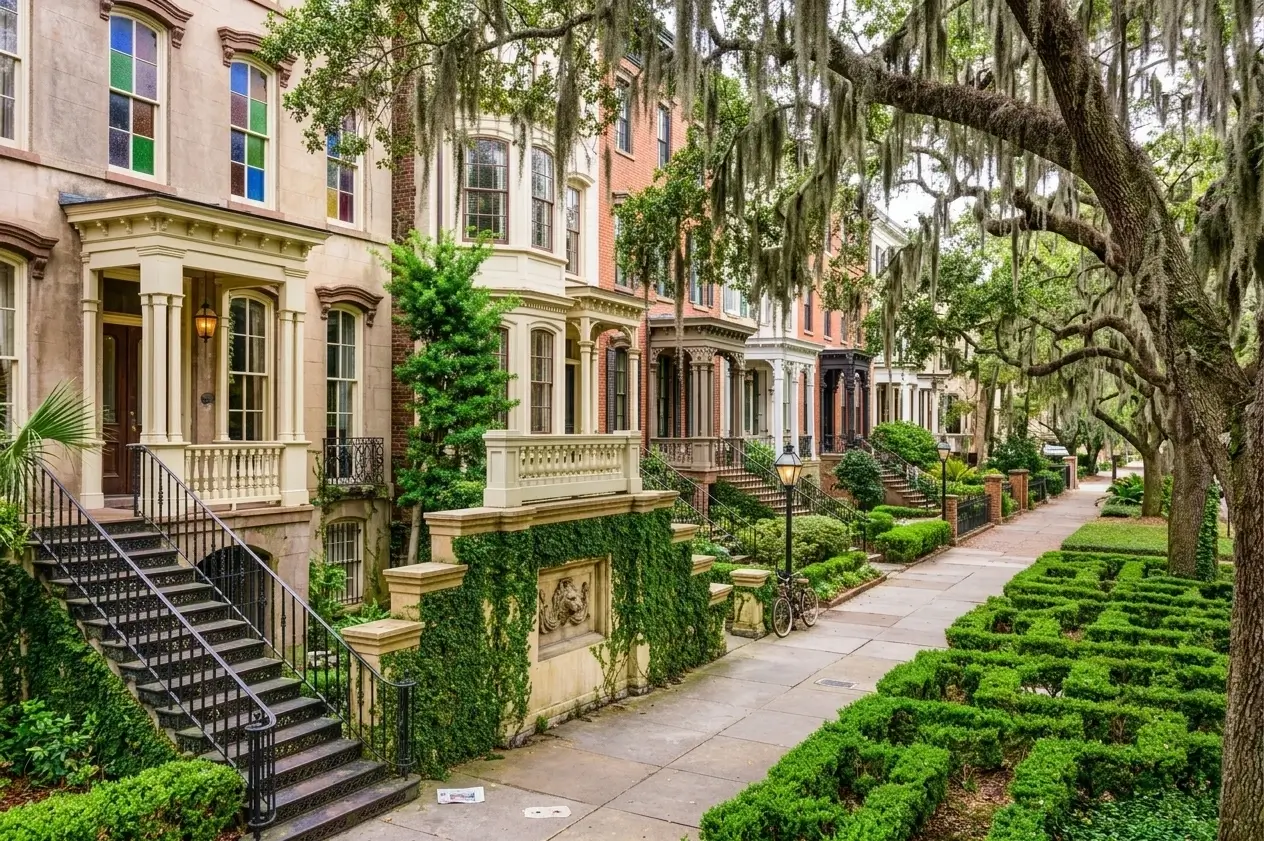
Savannah Things to See and Do: 25+ Top Sights & Experiences
Savannah has plenty to see, from historic squares and museums to River Street and coastal attractions. The Historic District is the best place to start for most first time visitors. You can explore historic streets, landmarks, parks, churches, and local restaurants within a walkable area. Forsyth Park, City Market, and Savannah’s riverfront are also popular stops. You can add food tours, historic homes, museums, ghost tours, or outdoor activities based on your interests. Your trip length also matters. One day calls for a focused sightseeing route, while two or three days allow more time for museums, food, and nearby attractions. This guide covers the best things to see and do in Savannah GA, including major sights, local experiences, free attractions, and practical ways to plan your visit.
Best Things to See and Do in Savannah
Savannah has more than historic buildings to explore. You can walk through old squares, visit museums, explore the riverfront, and try local food. The Historic District holds many major sights within a walkable area. It includes 23 park squares, museums, monuments, historic homes, shops, and restaurants.
Use this list as a starting point for your trip. Your available time and interests can help you decide which stops to add.
1. Explore Savannah’s Historic District
The Historic District is the best starting point for many first time visitors. It covers a large area filled with historic streets and public squares. You can see historic homes, churches, monuments, museums, shops, and restaurants while walking between attractions.
The district also connects several major areas of downtown. River Street sits along its northern edge. City Market lies nearby, while Forsyth Park anchors the southern end of the main sightseeing area.
Allow at least half a day if you want to explore at a relaxed pace. Wear comfortable shoes because you will likely cover several blocks.
2. Walk Through Forsyth Park
Forsyth Park gives you a large green space near the southern end of the Historic District. The park covers more than 30 acres and includes walking paths, sports areas, gardens, and open lawns.
The Forsyth Park Fountain is its most recognizable feature. The fountain dates to 1858 and remains one of Savannah’s most photographed spots.
You can visit the park without spending hours there. A short walk can take 30 minutes to an hour. Add more time if you want a picnic or a longer stroll.
3. Visit Savannah’s Historic Squares
Savannah’s squares give the city much of its distinct layout. The Historic District includes 23 park squares, each with its own history and nearby landmarks.
You can visit several squares during one walking route. Chippewa Square, Johnson Square, Reynolds Square, and Telfair Square are useful stops for first time visitors.
Don’t treat the squares as separate destinations on a strict schedule. Walk through them as you move between other attractions. This approach saves time and gives you a better feel for downtown Savannah.
4. Walk Along River Street
River Street follows the Savannah River along the northern edge of downtown. Its old waterfront buildings now hold shops, restaurants, candy stores, and other businesses.
The riverfront also gives you views of passing ships and the water. You can walk along the promenade, stop for food, or continue toward Plant Riverside District.
River Street has historic cobblestones, so choose supportive shoes. The area also connects easily with nearby parts of the Historic District.
5. Explore City Market
City Market occupies four blocks in the heart of Savannah’s Historic District. Restaurants, shops, galleries, and entertainment fill the area.
It works well as a stop between the Historic District and River Street. You can grab a meal, browse local art, or take a break during a walking route.
City Market also sits close to Ellis Square. That makes it easy to combine both areas during the same outing.
6. Visit Savannah’s Historic Homes
Savannah has many historic homes across the downtown area. Some operate as museums and offer a closer look at the city’s past.
The Juliette Gordon Low Birthplace is one notable example. It sits along Bull Street within the Historic District. Visit Savannah includes the home among the landmarks along its downtown walking route.
Other historic homes focus on different periods and families. Check current admission details before choosing which interiors to visit.
7. Explore Savannah Museums
Savannah’s museums cover local history, art, transportation, and culture. They also give you indoor options when the weather gets hot or rainy.
Popular choices include Telfair Museums, the Savannah History Museum, and the Georgia State Railroad Museum.
Families may also want to consider the Savannah Children’s Museum. Art lovers can add the SCAD Museum of Art to their plans.
Choose museums based on your interests rather than trying to visit them all. Most travelers can fit one or two into a short trip.
8. Visit Bonaventure Cemetery
Bonaventure Cemetery sits east of Savannah’s main downtown area. The cemetery is known for its historic graves, sculptures, large oak trees, and landscaped grounds.
It offers a different view of Savannah’s history. The site also became widely known through literature and popular culture.
Plan extra travel time because it does not sit within the main walking route downtown. A visit works well for travelers who want historic sites beyond the central district.
9. Take a Savannah Food Tour
A food tour combines local dishes with stories about Savannah’s food culture. Tour routes can focus on different parts of downtown and may include several restaurant stops.
You may encounter Southern favorites, seafood, desserts, and other local specialties. The exact stops depend on the operator and tour schedule.
Food tours also work well for visitors who want to learn about Savannah while eating. Check the current menu, walking distance, and dietary options before booking.
10. Explore Savannah’s Waterfront
Savannah’s waterfront centers on the Savannah River and the River Street area. You can watch river traffic, explore shops, dine, or continue along the riverfront.
The waterfront also includes areas such as Plant Riverside District. River Street and the nearby waterfront form one of the city’s main sightseeing zones.
Consider visiting in the late afternoon if you want to combine sightseeing with dinner. Allow extra time if you plan to browse shops or stop at several restaurants.
11. Take a Walking Tour
Walking tours can help you understand Savannah’s streets, squares, and historic landmarks. They also let you cover several sights without moving your car.
Visit Savannah’s self guided walking route connects places such as River Street, City Market, Chippewa Square, and Forsyth Park.
You can also choose guided tours that focus on history, architecture, food, or local stories. Check the route before booking because walking distances can vary.
12. Visit Old Fort Jackson
Old Fort Jackson sits along the Savannah River east of downtown. The historic fort gives visitors another way to explore Savannah’s military history.
It can work well for travelers who want an attraction outside the central walking route. Pair it with other nearby activities if you want to reduce driving.
Check the current schedule before visiting. Programs and admission details can change throughout the year.
13. Explore the Victorian District
The Victorian District sits south of Savannah’s Historic District. It includes historic homes, residential streets, local businesses, and Forsyth Park.
Visit Savannah describes the area as Savannah’s original suburb. The district covers roughly 50 blocks and features Victorian architecture from the 1800s.
Start near Forsyth Park and walk along streets such as Bull Street or Whitaker Street. This area suits travelers who enjoy architecture and quieter streets.
14. Take a Ghost or Evening Tour
Savannah’s history has created a large market for evening and ghost tours. These tours often combine nighttime walks with stories about historic buildings and local events.
The Historic District is a common setting for these experiences. Visit Savannah also lists ghost tours among activities connected with the district.
Choose a tour based on its route, length, and subject. Some focus more on history, while others lean into local ghost stories.
15. Visit Tybee Island
Tybee Island gives you a coastal option outside downtown Savannah. The beach community sits near the mouth of the Savannah River and has a long connection with the city’s history.
You can spend time on the Savannah beach, explore the lighthouse area, or add nearby Fort Pulaski to your trip.
Tybee Island works best when you have extra time. It is not part of the downtown walking route, so plan transportation and travel time.
If you also want to visit Fort Pulaski, the National Park Service places the monument on Cockspur Island near Savannah. The site preserves a Civil War era fort and offers hiking, biking, birdwatching, and other activities.
Planning tip: You do not need to visit all 15 places on one trip. First time visitors with limited time can focus on the Historic District, Forsyth Park, historic squares, City Market, and River Street. Add museums, food tours, Bonaventure Cemetery, or Tybee Island based on your interests and available time.
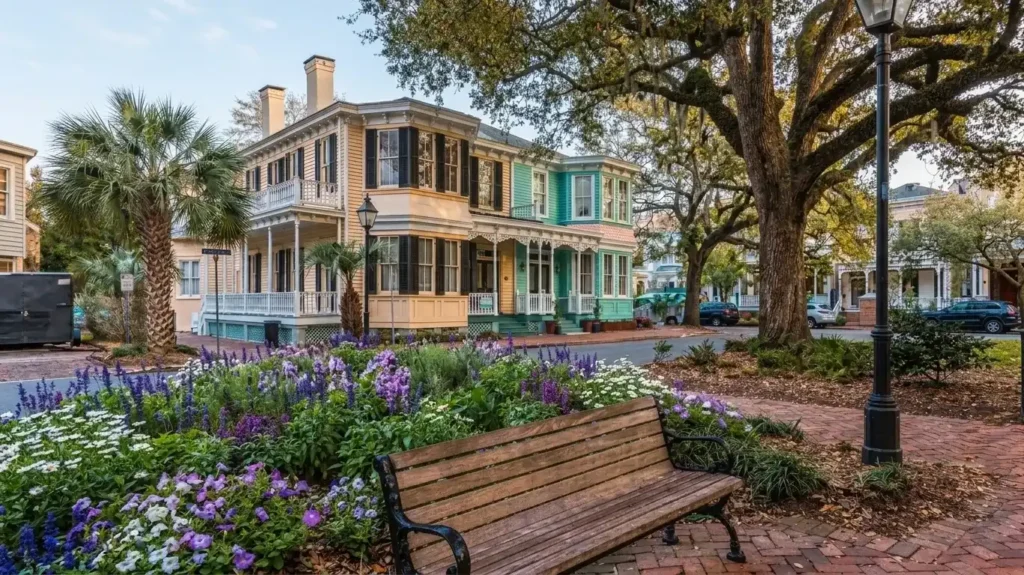
What Should You See in Savannah GA?
Savannah’s main sights are spread across several connected areas. The Historic District holds the largest concentration of landmarks and attractions. River Street and City Market sit nearby and work well in the same sightseeing route. The Victorian District adds historic homes and quieter residential streets. Areas beyond downtown offer beaches, forts, cemeteries, and other attractions.
Your best route depends on how much time you have. First time visitors can cover several central areas on foot. Other attractions require a car, rideshare, or another form of transportation.
Historic District
The Historic District is the main sightseeing area for most visitors. It contains historic squares, churches, museums, monuments, restaurants, and historic homes.
You can walk between many major attractions without moving your car. Forsyth Park sits near the southern end of the district. City Market and River Street are within easy reach from its central and northern sections.
Allow at least half a day for a basic visit. Give yourself a full day if you plan to enter museums or historic homes.
River Street and the Waterfront
River Street runs along the Savannah River on the northern side of downtown. Historic buildings now house restaurants, shops, galleries, and other businesses.
The riverfront is also a good place to watch ships move along the river. You can walk the promenade and connect with the Plant Riverside District.
River Street has historic cobblestones in several areas. Comfortable shoes can make the walk easier.
Allow about two to three hours for a relaxed visit. Add more time if you plan to eat, shop, or explore nearby attractions.
City Market
City Market sits in the center of Savannah’s Historic District. The area covers several blocks with restaurants, shops, galleries, and entertainment.
It works well as a short stop during a downtown walking route. You can combine City Market with Ellis Square, River Street, and nearby historic squares.
Plan about one to two hours for a basic visit. Add more time if you plan to dine or browse the shops.
Victorian District
The Victorian District lies south of the main Historic District. Forsyth Park provides an easy starting point for exploring the area.
The neighborhood features historic homes, tree lined streets, and local businesses. It gives you a different view of Savannah than the busy downtown areas.
This area suits travelers who enjoy architecture and residential history. You can combine it with Forsyth Park during the same outing.
Allow one to two hours for a walking visit. You may need longer if you stop for food or photography.
Areas Beyond Downtown
Some of Savannah’s notable attractions sit outside the main downtown sightseeing zone. These include Bonaventure Cemetery, Old Fort Jackson, and Fort Pulaski National Monument.
Tybee Island provides a separate coastal experience with beaches and historic attractions. It usually works better as a half day or full day trip.
Bonaventure Cemetery is useful for travelers interested in history, architecture, and historic graves. Fort Pulaski adds military history, trails, and outdoor activities.
These places require more planning because walking from downtown is not practical. Check transportation, opening hours, admission, and travel times before leaving the city center.
Savannah Sightseeing Areas at a Glance
Area | What to See | Best For | Time Needed |
|---|---|---|---|
Historic District | Historic squares, museums, churches, monuments, historic homes | First time visitors, history lovers, architecture | Half day to full day |
River Street and Waterfront | River Street, Savannah River views, shops, restaurants, Plant Riverside District | Waterfront views, dining, shopping, evening walks | 2 to 3 hours |
City Market | Restaurants, galleries, shops, Ellis Square | Food, shopping, nightlife, short visits | 1 to 2 hours |
Victorian District | Forsyth Park, historic homes, residential architecture | Architecture, photography, relaxed walks | 1 to 2 hours |
Areas Beyond Downtown | Bonaventure Cemetery, Old Fort Jackson, Fort Pulaski, Tybee Island | History, beaches, outdoor activities | Half day to full day |
Planning tip: Start downtown if this is your first Savannah visit. You can see several major sights within one walking route. Save Tybee Island, Fort Pulaski, or Bonaventure Cemetery for a separate outing when your schedule allows.
Top Sights and Landmarks in Savannah
Savannah’s most recognizable sights range from historic parks and squares to forts, churches, and waterfront landmarks. Most central attractions are close enough to combine during a walking route. Others, such as Bonaventure Cemetery and Fort Pulaski, require transportation.
Forsyth Park
What it is: Forsyth Park is a 30-acre public park in Savannah’s Historic District. Its 1858 cast-iron fountain is one of the city’s most photographed landmarks.
Why visit: The park gives you open green space, walking paths, gardens, and a break from sightseeing on city streets. It also works as a starting point for exploring the Victorian District.
Location: Bull Street and Gaston Street, at the southern end of the Historic District.
Time needed: Allow about 30 to 60 minutes for a basic visit. Plan longer if you want a picnic, longer walk, or time around the park.
Cost: Free.
Practical tip: Visit earlier in the day or later afternoon during hot weather. The park is easy to combine with the Historic District and Victorian District.
Savannah Historic Squares
What it is: Savannah’s historic squares are small public green spaces built into the city’s original street plan. Twenty-three of the original squares remain today.
Why visit: The squares let you see monuments, historic buildings, churches, and residential architecture without entering separate attractions. Chippewa Square, Johnson Square, Reynolds Square, Lafayette Square, and Monterey Square are useful stops.
Location: Throughout Savannah’s Historic District.
Time needed: Allow 1 to 3 hours for several squares. You can also see them naturally while walking between other attractions.
Cost: Free.
Practical tip: Do not plan to visit every square as a separate stop. Add several to your walking route and spend more time at the ones that interest you.
Cathedral Basilica of St. John the Baptist
What it is: The Cathedral Basilica of St. John the Baptist is an active Roman Catholic church known for its French Gothic architecture, stained glass, spires, and detailed interior. It stands near Lafayette Square.
Why visit: The cathedral is one of Savannah’s major architectural and religious landmarks. The interior gives you a chance to see stained glass, murals, carvings, and other decorative details.
Location: 222 East Harris Street in the Historic District.
Time needed: Allow about 30 to 60 minutes for a visit.
Cost: No ticket is required. The cathedral says a small $3 adult donation is appreciated.
Practical tip: Touring hours are generally 9:00 to 11:30 a.m. and 1:00 to 4:30 p.m. Monday through Saturday. Sunday touring is 1:00 to 4:30 p.m. Check the church calendar because services and special events can affect access.
River Street
What it is: River Street is Savannah’s historic waterfront street along the Savannah River. Former cotton warehouses now contain shops, galleries, restaurants, and other businesses.
Why visit: You can walk beside the river, watch large ships pass, explore shops, and stop for food. The area also connects with Factors Walk and the Plant Riverside District.
Location: Along the northern edge of downtown Savannah beside the Savannah River.
Time needed: Allow 1 to 3 hours, depending on how much you shop and dine.
Cost: Free to walk along the waterfront. Individual businesses and activities charge their own prices.
Practical tip: River Street has historic cobblestones and ramps. Comfortable shoes are useful, and elevators provide alternative access from the bluff in some locations.
City Market
What it is: City Market is a historic four-block district in the center of Savannah. Today it includes restaurants, art spaces, shops, live performances, and museums.
Why visit: It is a convenient place to combine food, shopping, entertainment, and sightseeing. Its central location also makes it easy to include during a downtown walking route.
Location: In the heart of the Historic District, near Ellis Square.
Time needed: Allow 1 to 2 hours for a basic visit. Plan longer if you eat or visit an attraction.
Cost: Walking through City Market is free. Individual restaurants, museums, and activities have separate prices.
Practical tip: Combine City Market with Ellis Square and River Street. This saves travel time and gives you a fuller downtown sightseeing route.
Bonaventure Cemetery
What it is: Bonaventure Cemetery is a large historic cemetery on a bluff overlooking the Wilmington River. The site covers more than 100 acres and contains historic graves, monuments, sculptures, and tree-lined roads.
Why visit: The cemetery offers a quieter way to explore Savannah’s history. It is also known for its historic figures, elaborate memorials, and connection with Savannah literature and popular culture.
Location: 330 Bonaventure Road, east of central Savannah.
Time needed: Allow 1 to 2 hours for a general visit. History-focused visitors may want longer.
Cost: Free.
Practical tip: Most cemetery paths are dirt or gravel, so mobility can vary by area. The cemetery is open daily from 8:00 a.m. to 5:00 p.m.
Old Fort Jackson
What it is: Old Fort Jackson is an early 19th-century fort and National Historic Landmark on the Savannah River. It is the oldest standing brick fortification in Georgia.
Why visit: The fort focuses on Savannah’s military history. Visitors can see historic defenses, exhibits, and daily military demonstrations, including cannon firings when weather permits.
Location: 1 Fort Jackson Road, on the eastern side of Savannah.
Time needed: Allow about 1 to 2 hours for the main fort experience.
Cost: Current admission is $15 for adults and $10 for children ages 3 to 12.
Practical tip: Cannon firings are scheduled at 11:00 a.m. and 2:00 p.m., weather permitting. The site is partly outdoors, so plan your clothing and footwear for the weather.
Fort Pulaski National Monument
What it is: Fort Pulaski National Monument preserves a historic masonry fort on Cockspur Island near Savannah. The National Park Service also manages surrounding areas for outdoor recreation and historic interpretation.
Why visit: You can explore the fort, learn about its Civil War history, and spend time outdoors. The site also offers opportunities for hiking, biking, birdwatching, and other activities.
Location: 101 Fort Pulaski Road, Savannah, GA 31410, on Cockspur Island.
Time needed: Allow 2 to 3 hours for the fort and surrounding area. Add more time if you plan to explore the trails.
Cost: The standard entrance fee is $10 per person for visitors age 16 and older. Children under 16 do not need an entrance pass. The pass remains valid for seven consecutive days.
Practical tip: The park is generally open from 9:00 a.m. to 5:00 p.m., with last entry at 4:30 p.m. Check the National Park Service before visiting for holiday closures or schedule changes.

Savannah Historic Squares You Should See
Savannah’s historic squares are central to the city’s original street plan. They connect major landmarks, churches, homes, museums, and commercial streets across the Historic District. The city has 23 surviving historic squares from its original system.
You do not need to visit every square separately. Several sit along the same streets, making them easy to include in a walking route. Bull Street, for example, connects several important squares from Johnson Square through Wright and Chippewa squares toward Forsyth Park.
Forsyth Park and Forsyth Fountain
Forsyth Park is different from Savannah’s smaller historic squares. It is a 30-acre public park at the southern end of the Historic District. Bull Street runs through the park and continues north toward several historic squares.
The Forsyth Fountain stands at the park’s northern end. The cast-iron fountain was installed in 1858 and remains one of Savannah’s most recognizable landmarks.
Forsyth Park is also a convenient gateway to the Victorian District. Whitaker Street and Bull Street border areas of the neighborhood, making it easy to combine architecture with your park visit.
Best for: First-time visitors, photography, walking, families, and architecture.
Time needed: About 30 to 60 minutes for the park and fountain. Allow longer for a full walk.
Chippewa Square
Chippewa Square sits on Bull Street between Perry and Hull Streets. It was established in 1815 and contains a bronze statue of Savannah founder James Oglethorpe.
The square is widely associated with Forrest Gump. The movie’s bus-stop scenes were filmed around the square, although the famous bench is now displayed at the Savannah History Museum.
Chippewa Square is also useful for understanding Savannah’s street layout. From here, you can continue north or south along Bull Street toward other major landmarks.
Nearby: Savannah Theatre, First Baptist Church, and historic buildings around Bull Street.
Best for: First-time visitors, movie fans, photography, and architecture.
Time needed: About 15 to 30 minutes.
Johnson Square
Johnson Square is one of the most important squares for understanding Savannah’s history. It was laid out in 1733 and was the first square in the city’s original plan.
The square sits on Bull Street between St. Julian and Bryan Streets. A monument honoring Revolutionary War general Nathanael Greene stands at its center. Christ Church Episcopal is also located beside the square.
Its location makes Johnson Square a useful starting point for a downtown walking route. You can walk south along Bull Street toward Wright Square and Chippewa Square. Walking north takes you toward City Market, River Street, and the waterfront.
Best for: History, architecture, and first-time sightseeing.
Time needed: About 15 to 30 minutes.
Wright Square
Wright Square sits on Bull Street between State and York Streets. It was laid out in 1733 and is one of Savannah’s oldest squares.
The square has strong connections to Savannah’s early colonial history. A large granite marker commemorates Tomochichi, the Yamacraw chief who helped Oglethorpe establish the Georgia settlement.
Wright Square sits between Johnson Square and Chippewa Square along Bull Street. That makes it an easy stop on a north-south walking route through the Historic District.
Nearby: Lutheran Church of the Ascension and the historic courthouse area.
Best for: Colonial history, architecture, and walking tours.
Time needed: About 15 to 30 minutes.
Reynolds Square
Reynolds Square sits at Abercorn and St. Julian Streets in the eastern part of the Historic District. It was laid out in 1733 and was named for John Reynolds, Georgia’s first Royal Governor.
A monument to John Wesley stands in the center. Wesley came to Savannah in 1736 as an Anglican clergyman and later became associated with the founding of Methodism.
Reynolds Square also sits near several well-known downtown landmarks. The Olde Pink House, Planters Inn, and Lucas Theatre are all nearby.
This square works well after exploring River Street or Factors Walk. You can then continue west toward Wright Square and other central squares.
Best for: Historic architecture, dining, and downtown walking routes.
Time needed: About 15 to 30 minutes.
Telfair Square
Telfair Square sits between Barnard and President Streets in the Historic District. It was originally called St. James Square and was one of Savannah’s four original squares laid out in 1733.
The square was renamed Telfair Square in 1883. It is closely connected with Savannah’s art and cultural attractions.
Telfair Academy and the Jepson Center are nearby, making this a useful stop for museum visitors.
Telfair Square also fits naturally into a walking route between City Market, Wright Square, and other central squares. A current Visit Savannah walking route places Wright Square about four minutes from Telfair Square on foot.
Best for: Museums, art, architecture, and walking tours.
Time needed: About 20 to 45 minutes, or longer if you visit a museum.
Which Savannah Squares Are Best for First-Time Visitors?
You do not need to choose only one. The best approach is to visit several squares along a logical walking route.
For a first visit, consider connecting Johnson Square, Wright Square, Chippewa Square, and Forsyth Park along the Bull Street corridor. This route shows how Savannah’s historic squares connect with major streets, neighborhoods, and landmarks.
Another useful route starts near River Street or Factors Walk, continues to Johnson Square, then moves south through Wright and Chippewa squares. You can finish at Forsyth Park and continue into the Victorian District. Visit Savannah’s current self-guided route follows this broader north-to-south sightseeing pattern.
If you want museums, add Telfair Square to your route. If you want historic restaurants and downtown architecture, add Reynolds Square near River Street and the eastern Historic District.
Square or Park | Nearby Area | Good Nearby Sights | Best For |
|---|---|---|---|
Johnson Square | North Historic District | Christ Church, Bull Street, River Street | Colonial history |
Wright Square | Central Historic District | Bull Street, Lutheran Church | Early Savannah history |
Chippewa Square | Central Historic District | Savannah Theatre, Bull Street | Architecture and Forrest Gump |
Telfair Square | Central Historic District | Telfair Academy, Jepson Center | Art and museums |
Reynolds Square | Eastern Historic District | Olde Pink House, Lucas Theatre | Architecture and dining |
Forsyth Park | South Historic District / Victorian District | Forsyth Fountain, Bull Street | Parks, photography, and walking |
Planning tip: Treat Savannah’s squares as part of your sightseeing route rather than isolated attractions. The streets between them contain many of the historic homes, churches, restaurants, and landmarks that make the Historic District worth exploring.
Things to Do on River Street and the Savannah Waterfront
River Street follows the Savannah River along the northern edge of downtown Savannah. The historic waterfront combines river views, former cotton warehouses, shops, restaurants, and public spaces. More than 75 boutiques, galleries, restaurants, and pubs now occupy buildings along the street.
You can walk along the river, watch cargo ships, shop for souvenirs, eat at waterfront restaurants, or take a river cruise. River Street also connects with Factors Walk, City Market, Plant Riverside District, and other parts of the Historic District.
What to See on River Street
The Savannah River is the main attraction along River Street. Large container ships regularly pass through the river, making ship watching one of the area’s distinctive experiences. You can also see the Talmadge Memorial Bridge from the waterfront.
The historic buildings along River Street once served as cotton warehouses. Today, they contain restaurants, galleries, boutiques, pubs, and specialty shops.
Look for several landmarks as you walk:
- African-American Monument: Located on the western section of the riverfront.
- Waving Girl Statue: A well-known Savannah landmark near the eastern side.
- World War II Monument: Another notable memorial along the waterfront.
- River Street Market Place: An open-air shopping area with local goods and souvenirs.
- Savannah Riverboat Cruises: Boats depart from the River Street waterfront for sightseeing and other cruises.
River Street also has historic cobblestones, ramps, and stairs. Elevators provide alternative access from the bluff in some locations.
How Long to Spend on River Street
Plan about two to three hours if you mainly want to walk, see the river, browse shops, and stop for food.
Allow half a day if you want a slower visit. This gives you time for shopping, lunch or dinner, Plant Riverside District, and additional waterfront attractions.
A river cruise requires additional time based on the cruise you choose. Savannah Riverboat Cruises offers sightseeing, dinner, entertainment, and other cruise options from the River Street area.
You can also extend your walk beyond the main River Street section. Heading west brings you toward Plant Riverside District. Walking east connects with the eastern waterfront and Eastern Wharf area.
Practical tip: River Street can become busy during evenings, weekends, festivals, and peak travel periods. Give yourself extra time if you plan to dine or browse several shops.
What to Do Near River Street
River Street works well as the starting point for exploring several nearby Savannah attractions.
Plant Riverside District sits on the western end of River Street. The former 1912 power plant has been restored and incorporated into a riverfront entertainment district. It now includes restaurants, shops, hotels, entertainment venues, and a riverwalk.
Factors Walk runs above and behind parts of River Street. Its historic buildings and passageways provide another way to explore the waterfront and connect with the Historic District.
City Market is a short walk inland from River Street. Its four-block area contains restaurants, galleries, shops, and entertainment. This makes it easy to combine City Market and River Street during the same downtown outing.
Historic Squares are also within walking distance. From River Street, you can walk toward Johnson Square, Reynolds Square, Wright Square, and other parts of the Historic District.
Savannah Riverboat Cruises provide another way to experience the waterfront. Depending on the cruise, you can see the river from the water rather than from the riverwalk.
River Street vs. City Market
River Street and City Market are both central Savannah attractions, but they offer different experiences.
Feature | River Street | City Market |
|---|---|---|
Main setting | Savannah River waterfront | Downtown Historic District |
What to see | River views, ships, historic warehouses, monuments | Historic buildings, galleries, shops, restaurants |
Best for | Waterfront walks, ship watching, dining, shopping | Food, art, shopping, entertainment |
Atmosphere | Riverfront and open-air | Urban and pedestrian-focused |
Walking surface | Historic cobblestones and ramps | Mostly city streets and pedestrian areas |
Typical visit | 2 to 3 hours | 1 to 2 hours |
Can you combine them? | Yes | Yes |
Choose River Street if waterfront views and ships are high on your list. Choose City Market if you want restaurants, galleries, shops, and a central downtown setting.
You do not need to choose only one. The two areas are close enough to include in the same walking itinerary. A route from River Street through City Market can then continue toward Savannah’s historic squares and Forsyth Park.
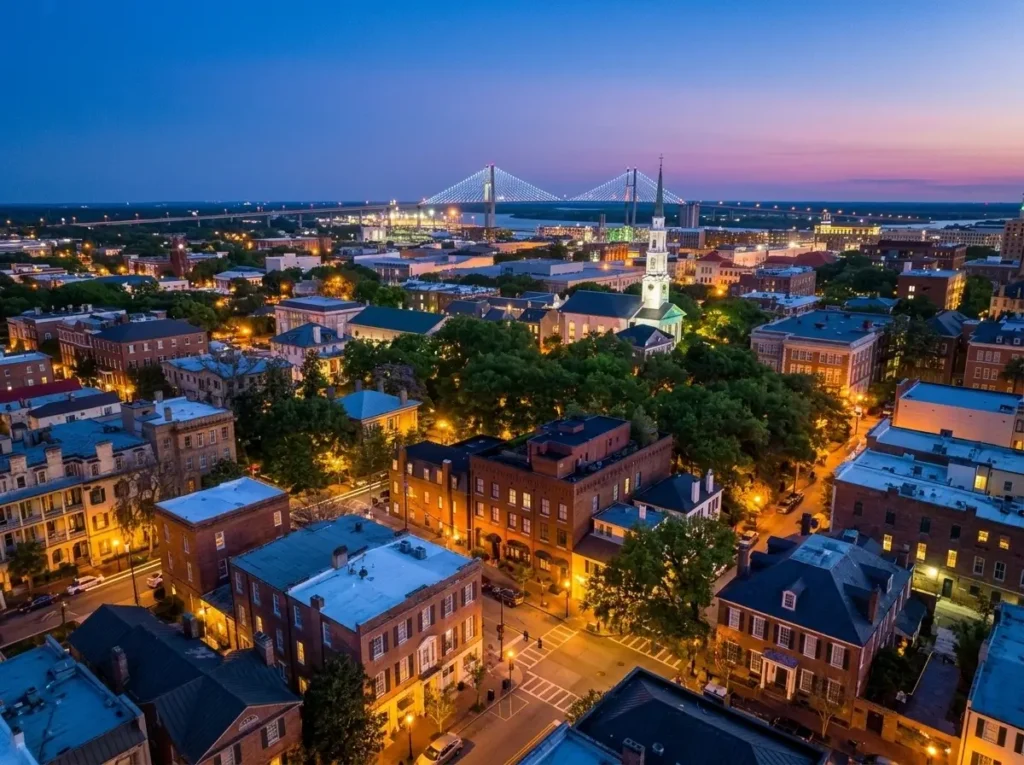
Things to See and Do in Savannah’s Historic District
Savannah’s Historic Landmark District is the center of the city’s main sightseeing area. It is known for its historic squares, museums, churches, homes, restaurants, shops, and walkable streets. Visit Savannah describes the district through its North Historic District near River Street, South Historic District, and MLK Boulevard corridor.
The district is also where several major Savannah attractions connect geographically. River Street runs along the northern edge beside the Savannah River. City Market sits inland from the riverfront. Forsyth Park marks the southern end of the main sightseeing route, with the Victorian District extending around the park.
You can see many of these places on foot. Savannah’s historic squares help organize the route, while streets such as Bull, Barnard, Abercorn, and Broughton connect different parts of downtown.
Best Walking Route for First-Time Visitors
A practical first-time route is to start at River Street and gradually walk south through the Historic District toward Forsyth Park.
Start beside the Savannah River and explore River Street. From there, walk uphill toward Johnson Square and continue through the historic street grid.
A useful route can include:
- River Street and Factors Walk
- Johnson Square
- Broughton Street
- Ellis Square and City Market
- Telfair Square
- Wright Square
- Reynolds Square
- Chippewa Square
- Bull Street and Jones Street
- Forsyth Park
Visit Savannah’s current self-guided walking route follows this general north-to-south pattern. Its route connects River Street, Johnson Square, Ellis Square, City Market, Telfair Square, Wright Square, Chippewa Square, and Forsyth Park.
You do not need to follow every stop exactly. Add a museum, historic home, church, restaurant, or shop based on your interests.
The route also gives you a useful view of how Savannah’s historic grid works. You can move between squares instead of driving from one attraction to another.
Practical tip: Start early if you plan to walk the entire route. Savannah’s heat and humidity can make a long afternoon walk tiring, especially during summer.
Historic District Attractions Near Each Other
One advantage of Savannah’s Historic District is the concentration of attractions within a relatively compact area.
River Street and City Market are easy to combine. City Market sits a short walk inland from the riverfront and connects with Ellis Square.
From Johnson Square, you can continue south along Bull Street toward Wright Square and Chippewa Square. These squares sit along the same north-south street corridor.
Telfair Square is close to City Market and the Telfair Museums. Visit Savannah’s walking route places Telfair Square about five minutes from City Market on foot.
Reynolds Square sits farther east, near River Street and the eastern section of the Historic District. Nearby landmarks include the Olde Pink House and Lucas Theatre.
Chippewa Square sits on Bull Street and is close to the Savannah Theatre and First Baptist Church. Continuing south along Bull Street leads toward Forsyth Park.
Forsyth Park sits at the southern end of this central sightseeing route. Its northern edge connects directly with the Victorian District.
This geographic layout means you can combine several attractions without repeatedly returning to a parking area.
How Long Do You Need in the Historic District?
For a quick introduction, plan half a day in the Historic District. This gives you enough time to walk through several squares, see City Market, visit River Street, and stop at a few landmarks.
Plan one full day if you want a slower walking route with museums, historic homes, churches, shopping, and restaurants.
Allow two days if history and culture are major priorities. You can spread out museum visits, historic house tours, food stops, and longer walks instead of rushing between attractions.
A simple time guide looks like this:
Time Available | What You Can See |
|---|---|
2 to 3 hours | River Street, City Market, several nearby squares |
Half day | River Street, City Market, historic squares, major landmarks |
1 full day | Historic District walking route, museums, churches, shopping, restaurants |
2 days | Museums, historic homes, food tours, more squares, slower neighborhood walks |
If you only have one day in Savannah, keep most of your sightseeing within the Historic District. You can cover River Street, City Market, several squares, and Forsyth Park without spending much time traveling between destinations.
For a longer stay, add attractions outside downtown such as Bonaventure Cemetery, Old Fort Jackson, Fort Pulaski National Monument, or Tybee Island.
Planning tip: The Historic District is best explored as a connected area. Instead of treating every landmark as a separate destination, group attractions by location. This saves travel time and gives you more time to experience Savannah’s streets, squares, architecture, and local businesses.
Cool and Unique Things to See in Savannah
Savannah has plenty of familiar attractions, but some experiences feel different from a standard sightseeing route. You can explore the city after dark, visit historic cemeteries, taste local dishes, or walk through neighborhoods away from the busiest streets.
The most interesting options are not always the biggest attractions. Some stand out because of their history, setting, architecture, or connection to local culture.
Take a Savannah Ghost Tour at Night
Savannah’s historic streets take on a different atmosphere after sunset. Ghost tours combine nighttime walking with stories about historic buildings, cemeteries, and reported paranormal activity.
The historical details behind these tours vary. Some stories come from documented events, while others reflect local traditions and tour-guide storytelling.
Why it is different: You experience familiar streets at night while hearing stories you might not encounter on a daytime history tour.
Good for: Couples, adults, first-time visitors, and travelers interested in Savannah’s darker folklore.
Tip: Check the walking distance and tour length before booking. Some evening routes cover several downtown blocks.
Explore Savannah’s Historic Cemeteries
Bonaventure Cemetery offers a different way to experience Savannah’s history. The grounds contain historic graves, monuments, sculptures, and large oak trees beside the Wilmington River. The cemetery covers more than 100 acres.
You can also learn about Savannah’s African American history through historic burial grounds and church cemeteries.
Why it is different: Cemeteries reveal personal stories, memorial traditions, architecture, and social history that you may miss while visiting major landmarks.
Good for: History travelers, photographers, architecture enthusiasts, and visitors looking for quieter places.
Tip: Bonaventure is outside the central walking route. Plan transportation and allow at least an hour.
Try a Savannah Food Tour
A food tour gives you another way to explore Savannah’s neighborhoods and history. Depending on the route, you may taste Southern dishes, seafood, desserts, or other local specialties.
Food tours also connect restaurants with the city’s historic streets. A guide can explain how regional ingredients and culinary traditions relate to Coastal Georgia and the Lowcountry.
Why it is different: You learn about Savannah through food while moving between local restaurants and historic locations.
Good for: Food lovers, first-time visitors, couples, and travelers who want an activity that combines sightseeing with dining.
Tip: Check the number of tastings, walking distance, dietary options, and whether drinks are included before booking.
Visit Lesser-Known Historic Squares
Savannah’s most famous squares receive much of the attention, but you do not have to stop at the major names.
Squares such as Columbia Square, Warren Square, Washington Square, and Troup Square offer additional examples of Savannah’s historic urban design. Each sits within the larger network of streets and squares that shaped the Historic District.
Why it is different: These squares can feel quieter than popular stops such as Chippewa Square or Forsyth Park.
Good for: Architecture lovers, photographers, walkers, and repeat visitors.
Tip: Add lesser-known squares to your route instead of making separate trips. You will naturally pass several while walking through the Historic District.
Look Closely at Savannah’s Architecture
Savannah’s architecture becomes more interesting when you stop looking for individual landmarks and start comparing entire streets.
The Historic District contains Federal, Greek Revival, Italianate, Gothic Revival, Victorian, and other architectural styles.
Look at Jones Street, Bull Street, Abercorn Street, and the streets surrounding the historic squares. Compare entrances, windows, columns, balconies, setbacks, and building materials.
Why it is different: You can turn an ordinary walk into an informal architecture tour without paying admission.
Good for: Architecture enthusiasts, photographers, history lovers, and travelers who prefer self-guided activities.
Tip: Visit during daylight so you can see building details clearly. Give yourself time to look beyond the most photographed streets.
Explore Savannah’s Local Neighborhoods
Savannah’s character changes outside the busiest parts of the Historic District.
The Victorian District is a useful example. It developed south of the original city and contains many 19th-century homes. Forsyth Park provides a natural starting point for exploring the area.
The Starland District offers a different experience, with restaurants, creative businesses, art spaces, and local nightlife. It is farther from the traditional sightseeing core.
Why it is different: These neighborhoods show parts of modern Savannah that you may miss if you stay around River Street and City Market.
Good for: Repeat visitors, food-focused travelers, nightlife seekers, and visitors interested in local businesses.
Tip: Research the specific streets and businesses you want to visit. Neighborhoods are not attractions with one entrance or central ticketed area.
Visit Unusual Museums
Savannah has museums beyond traditional art and city-history collections.
The Georgia State Railroad Museum lets you explore the former Central of Georgia Railway complex and historic railroad equipment.
The Savannah Children’s Museum uses hands-on exhibits and outdoor spaces for younger visitors. The SCAD Museum of Art offers contemporary art and design exhibitions connected with Savannah’s creative community.
Why it is different: These museums focus on specific subjects rather than giving the same broad overview of Savannah’s history.
Good for: Families, railroad enthusiasts, art lovers, and visitors looking for indoor activities.
Tip: Choose the museum based on your interests. You do not need to visit every museum during a short trip.
See Savannah’s Historic Waterfront After Dark
River Street changes after sunset. Restaurants, bars, hotels, and entertainment venues illuminate the waterfront while the Savannah River continues to carry commercial traffic.
The Plant Riverside District adds restaurants, shops, entertainment venues, and public spaces along the western end of River Street.
Why it is different: The same waterfront you see during the day becomes an evening dining and entertainment area.
Good for: Couples, adults, evening travelers, and visitors who want to combine sightseeing with dinner.
Tip: Stay in well-used public areas and plan your route before heading out. River Street includes steep connections between the upper Historic District and lower waterfront.
Join a Cemetery or Historic Walking Tour
A guided cemetery or history-focused walking tour can add context that you might miss on your own.
Some tours focus on Bonaventure Cemetery, while others explore downtown squares, historic homes, churches, or Savannah’s African American history.
Why it is different: A knowledgeable guide can connect individual buildings and people to larger events in Savannah’s history.
Good for: Travelers who prefer context over simply taking photographs.
Tip: Ask what sources or historical sites the tour uses. Savannah has many local stories, and documented history is not always the same as folklore.
Try a Nighttime Savannah Experience
Savannah offers more than ghost tours after dark. You can take an evening walk through the Historic District, eat along River Street, attend live entertainment in City Market, or explore nighttime events when available.
The city’s squares also look different after sunset, with illuminated streets and historic buildings creating a different setting from daytime sightseeing.
Why it is different: You can experience familiar parts of Savannah without repeating the same daytime itinerary.
Good for: Couples, adults, repeat visitors, and travelers with limited daytime schedules.
Tip: Check current event schedules before planning your evening. Nightlife and entertainment options change more often than permanent attractions.
What Makes Savannah’s Experiences Different?
The best unusual experiences are those that add something beyond another photo stop. A ghost tour adds local folklore. A food tour connects restaurants with history. A cemetery visit explores people and memorial traditions. A neighborhood walk shows modern Savannah beyond the main tourist streets.
You can also combine several experiences. For example, spend the afternoon exploring Forsyth Park and the Victorian District, then take a food tour or evening walk downtown.
That approach gives you a broader view of Savannah without trying to label every attraction a “hidden gem.”
Things to See in Savannah for Different Travelers
Savannah works well for different types of travelers because its attractions cover history, food, architecture, parks, museums, and nightlife. You do not need to see everything to have a good trip.
Your available time and interests should guide your itinerary. A first-time visitor may focus on the Historic District, while families may prefer interactive museums and parks. Couples may want evening walks and waterfront dining.
Best Things to See in Savannah for First-Time Visitors
First-time visitors should start with the areas that put several major sights close together.
Begin in the Historic District and explore its historic squares, churches, architecture, and historic homes. Continue toward City Market and River Street for restaurants, shops, and waterfront views.
Add Forsyth Park if you have enough time. The park sits at the southern end of the central sightseeing area and connects naturally with the Victorian District.
If you have a full day, consider adding one museum or historic house.
Good first-time route: Historic District → historic squares → City Market → River Street → Forsyth Park.
Best Things to See in Savannah for Families
Families have several options that do not require spending the entire day inside traditional museums.
Savannah Children’s Museum offers hands-on activities and outdoor learning spaces. The Georgia State Railroad Museum provides historic trains and interactive experiences. Telfair Museums also operates the Telfair Children’s Art Museum at the Jepson Center.
Forsyth Park gives children room to walk and play between sightseeing stops. Families can also explore River Street, although the historic cobblestones and changes in elevation require some planning.
For a longer trip, Tybee Island provides beaches and outdoor activities outside downtown.
Planning tip: Avoid packing too many museums and walking tours into one day. Alternate sightseeing with parks, food stops, or free outdoor areas.
Best Things to See in Savannah for Couples
Couples can combine historic streets with food, waterfront views, and evening activities.
Start with a walk through the Historic District, especially around the squares and architecture along Bull Street and Jones Street. Continue toward Forsyth Park for a slower walk through one of Savannah’s largest public parks.
For an evening, consider River Street, Plant Riverside District, or a restaurant near the waterfront. A food tour or nighttime walking tour can add a shared activity beyond traditional sightseeing.
Good combination: Historic squares → Forsyth Park → dinner → River Street at night.
Planning tip: Leave open time between attractions. Savannah is a city where wandering through the historic streets can be part of the experience.
Best Things to See in Savannah for History Lovers
History-focused travelers have more options than the main downtown landmarks.
The Owens-Thomas House & Slave Quarters explores architecture and the history of slavery at the property. Fort Pulaski National Monument adds military and Civil War history. Old Fort Jackson focuses on Savannah’s coastal military history.
Bonaventure Cemetery provides another perspective through historic graves, monuments, and memorial art.
For African American history, consider sites such as First African Baptist Church, the Ralph Mark Gilbert Civil Rights Museum, and Pin Point Heritage Museum. These sites address slavery, Black community history, civil rights, and Gullah Geechee heritage.
Planning tip: Give historical sites enough time to read their exhibits and interpretation. The context is often more valuable than simply seeing the building.
Best Things to See in Savannah for Food Lovers
Food-focused travelers can build sightseeing around local restaurants and culinary experiences.
A Savannah food tour can combine tastings with stories about local food traditions and downtown history. You can also explore restaurants around City Market, Broughton Street, River Street, and the Historic District.
Look for regional dishes such as shrimp and grits, fried green tomatoes, seafood, biscuits, and locally influenced Southern cooking. Specific menus change, so check current offerings before visiting.
Desserts and sweets also have a strong place in Savannah’s food scene. You can build a self-guided food walk around restaurants, bakeries, candy shops, and dessert stops.
Planning tip: Food tours involve walking, so check the route, tasting schedule, and dietary accommodations before booking.
Best Things to See in Savannah for Outdoor Lovers
Outdoor travelers can find several options both downtown and outside the city center.
Forsyth Park is the easiest downtown choice. You can walk its paths, relax on the lawns, and explore the gardens.
For a larger outdoor experience, visit Fort Pulaski National Monument. The National Park Service offers opportunities for hiking, biking, birdwatching, and exploring the historic fort and surrounding landscape.
Tybee Island provides a coastal setting with beaches and outdoor activities. It is outside downtown, so allow travel time.
Bonaventure Cemetery also works for travelers who enjoy walking and outdoor photography, although it is primarily a historic cemetery rather than a traditional park.
Planning tip: Savannah’s summer heat and humidity can make long outdoor walks uncomfortable. Start early and carry water.
Best Free Things to See in Savannah
You can see many of Savannah’s major sights without paying admission.
Good free options include:
- Savannah’s historic squares
- Forsyth Park
- River Street
- City Market
- Historic District architecture
- Jones Street
- Waterfront views
- Walking through the Victorian District
Walking between the squares is one of the easiest ways to explore Savannah on a budget. River Street and City Market also allow you to browse the area without paying an admission fee.
Some landmarks may have free exterior access but charge for interior tours. Historic homes, museums, forts, and guided tours can have separate admission fees.
Planning tip: Use free outdoor attractions as the foundation of your itinerary, then add one or two paid experiences that match your interests.
Best Things to See in Savannah at Night
Savannah’s Historic District remains useful after sunset. You can walk through the squares, have dinner downtown, explore River Street, or join an evening tour.
River Street is a popular nighttime area because of its restaurants, bars, shops, and waterfront setting. Plant Riverside District adds dining, entertainment, and riverfront spaces at the western end of River Street.
A ghost tour offers a different nighttime experience. These tours mix Savannah’s documented history with local ghost stories and folklore, depending on the operator.
You can also explore City Market for restaurants and evening entertainment.
Planning tip: Check current business and tour hours before heading out. Evening schedules can change by season and day of the week.
For a quieter night, take a short walk through the Historic District and stop at a restaurant near one of Savannah’s squares. This gives you the atmosphere of the city without committing to a long tour.
Things to See in Savannah in One Day
You can see many of Savannah’s main sights in one day if you keep your route compact. The Historic District is the best area to focus on because River Street, City Market, historic squares, and Forsyth Park connect through the downtown street grid. Visit Savannah also recommends a north-to-south walking route from River Street toward Forsyth Park.
The key is to avoid driving between every attraction. Park once, walk between nearby sights, and leave the evening for the waterfront.
Morning: Forsyth Park and Historic Squares
Start your morning at Forsyth Park. The 30-acre park sits at the southern end of Savannah’s main Historic District sightseeing area. Its cast-iron fountain dates to 1858.
Spend about 30 to 45 minutes walking around the park. Then head north along Bull Street.
This route lets you see several historic squares without backtracking. Consider stopping at:
- Monterey Square
- Madison Square
- Chippewa Square
- Wright Square
- Johnson Square
You do not need to spend equal time at each square. Pick two or three for longer stops and use the others as brief walking stops.
Chippewa Square is especially recognizable because of its connection to Forrest Gump. Johnson Square is useful for understanding Savannah’s original city plan. Wright Square and Madison Square add more historic architecture along the same general route.
Allow about 2 to 3 hours for Forsyth Park and the squares, including photographs and short breaks.
Walking tip: Bull Street provides a straightforward north-south route through several major squares. Comfortable shoes are important for a full day of sightseeing.
Afternoon: Historic District and City Market
Continue north toward the center of the Historic District. This is where you can add a museum, historic home, church, or shopping stop.
If history interests you, consider visiting the Cathedral Basilica of St. John the Baptist or a historic house museum. If you prefer art, Telfair Square provides access to Telfair Museums.
Then continue toward City Market. The four-block district contains restaurants, galleries, shops, and entertainment.
City Market makes a practical lunch stop because you can eat without making a separate trip across town.
After lunch, walk toward Ellis Square and continue north toward Factors Walk. From there, you can reach River Street by stairs, ramps, or accessible elevators in parts of the waterfront area.
Allow roughly 3 to 4 hours for this part of the day if you include lunch and one indoor attraction.
Time-saving tip: Do not schedule multiple museums during a one-day visit. One museum or historic house gives you more time to experience the streets and squares.
Evening: River Street and Dinner
Finish your main sightseeing route on River Street beside the Savannah River.
The waterfront gives you a different setting from the residential streets and squares. You can watch river traffic, browse shops, explore historic warehouse buildings, and stop for dinner.
Walk west toward the Plant Riverside District if you want more restaurants and evening entertainment. Walk east if you want more waterfront shops and river views.
A river cruise can also fit into the evening if its schedule works with your itinerary. Otherwise, simply walking the waterfront gives you a good end to the day.
Allow 2 to 3 hours for River Street, dinner, and an evening walk.
Practical tip: River Street has historic cobblestones and changes in elevation. Plan extra time if you need an accessible route.
One-Day Savannah Sightseeing Map/Route
For one day, use a south-to-north route through the Historic District:
Forsyth Park → Monterey Square → Madison Square → Chippewa Square → Wright Square → Johnson Square → City Market → Factors Walk → River Street → Plant Riverside District
This route follows the geography of Savannah instead of simply ordering attractions by popularity. It also reduces unnecessary backtracking.
Time | Area | What to See |
|---|---|---|
8:30–9:15 a.m. | Forsyth Park | Fountain, park paths, gardens |
9:15–11:30 a.m. | Bull Street corridor | Monterey, Madison, Chippewa, Wright, and Johnson squares |
11:30 a.m.–1:00 p.m. | Historic District | Historic architecture, church, museum, or historic home |
1:00–2:00 p.m. | City Market | Lunch, shops, galleries, Ellis Square |
2:00–3:00 p.m. | Historic District | Telfair Square, nearby landmarks, or additional squares |
3:00–4:00 p.m. | Factors Walk | Historic waterfront connections and views |
4:00–6:00 p.m. | River Street | Savannah River, shops, waterfront landmarks |
6:00 p.m. onward | River Street / Plant Riverside | Dinner, river views, evening entertainment |
Visit Savannah’s current self-guided route similarly connects River Street, Factors Walk, Johnson Square, City Market, Telfair Square, Wright Square, Reynolds Square, Chippewa Square, and Forsyth Park.
You can reverse the route if you prefer to finish at the riverfront after walking north from Forsyth Park. The important part is keeping the attractions in geographic clusters.
If you have less than one full day: Prioritize Forsyth Park, several historic squares, City Market, and River Street. Skip attractions that require a separate drive, such as Bonaventure Cemetery, Fort Pulaski, or Tybee Island.
If you have more than one day: Use your second day for museums, historic homes, food tours, Bonaventure Cemetery, or attractions outside the central Historic District.
How Many Days Do You Need to See Savannah?
You need at least 1 full day to see Savannah’s main sights. 2 to 3 days gives you more time for historic sites, museums, food, and local neighborhoods. With 4 or more days, you can add Tybee Island and attractions outside the central Historic District.
Trip Length | Best Focus |
|---|---|
1 day | Historic District + River Street |
2 days | Historic sites + food and culture |
3 days | Downtown + additional attractions |
4+ days | Add Tybee Island and nearby areas |
1 Day in Savannah
One day is enough for a focused introduction to Savannah.
Stay mostly within the Historic District. Walk through several historic squares, visit Forsyth Park, explore City Market, and finish along River Street.
You can also add one museum or historic landmark if you keep the rest of your schedule flexible.
Best for: First-time visitors with limited time.
2 Days in Savannah
Two days gives you enough time to slow down and explore beyond the main streets.
Use the first day for the Historic District, historic squares, City Market, and River Street. Use the second day for historic homes, museums, a food tour, Bonaventure Cemetery, or another attraction that matches your interests.
You can also spend more time exploring Savannah’s food and cultural scene.
Best for: Travelers who want a balanced Savannah experience.
3 Days in Savannah
Three days lets you combine downtown sightseeing with attractions farther from the central squares.
Spend one day exploring the Historic District. Use another for museums, historic homes, food experiences, or Bonaventure Cemetery. Your third day can include Old Fort Jackson, Fort Pulaski National Monument, Tybee Island, or another outdoor activity.
This length also gives you more flexibility if weather changes your plans.
Best for: Travelers who want history, food, culture, and outdoor experiences.
4 or More Days in Savannah
Four or more days gives you room to explore Savannah without rushing between attractions.
After covering downtown, add Tybee Island, Fort Pulaski, Bonaventure Cemetery, local neighborhoods, additional museums, or longer food and walking experiences.
You can also leave open time for restaurants, shopping, parks, and slower walks through the Historic District.
Best for: Travelers who want to explore Savannah and nearby coastal areas at a relaxed pace.
What Is the Ideal Number of Days for Savannah?
For most visitors, 2 to 3 days provides enough time to see major Savannah sights while leaving room for food, history, and local experiences.
Choose 1 day if Savannah is a short stop. Choose 2 days for the main attractions plus cultural experiences. Choose 3 days if you want to add museums, historic sites, or attractions outside downtown.
If you have 4 or more days, you can explore beyond the central Historic District without turning every day into a packed sightseeing schedule.
How to Get Around Savannah While Sightseeing
The best way to get around Savannah depends on where you plan to visit. Walking works well for the central Historic District, while free downtown transit can reduce walking between major areas.
You can also use trolley tours, bicycles, rideshare services, or a car for attractions outside downtown. Tybee Island and Fort Pulaski require more planning than attractions within the Historic District.
Walking
Walking is one of the easiest ways to explore central Savannah. The Historic District has many attractions within a walkable street grid. The City of Savannah specifically highlights downtown’s pedestrian-friendly layout.
Walking works especially well for routes connecting:
- Forsyth Park
- Historic squares
- Cathedral Basilica of St. John the Baptist
- City Market
- River Street
- Factors Walk
- Broughton Street
- Historic homes and museums
Wear comfortable shoes for a full sightseeing day. River Street also has historic cobblestones and changes in elevation.
Use marked crosswalks and follow pedestrian signals. The city advises visitors to use appropriate crossing facilities downtown.
Best for: First-time visitors exploring the central Historic District.
Free Transportation Options
Savannah has a free downtown transportation system called DOT. The current DOT Express Shuttle operates two loops that connect visitor centers, parking facilities, attractions, shops, restaurants, and hotels.
The shuttle currently serves 18 downtown stops and runs every 10 minutes. Current hours are 7 a.m. to 7 p.m. Monday through Friday and 10 a.m. to 6 p.m. on weekends. Holiday schedules can differ.
The Savannah Belles Ferry is also free. It connects River Street with Hutchinson Island across the Savannah River. Bikes and strollers are permitted on the ferry.
One important update for visitors: the city’s current transportation page lists the River Street Streetcar and DOT Shuttle as out of service, while CAT’s current pages confirm the DOT Express Shuttle is operating. Check the latest CAT or City transportation information before your trip.
Best for: Visitors who want to save money and reduce walking around downtown.
Trolley Tours
Trolley tours can combine transportation with sightseeing narration. They are different from Savannah’s free public DOT shuttle.
Old Town Trolley Tours currently operates a narrated 90-minute tour with 16 stops and hop-on, hop-off access. Its current schedule lists daily service from about 9 a.m. to 5 p.m., with departures approximately every 20 minutes.
A trolley can be useful if you want an overview before exploring specific areas on foot. It can also reduce the amount of walking between attractions.
Do not confuse a paid sightseeing trolley with the free DOT shuttle. The DOT provides public transportation and does not provide the narrated tour experience.
Schedules can change for holidays, events, or seasonal operations. Check the operator’s current schedule before booking.
Best for: First-time visitors who want sightseeing narration and flexible stops.
Biking
Biking can be a practical way to cover more ground than walking. Savannah’s city government provides bicycle maps and information for downtown riders.
The Historic District, Forsyth Park, and surrounding neighborhoods can be explored by bike. Bike tours are also available through regulated tour operators.
Cyclists must follow traffic rules. The city notes that bicycles are subject to traffic regulations and provides specific guidance for downtown riding.
Be careful around pedestrians, parked cars, intersections, and busy streets. Some downtown areas have restrictions on sidewalk riding.
Best for: Active travelers who want to cover several neighborhoods without relying on a car.
Driving and Parking
A car is useful when your itinerary extends beyond central Savannah. It can make trips to Bonaventure Cemetery, Old Fort Jackson, Fort Pulaski, and Tybee Island easier.
For central sightseeing, consider parking once and walking or using the DOT shuttle. Moving your car between attractions can add parking costs and unnecessary driving.
Savannah currently uses paid parking meters in its managed downtown parking zones. City rates are up to $2.50 per hour in Zone 1 and $1.50 per hour in Zone 2. Meter enforcement hours vary by zone.
The city also operates several downtown parking garages. Garage rates and special-event pricing can vary, so check the current city parking page before your visit.
A Visitor Day Pass is another option for qualifying on-street parking. The current city price is $15 for 24 hours or $24 for 48 hours. The pass has restrictions and does not apply to city garages.
Best for: Travelers staying outside downtown or visiting attractions beyond the Historic District.
Rideshare
Rideshare services can help when walking or public transit does not fit your schedule. Visit Savannah confirms rideshare availability for transportation into the city from locations such as the Amtrak station and bus station.
Rideshare can be useful for:
- Getting between your hotel and downtown
- Reaching attractions outside the central walking area
- Returning to your hotel after evening activities
- Traveling to or from the airport or train station
Pickup locations can change during major events. For example, Savannah uses designated rideshare areas during St. Patrick’s Day activities.
Check your rideshare app for the current pickup point rather than assuming your driver can stop directly outside a busy attraction.
Best for: Short trips when you want door-to-door transportation without parking.
Getting Between Downtown Savannah and Tybee Island
Tybee Island is about 18 miles east of central Savannah, so it should be treated as a separate part of your itinerary.
Driving is the simplest option for many visitors. Parking on Tybee Island is managed separately from Savannah, so check current Tybee parking rules and payment requirements before arriving. Visit Savannah specifically directs visitors to Tybee’s separate parking information.
Public transportation is another possibility, but routes and schedules can change. CAT operates local routes across Chatham County, and its current schedules should be checked before planning a downtown-to-Tybee trip.
If you plan to spend most of the day at Tybee Island, allow extra travel time rather than combining it with a packed downtown walking itinerary.
Best for: Travelers staying several days who want to add beaches and coastal attractions.
Which Transportation Should You Use in Savannah?
Your best option depends on your sightseeing plan.
Transportation | Best For | Main Advantage |
|---|---|---|
Walking | Historic District | Easy access to nearby sights |
DOT Shuttle | Downtown sightseeing | Free transportation |
Savannah Belles Ferry | Riverfront and Hutchinson Island | Free river crossing |
Trolley Tour | First-time visitors | Narration and hop-on, hop-off sightseeing |
Biking | Active travelers | Covers more ground than walking |
Driving | Attractions outside downtown | More flexibility |
Rideshare | Short trips and evenings | Convenient point-to-point travel |
Public Bus | Wider Chatham County trips | Connects areas beyond downtown |
Car to Tybee | Beach day | Convenient for a full-day coastal trip |
For a typical first visit, you can walk through most of the central Historic District and use the DOT Shuttle when you want to save time or energy. Use a car or rideshare for attractions farther from downtown.
Always check current schedules, service alerts, parking rules, and event restrictions shortly before your sightseeing day.
Where Are the Main Savannah Attractions Located?
Most major Savannah attractions are concentrated in or around the Historic District. This makes downtown sightseeing easier because many landmarks, squares, museums, restaurants, and waterfront areas are within walking distance.
Other attractions sit outside the central district. Bonaventure Cemetery and Old Fort Jackson are east of downtown, while Fort Pulaski and Tybee Island require a trip farther east.
Understanding these locations can help you build a route without unnecessary driving or backtracking.
Attraction | Area | Near | Best For |
|---|---|---|---|
Forsyth Park | Historic District | Historic Squares, Victorian District | First-time visitors |
Historic Squares | Historic District | Bull Street, historic homes | Architecture and history |
River Street | Waterfront | Factors Walk, City Market | Waterfront views |
City Market | Downtown Historic District | Ellis Square, River Street | Food and shopping |
Factors Walk | Historic District waterfront | River Street, Bay Street | History and architecture |
Cathedral Basilica of St. John the Baptist | Historic District | Lafayette Square, Colonial Park Cemetery | Architecture and history |
Telfair Museums | Historic District | Telfair Square, City Market | Art and culture |
Juliette Gordon Low Birthplace | Historic District | Chippewa Square, Telfair Square | History and Girl Scouts heritage |
Bonaventure Cemetery | East Savannah | Wilmington River | History and cemetery architecture |
Old Fort Jackson | East Savannah | Savannah River | Military history |
Georgia State Railroad Museum | West of Historic District | Savannah History Museum, Savannah Children’s Museum | Families and railroad history |
Savannah History Museum | West of Historic District | Georgia State Railroad Museum | Local history |
Victorian District | South of Historic District | Forsyth Park | Architecture and neighborhood walks |
Starland District | Midtown Savannah | Victorian District | Food, art, and nightlife |
Fort Pulaski National Monument | Cockspur Island | Tybee Island, Wilmington Island | Military history and outdoors |
Tybee Island | Coastal Savannah | Fort Pulaski | Beaches and outdoor activities |
Wormsloe Historic Site | South of Savannah | Isle of Hope | Colonial history and scenery |
Where Are Savannah’s Main Attractions Downtown?
The main downtown sightseeing area stretches from the Savannah River south toward Forsyth Park.
River Street forms the northern waterfront. City Market sits inland from the riverfront, while the historic squares extend south through the Historic District. Forsyth Park marks the southern end of the main downtown sightseeing area. Visit Savannah’s current self-guided route connects River Street, Johnson Square, City Market, Telfair Square, Chippewa Square, and Forsyth Park.
This creates a useful sightseeing pattern:
River Street → Factors Walk → City Market → Historic Squares → Forsyth Park
You can walk much of this route without moving your car.
Which Savannah Attractions Are Close Together?
Several major sights can be grouped into the same walking itinerary.
River Street and City Market are close to each other. Factors Walk provides historic connections between the waterfront and the upper streets.
Johnson Square, Wright Square, Chippewa Square, and Forsyth Park also form a practical north-to-south sightseeing route. Visit Savannah’s current walking guide follows this general geographic pattern.
Telfair Square, Telfair Museums, the Cathedral Basilica, and several historic homes can also be combined with downtown sightseeing.
This is why staying within the central Historic District can save time on a short trip.
Where Are Savannah’s Attractions Outside Downtown?
Some popular attractions require transportation beyond the central walking area.
Bonaventure Cemetery and Old Fort Jackson are both east of the Historic District. Bonaventure sits along the Wilmington River, while Old Fort Jackson is farther east along the Savannah River.
Fort Pulaski National Monument is farther east near the entrance to Tybee Island. It sits on Cockspur Island and works well as part of a coastal sightseeing day.
Tybee Island is the farthest major visitor area from downtown. Plan it as a separate half-day or full-day outing rather than adding it to a packed downtown walking route.
Wormsloe Historic Site is south of central Savannah. Its location also makes it better suited to a separate driving itinerary.
Savannah Attraction Areas at a Glance
For quick trip planning, think of Savannah in these geographic zones:
Area | Main Attractions | Typical Visit Style |
|---|---|---|
Waterfront | River Street, Factors Walk, Plant Riverside District | Walking, dining, shopping |
Central Historic District | Historic squares, City Market, churches, historic homes | Walking and sightseeing |
Southern Historic District | Forsyth Park, Jones Street | Walking, parks, architecture |
Victorian District | Historic homes, Forsyth Park, local businesses | Walking and neighborhood exploring |
West of Downtown | Georgia State Railroad Museum, Savannah History Museum, Savannah Children’s Museum | Museums and family activities |
East Savannah | Bonaventure Cemetery, Old Fort Jackson | Driving or rideshare |
Coastal East | Fort Pulaski, Tybee Island | Driving and outdoor activities |
South Savannah | Wormsloe Historic Site, Isle of Hope area | Driving and history |
How Should You Group Savannah Attractions?
If you have one day, stay mostly within the Historic District. Combine Forsyth Park, several squares, City Market, and River Street.
With two days, add a museum, historic home, Bonaventure Cemetery, or another attraction outside the central district.
With three or more days, you have more time for Fort Pulaski, Tybee Island, Wormsloe Historic Site, Old Fort Jackson, or Savannah’s neighborhoods.
The key is to group attractions by location. Savannah’s central attractions are close enough to combine, while coastal and eastern sites need more travel time.
Free and Low-Cost Things to See in Savannah
Savannah is easy to explore on a budget because many major sights do not require admission. The Historic District alone gives you access to historic squares, parks, architecture, public streets, and waterfront views.
You can also reduce transportation costs by walking between nearby attractions and using Savannah’s free downtown transportation options.
Walk Through Savannah’s Historic Squares
Savannah’s historic squares are among the best free sights in the city. You can walk through the squares, view monuments, photograph historic buildings, and explore the surrounding streets without paying an attraction fee.
The Historic Landmark District has 23 surviving squares. Several sit along the Bull Street corridor, making them easy to combine into one walking route.
Good squares to include are:
- Johnson Square
- Wright Square
- Chippewa Square
- Madison Square
- Monterey Square
- Reynolds Square
- Telfair Square
You do not need to visit every square on one trip. Choose several based on your route and interests.
Spend Time at Forsyth Park
Forsyth Park is another major free attraction. You can walk its paths, see the famous fountain, relax on the lawns, and explore the surrounding Victorian District.
The park works especially well as the starting or ending point for a walking route through Savannah’s Historic District.
Bring water and plan your visit around the weather during warmer months. You can also combine the park with nearby Jones Street and historic neighborhood streets.
Walk Along River Street
You do not need to pay an admission fee to explore River Street. The waterfront offers views of the Savannah River, historic warehouses, public monuments, shops, and restaurants.
Walking the riverfront is a good budget activity even if you skip the paid attractions nearby.
You can also continue through Factors Walk and connect the waterfront with the central Historic District.
Keep in mind that River Street has historic cobblestones and changes in elevation. Comfortable shoes can make a noticeable difference.
Explore City Market and Downtown Streets
City Market is another area where you can sightsee without buying an attraction ticket.
Walk through the market area, browse galleries, view public art, and explore nearby streets. You can spend nothing or stop for food and shopping based on your budget.
From City Market, you can continue toward Ellis Square, Telfair Square, River Street, or other nearby historic areas.
Follow a Free Savannah Walking Route
A self-guided walking route can cover many of Savannah’s main sights without paying for a tour.
A practical budget route is:
Forsyth Park → Monterey Square → Madison Square → Chippewa Square → Wright Square → Johnson Square → City Market → Factors Walk → River Street
This route lets you combine parks, squares, architecture, monuments, and waterfront scenery.
Visit Savannah also promotes self-guided sightseeing through the Historic Landmark District, including a route connecting River Street and Forsyth Park.
The main cost is usually transportation to your starting point, parking if you drive, and any food or paid attractions you choose along the way.
Use Free Downtown Transportation
Savannah’s DOT Express Shuttle provides free downtown transportation. It can help reduce walking and avoid moving your car between sightseeing areas. The City of Savannah lists free shuttle service connecting downtown destinations and parking facilities.
The Savannah Belles Ferry is also free. It provides a scenic way to cross the Savannah River between downtown and Hutchinson Island.
Check current schedules before your trip because service hours can change for holidays and special events.
Visit Free Public Areas and Outdoor Sights
Many Savannah experiences are free because they take place in public spaces.
Budget-friendly options include:
- Historic squares
- Forsyth Park
- River Street
- City Market
- Jones Street
- Historic District architecture
- Public monuments
- Waterfront views
- Neighborhood walks
- Savannah Belles Ferry
- Free downtown shuttle service
Bonaventure Cemetery is another free option listed by Visit Savannah. It offers historic graves, monuments, mature trees, and walking opportunities.
Know Which Savannah Attractions Charge Admission
Not every major Savannah sight is free.
Museums, historic homes, forts, guided tours, and some special experiences charge admission. These costs can add up if you visit several paid attractions in one day.
For example, Old Fort Jackson currently lists admission at $15 for adults and $10 for children ages 3 to 12.
Fort Pulaski National Monument currently charges $10 per person for visitors age 16 and older, while visitors under 16 enter free. The National Park Service says the standard pass is valid for seven consecutive days.
Check official attraction websites before visiting because admission prices, discounts, and operating schedules can change.
Consider Parking When Planning a Budget
Free attractions can still cost money if you drive into downtown.
The City of Savannah currently lists downtown parking meters at a maximum of $2.50 per hour in Zone 1 and $1.50 per hour in Zone 2. Enforcement hours vary by location.
Downtown garages have separate rates. Some city garages currently charge hourly rates, while certain evenings and weekends use flat rates. Special-event pricing can also apply.
A Visitor Parking Pass is another option for eligible downtown parking. Current pricing is $15 for 24 hours or $24 for 48 hours.
For a budget sightseeing day, parking once and walking can be cheaper than repeatedly moving your car.
How to See Savannah on a Small Budget
You can build a low-cost Savannah itinerary around free public attractions.
Morning: Start at Forsyth Park and walk through several historic squares.
Afternoon: Continue toward City Market and explore the surrounding Historic District.
Evening: Walk through Factors Walk and River Street before finding a reasonably priced dinner.
Add one paid attraction if your budget allows. A museum, historic home, or fort can provide more context without requiring a full day of paid activities.
The biggest savings usually come from walking between attractions, using free downtown transportation, limiting paid admissions, and avoiding unnecessary parking fees.
Practical Tips for Savannah Sightseeing
A good Savannah sightseeing plan depends on more than choosing attractions. Weather, walking distance, parking, restrooms, and tour schedules can change your day.
Use these practical tips to make your itinerary easier and avoid common planning problems.
Best Time of Day to Sightsee
Start outdoor sightseeing in the morning, especially during summer. Morning temperatures are usually more comfortable than the afternoon, and you can cover several squares before the strongest heat.
Use the early afternoon for museums, historic homes, lunch, or other indoor attractions. Then return outside later in the day.
A simple daily pattern is:
Morning: Parks, squares, architecture, and walking
Afternoon: Museums, historic homes, lunch, and indoor attractions
Evening: River Street, dinner, tours, and waterfront walks
Savannah’s summers are hot and humid, with afternoon thunderstorms also common.
Savannah Weather and Heat
Savannah has a subtropical climate. Summer temperatures commonly reach the 80s and 90s, with high humidity. Afternoon thunderstorms can also interrupt outdoor plans.
Carry water during long walking days. A refillable bottle is useful because sightseeing can involve several miles of walking. Visit Savannah also recommends staying hydrated while exploring the city.
During hot weather, build indoor breaks into your schedule. Museums and historic house tours can provide air-conditioned stops between outdoor attractions.
Spring and fall generally offer more comfortable conditions for extended outdoor sightseeing. Winter is also mild compared with many U.S. destinations, with typical highs in the 50s and 60s.
Comfortable Walking Shoes
Wear comfortable shoes if you plan to explore Savannah on foot.
A sightseeing route can combine sidewalks, historic streets, parks, squares, and River Street. The waterfront also includes historic cobblestone surfaces.
Choose shoes that provide good support rather than footwear designed only for photographs.
You should also carry water, sunscreen, and weather protection when spending several hours outside.
Rainy-Day Alternatives
Rain does not have to cancel your Savannah sightseeing day.
Move outdoor attractions earlier or later and use rainy periods for indoor experiences. Good alternatives include:
- Telfair Academy
- Jepson Center
- Owens-Thomas House & Slave Quarters
- Savannah History Museum
- Georgia State Railroad Museum
- Savannah Children’s Museum
- Shopping and dining in the Historic District
- Indoor food experiences
Telfair Museums operates three sites in the Historic District, giving you several indoor options within a relatively compact area.
Check attraction hours before leaving your hotel. Some sites may change schedules because of weather or special events.
Parking
If you are staying downtown, consider parking once and walking between nearby attractions.
Moving your car repeatedly can add parking costs and time. Savannah has metered street parking and city parking garages in the downtown area.
The city also provides accessible parking spaces in garages, city lots, and on-street locations.
If you plan to visit several attractions in the Historic District, compare the cost of parking for the full day with using walking and free downtown transportation.
For current parking rates, restrictions, and event-related changes, check the City of Savannah before your sightseeing day.
Restrooms
Do not assume every public square has a restroom.
Plan restroom stops around museums, visitor centers, restaurants, and other attractions where facilities are available.
The City Market Visitor Information Center is one useful downtown planning stop. Visit Savannah currently lists it at 307 West Julian Street with daily operating hours of 10 a.m. to 5 p.m.
Families should plan restroom breaks before starting long walking stretches. This is especially useful when moving between squares and waterfront areas.
If you are visiting a museum, use its restroom before continuing your walking route.
Strollers and Family Travel
A stroller can make Savannah easier for families, but the type of route matters.
Historic sidewalks, cobblestones, stairs, and crowded areas can make some routes harder with a stroller. Plan shorter walking segments and use parks or indoor attractions as breaks.
Telfair Museums welcomes strollers at the Jepson Center and Telfair Academy. Strollers are also permitted in certain areas of the Owens-Thomas property, although they are not permitted inside the historic house itself.
The Jepson Center also offers stroller and toddler programming, with babies, toddlers, and strollers welcome during those programs.
For families, avoid planning a full day of nonstop walking. Combine one major sightseeing area with a park, meal, or child-friendly attraction.
Accessibility and Mobility
Savannah has accessible options, but historic areas can present challenges.
Cobblestones, older sidewalks, stairs, and historic buildings can affect mobility. Visit Savannah notes that the city has added wheelchair ramps, accessible transportation, dining, and accommodations, while also recognizing the challenges created by historic streets and waterfront areas.
Check each attraction separately rather than assuming the entire property is accessible.
For example, Telfair Academy and the Jepson Center are wheelchair accessible. The Owens-Thomas House itself is not wheelchair accessible because of its historic structure, although the orientation gallery and slave quarters have ramped entrances.
If mobility is a concern, contact attractions before visiting. Ask about:
- Accessible entrances
- Elevators
- Restrooms
- Accessible parking
- Wheelchair availability
- Tour route surfaces
- Steps or steep sections
- Seating during guided tours
This can help you avoid arriving at an attraction that cannot accommodate your needs.
When to Book Tours and Attractions
Book popular tours and timed attractions before your trip when your schedule is fixed.
This is especially useful for:
- Food tours
- Ghost tours
- Historic house tours
- Private tours
- Small-group experiences
- Timed museum visits
- Special events
Some attractions limit the number of visitors per entry period. The Owens-Thomas House, for example, currently limits visitor entries and offers guided tours that typically last 45 to 60 minutes.
You do not need to pre-book every part of your Savannah itinerary. Keep some time open for walking, restaurants, parks, and spontaneous stops.
For group tours, check booking requirements early. The City of Savannah notes that some youth and adult group tours require advance scheduling.
Practical rule: Book the experiences that have fixed times first. Build your flexible sightseeing around them.
A Simple Savannah Sightseeing Checklist
Before leaving your hotel, check:
- Weather and rain forecast
- Comfortable walking shoes
- Water bottle
- Sunscreen and sun protection
- Attraction hours
- Tour meeting point
- Parking location
- Restroom stops
- Accessibility details
- Stroller needs
- Timed-entry reservations
- Evening transportation
A little planning can prevent the most common sightseeing problems. It also leaves more time to enjoy Savannah instead of solving logistics during the day.
Savannah Things to See and Do FAQ
Final Thoughts on Savannah Things to See and Do
First-time visitors can focus on the Historic District, historic squares, Forsyth Park, City Market, and River Street. These areas put many of Savannah’s best-known sights within a practical sightseeing route.
Travelers with more time can add museums, historic homes, food tours, Bonaventure Cemetery, Fort Pulaski, or Tybee Island. Your ideal itinerary depends on how many days you have and what interests you most.
For a short trip, keep your route compact and walk between nearby attractions. With extra days, explore beyond downtown and experience more of the city’s history, food, neighborhoods, and coastal setting.
The best Savannah things to see are not limited to individual landmarks. The city’s squares, streets, architecture, waterfront, and local experiences are all part of the sightseeing experience.
- Explore comprehensive travel guides and local insights for visiting Savannah, Georgia.
- Discover iconic historic landmarks, picturesque squares, and top-rated Savannah attractions to include in your itinerary.

John Robert
Travel Writer & Founder @ Thing Savannah
John Robert is a travel writer and explorer specializing in authentic regional guides, detailed itineraries, and practical travel logistics.