When Was Savannah GA Founded? A Complete Guide to Savannah’s Founding
Savannah, Georgia, was founded on February 12, 1733, by James Oglethorpe and the first colonists. They settled on Yamacraw Bluff beside the Savannah River. The new settlement became the first city in the Georgia colony. Its founding also shaped the city’s famous street and square system. Today, visitors can still see that early plan across Savannah’s Historic District. Understanding Savannah’s founding helps explain why its historic streets, squares, and landmarks remain so important.
When Was Savannah, Georgia Founded?
Savannah, Georgia, was founded on February 12, 1733, by James Oglethorpe and the first colonists. They established the settlement on Yamacraw Bluff beside the Savannah River. Oglethorpe led the group of 114 colonists who arrived on the ship Anne. The settlement became the first town of the new Georgia colony.
King George II granted the Georgia colony’s charter in 1732. The British government saw Georgia as a southern buffer against Spanish Florida. Oglethorpe then chose a high bluff above the Savannah River for the settlement. The location offered access to the river and a strong position for defense.
Oglethorpe also directed Savannah’s early city plan. He arranged streets, wards, trust lots, and public squares in a regular pattern. That plan became the foundation of Savannah’s historic layout. Parts of it remain visible across the Historic District today.
What Date Was Savannah Founded?
Savannah was founded on February 12, 1733. That date marks Oglethorpe’s arrival at Yamacraw Bluff with the first group of colonists. The Georgia Historical Society records 114 colonists arriving with him on the Anne.
The journey began in England several months earlier. The colonists sailed from Gravesend on November 28, 1732. They reached Charles Town, South Carolina, on January 24, 1733. From there, they continued south toward the future site of Savannah.
The arrival at Yamacraw Bluff marked the start of Savannah’s settlement. Oglethorpe had selected the site after traveling farther south from South Carolina. He chose the bluff because of its position above the Savannah River.
There is also a calendar detail worth noting. England used the Julian calendar in 1733. Under that older system, the founding date appears as February 1, 1733. England adopted the Gregorian calendar in 1752. Modern historical records use February 12, 1733, for Savannah’s founding date.
The founding also involved people already living in the area. Oglethorpe met Tomochichi, the Yamacraw leader, soon after arriving. Mary Musgrove helped interpret between the colonists and the local Indigenous community.
This distinction matters when discussing when Savannah was founded. February 12, 1733, marks the establishment of the colonial settlement. It does not mean the land had no people or history before the arrival of the colonists.
Who Founded Savannah, Georgia?
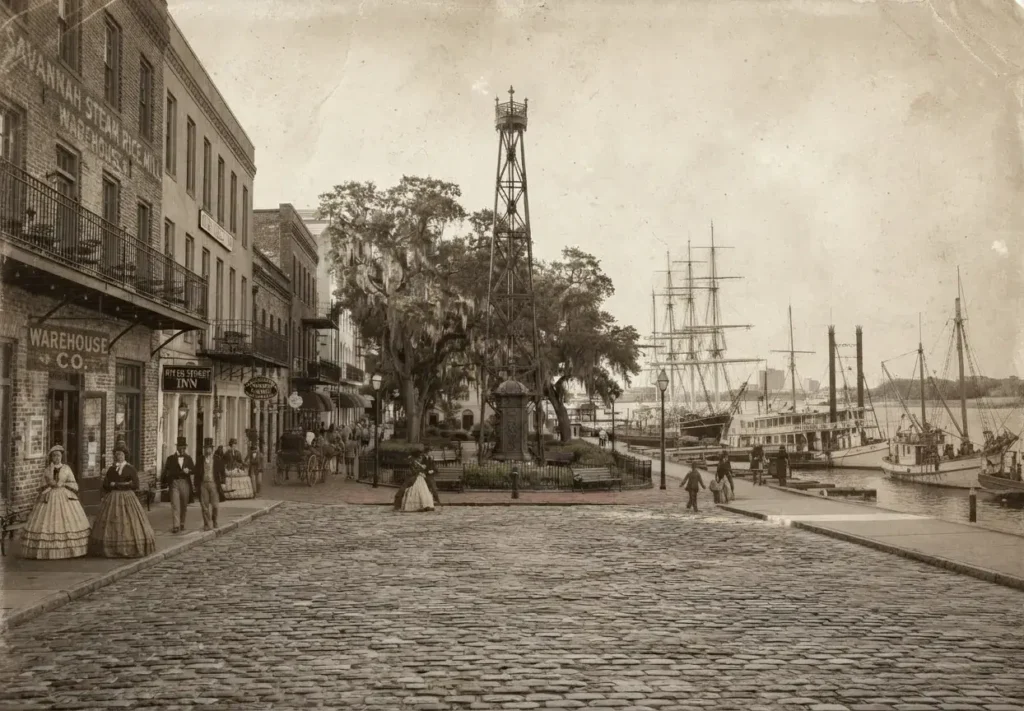
James Oglethorpe led the founding of Savannah in 1733. He arrived with 114 colonists from Great Britain and selected Yamacraw Bluff for the new settlement. Oglethorpe served as the colony’s leading figure during its early years. He also directed the layout of Savannah’s first streets, lots, and public squares.
Savannah became the first town of the new Georgia colony. King George II had granted the colony’s charter in 1732. The Georgia Trustees then organized the settlement and sent colonists under Oglethorpe’s leadership.
James Oglethorpe and the Founding of Savannah
James Oglethorpe was one of the Georgia colony’s trustees. He helped secure support for the new colony before its first settlers sailed from England. Oglethorpe left Gravesend aboard the Anne in November 1732 with about 114 passengers.
The group reached the Georgia coast after stopping in South Carolina. Oglethorpe then searched for a suitable site for the settlement. He selected Yamacraw Bluff because it overlooked the Savannah River. The bluff also offered access to river transportation and a useful defensive position.
On February 12, 1733, Oglethorpe and the colonists arrived at the bluff. They began clearing land and laying out the new town. Oglethorpe marked the streets, town lots, and common areas. His plan later developed into Savannah’s distinctive system of squares and streets.
Oglethorpe was not the only person involved in Savannah’s establishment. The Georgia Trustees created the colony, while Oglethorpe led the first settlement. This distinction gives a clearer picture of how Savannah and colonial Georgia began.
The Role of Tomochichi and the Yamacraw
Savannah’s founding took place in an area already occupied by Indigenous people. Tomochichi was the mico, or chief, of the Yamacraw. The Yamacraw were a small community made up of Lower Creek and Yamasee people. They lived near the Savannah River before Oglethorpe arrived.
Tomochichi played an important role in the early settlement. He welcomed Oglethorpe and the colonists and worked with them through negotiations. Mary Musgrove served as an interpreter during these early discussions. Her knowledge of English and Creek languages helped both sides communicate.
Tomochichi and Oglethorpe reached an agreement that allowed the English settlement to develop at Savannah. The relationship also created opportunities for trade and diplomacy between the Yamacraw and the colonists. Tomochichi later helped Oglethorpe maintain relations with other Native American communities.
Tomochichi also helped the colonists during Savannah’s early years. He assisted with road planning and supported communication with nearby Indigenous groups. In 1734, he traveled to England with Oglethorpe and a Yamacraw delegation. They met British leaders and asked for fair trade and education for his people.
Tomochichi died in 1739 and was buried in what is now Wright Square. Oglethorpe attended his military funeral and served as a pallbearer. His grave remains an important reminder of the Indigenous role in Savannah’s early history.
Savannah’s founding story therefore includes more than the arrival of British colonists. Oglethorpe led the new settlement, but the Yamacraw already lived in the area. Their relationship with the colonists shaped the early development of Savannah and the Georgia colony.
Planning your visit around Savannah’s historic squares, waterfront, and coastal attractions can help you make the most of your trip. Explore these things to do in Savannah, GA to find activities, tours, and itineraries that fit your travel plans.
Why Was Savannah Founded?
Savannah was founded in 1733 as the first settlement of the Georgia colony. The colony received its charter from King George II in 1732. Its founders had several goals for the new settlement. They wanted to create new opportunities for settlers, develop trade, and strengthen Britain’s position along its southern frontier.
The Georgia Trustees also saw the colony as a place for people with limited opportunities in Britain. They hoped settlers could build small farms and support a growing local economy. The Trustees also expected Georgia to produce valuable goods for British trade. Silk production became one early economic goal.
Defense became another major reason for establishing Georgia. Spanish Florida lay south of the new colony, while South Carolina stood to the north. Britain wanted a settlement that could help protect South Carolina from Spanish expansion. Georgia therefore served both civilian and military purposes.
Savannah became the colony’s main settlement and commercial center. Its position near South Carolina also supported trade and communication. The Savannah River gave the settlement access to inland waterways and the Atlantic coast.
Why Did James Oglethorpe Choose Savannah?
James Oglethorpe searched for a suitable location before the colonists reached Georgia. He traveled ahead from South Carolina with Carolina Rangers to find a practical site. He chose Yamacraw Bluff on the Savannah River for several reasons.
The bluff stood high above the river and provided a strong position for the new town. Its elevation helped protect the settlement from flooding and gave settlers a clear view of the surrounding area. The river also provided an important route for transportation and trade.
The location also gave Savannah access to the Atlantic coast. The town stood inland along the river, yet ships and smaller boats could reach the settlement. This position supported trade with South Carolina and other parts of the British colonies.
Defense was another factor. Savannah stood closer to South Carolina than to Spanish Florida. Georgia’s location created a buffer between the Spanish territory and the established British colonies farther north. Oglethorpe later built additional defensive settlements as tensions with Spain increased.
The surrounding land also supported farming. The river and nearby marshes created conditions for crops such as rice. Early settlers developed farms and gardens around Savannah as the colony grew. Oglethorpe’s original plan gave settlers town lots, garden lots, and farm land outside the town.
Savannah’s location therefore served several needs at once. The river supported transportation and trade. The bluff provided a defensible site for the town. Nearby farmland supported settlement and food production. Its position also helped Britain protect South Carolina from Spanish Florida.
Savannah’s food scene ranges from classic Southern comfort food and fresh seafood to elegant fine dining and cozy local cafés. Finding the best restaurants in Savannah, GA can help you choose the right places to eat during your visit.
Where Was Savannah Founded?
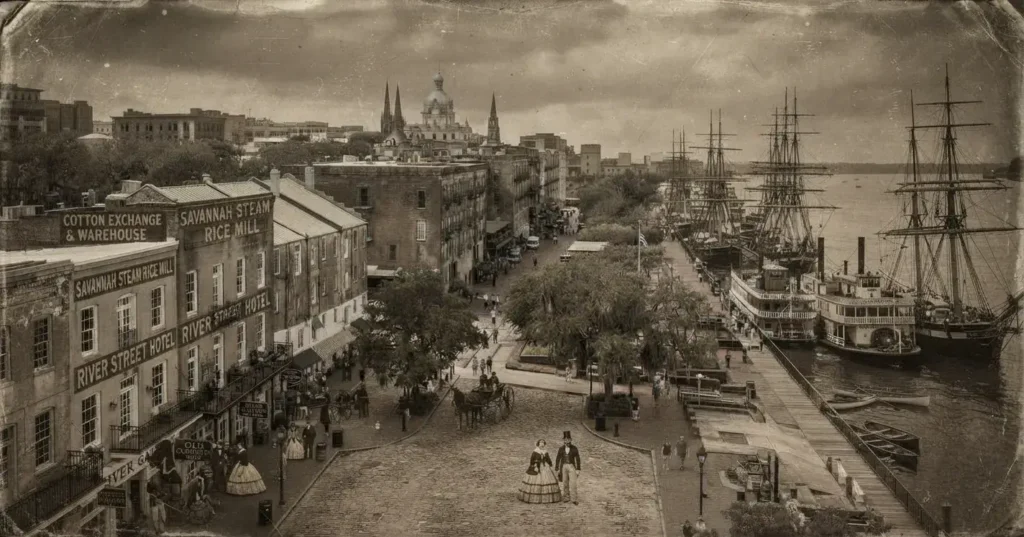
Savannah was founded on Yamacraw Bluff along the western bank of the Savannah River. The site stood about 10 miles from the Atlantic coast and offered a high position above the river. James Oglethorpe selected this location for the first settlement of the Georgia colony in 1733.
The original settlement now sits within downtown Savannah. Its location forms part of the area visitors know as Savannah’s Historic District. The city’s early street plan still shapes much of this area today.
The Savannah River was central to the settlement from the beginning. It provided a route for transportation, trade, and access to the coast. The high bluff also gave the settlers a dry and defensible place to establish the town.
Today, visitors can explore this historic setting from the riverfront and nearby streets. River Street runs along the Savannah River below the bluff. The original settlement area extends inland toward the streets and squares of downtown Savannah.
Where Is Yamacraw Bluff?
Yamacraw Bluff is on the Savannah River in present day downtown Savannah. The historic site sits near Bay Street, west of City Hall. A stone marker identifies the location where Oglethorpe landed with the first colonists in 1733.
The bluff was already home to the Yamacraw before the British colonists arrived. This makes the location important to both Savannah’s colonial history and its Indigenous history.
Visitors can use River Street, Bay Street, and City Hall as nearby reference points. The bluff is above the riverfront, while River Street sits closer to the water. This helps explain the geography that Oglethorpe saw when he chose the site.
The surrounding Savannah Historic District preserves much of the city plan created after the settlement began. The National Park Service notes that Savannah’s original plan has remained a major part of the city’s layout since 1733.
So, when asking where Savannah was founded, the most precise answer is Yamacraw Bluff on the Savannah River in what is now downtown Savannah. The exact founding site remains identifiable within the modern city.
Savannah’s historic charm shines through its moss-covered oak trees, cobblestone streets, historic mansions, and picturesque public squares. Exploring the Savannah Historic District offers a closer look at the city’s rich history, architecture, and local attractions.
What Was Savannah Like When It Was Founded?
Savannah looked very different from the city visitors see today. In 1733, Oglethorpe and the first colonists began building a small settlement above the Savannah River. They first put up temporary shelters before constructing permanent homes and public buildings. The settlement grew around a planned layout rather than scattered development.
The river shaped daily life in the new town. It provided a route for transportation, trade, and communication with nearby settlements. The high bluff also gave the colonists a useful location above the river. This position helped with access, settlement, and defense.
Most early homes were simple wooden structures. The first houses were small clapboard buildings with a loft and a yard. Families also received land outside the town for gardens and farming. This system linked life in the town with food production beyond its streets.
Early Savannah also had open public spaces. These squares served as meeting places for residents. They provided room for community activities and helped organize the surrounding neighborhoods. The squares became a defining part of Savannah’s layout.
Savannah’s Original City Plan
James Oglethorpe led the effort to turn Savannah into a planned town. Historians do not fully agree on who first designed every part of the plan. The historical record does show that Oglethorpe directed its early development.
The plan organized Savannah into units called wards. Each ward centered on a public square. Streets and residential lots surrounded the square in a regular pattern. This design created defined neighborhoods instead of a loose collection of buildings.
Each ward included four residential groups called tythings. Each tything contained ten house lots. The house lots stood around the central square and gave residents a shared public space.
The plan also included trust lots. These larger lots stood beside the squares and were reserved for public buildings. Churches and other community structures could occupy these lots.
The early plan also connected town life with farming. A settler could receive a house lot in Savannah, a garden lot outside town, and a larger farm lot farther away. This arrangement supported both urban life and agricultural work.
The first four wards formed the foundation of Savannah’s city plan. Oglethorpe and his team later added more wards as the population grew. The same basic design continued long after Oglethorpe left Georgia.
The plan still shapes Savannah today. The Historic District retains much of the original street pattern and public square system. Twenty two of Savannah’s original twenty four squares remain. Visitors can therefore see parts of the 1733 plan while walking through the modern city.
That connection makes Savannah’s founding easier to understand. The city’s historic character comes partly from a plan created when the settlement was still new. Its streets, squares, and neighborhoods preserve that early approach to city building.
Visitors looking for a coastal escape can enjoy sandy shores, water activities, and relaxing views near Savannah. Explore these things to do in Savannah Beach to plan a memorable beach day during your trip.
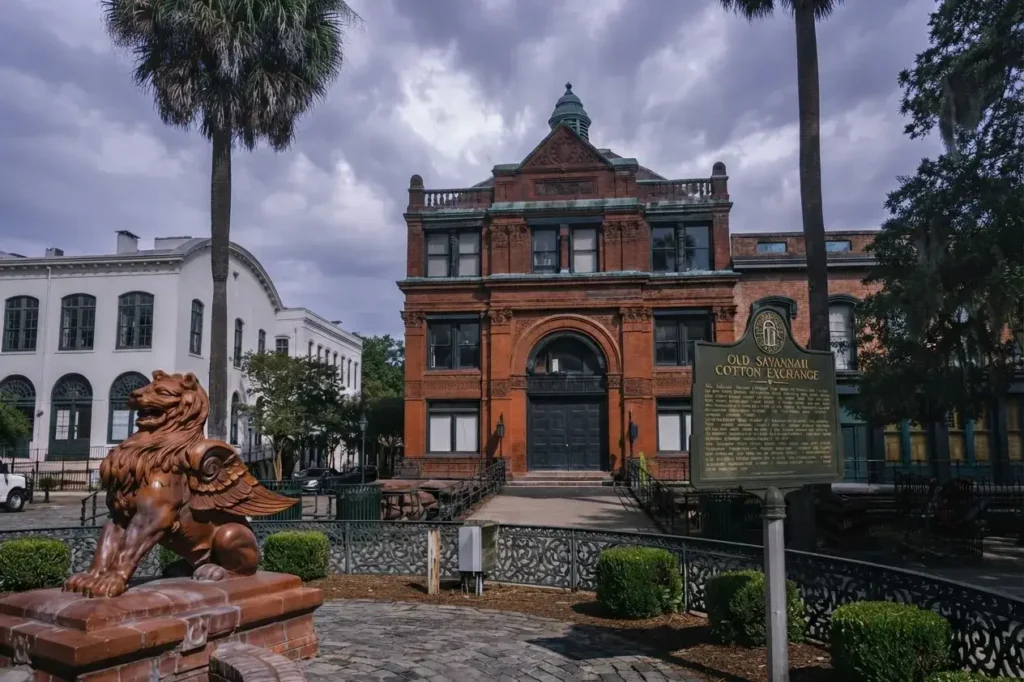
What Happened After Savannah Was Founded?
Savannah grew from a small settlement into the main center of Georgia’s early colonial government and trade. Its location on the Savannah River helped the town develop as the colony expanded. The city’s planned streets and squares also gave the growing settlement a clear structure.
Savannah in the 1730s
The first decade was a period of rapid settlement. After arriving in 1733, the colonists built homes, gardens, public buildings, and farms around the planned town.
Savannah also became a meeting point for different groups. Jewish settlers arrived in 1733, and Salzburgers established the nearby settlement of Ebenezer in 1734. Trade with Native American communities also remained important to the new colony.
Defense soon became another concern. Oglethorpe established Fort Frederica on St. Simons Island in 1736 as tensions with Spanish Florida increased. Savannah remained the main settlement and an important center for the colony.
Savannah During the Colonial Period
Savannah continued to grow during Georgia’s colonial period. The original settlement expanded through the addition of new wards, squares, streets, and residential areas.
Georgia remained under the Trustees until 1752. In 1754, the colony became a royal colony, and Savannah became the official seat of government. The royal governor, legislature, and courts established their headquarters in the city.
Agriculture and river trade also shaped Savannah’s growth. Rice became an important crop in the surrounding lowlands and along the river. Savannah developed into a major commercial center for the growing colony.
Savannah During the American Revolution
Savannah became involved in the American Revolution as political tensions spread through Georgia. The city became a center of the movement for independence in 1775.
British forces captured Savannah on December 29, 1778. They held the city until 1782. In 1779, American and French forces attempted to retake Savannah but failed after a major siege and assault.
The British withdrawal in 1782 returned Savannah to American control. The war had changed the political status of Georgia and ended the city’s colonial period.
Savannah After Georgia Became a State
Georgia became a state during the transition from British rule to the new United States. Savannah continued to serve as an important center for government, trade, and shipping.
The city’s position on the Savannah River supported commercial growth after independence. Agriculture also became increasingly important across the surrounding region. Rice remained significant, while cotton later became a major source of wealth in Georgia.
Savannah’s early city plan also survived these political and economic changes. New neighborhoods were added over time, but the original system of streets, squares, and wards remained an important framework for the city.
In short: Savannah began as Georgia’s first settlement in 1733. It developed into a colonial government and trade center, became a strategic target during the Revolution, and continued growing after Georgia joined the United States.
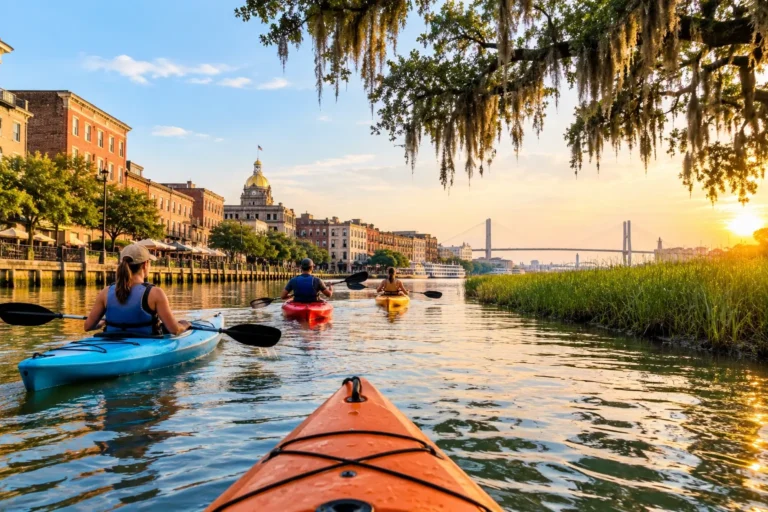
Explore the coastal waterways with guided kayaking in Savannah, GA for a closer look at the area’s natural beauty and wildlife.
Why Is Savannah’s Founding Important?
Savannah’s founding matters because it shaped both Georgia’s early history and the city visitors see today. Savannah was Georgia’s first town after the colony was established in 1732. Its location on the Savannah River helped the settlement develop into an important center for government, trade, and transportation.
The city’s importance also comes from its original plan. James Oglethorpe organized Savannah around wards, squares, streets, and public lots. Later generations continued using this basic system as the city expanded. The plan therefore survived major changes in government, architecture, and population.
Savannah’s founding also has cultural significance. The city’s history includes Indigenous communities, British colonists, African Americans, immigrants, merchants, farmers, and other groups who shaped its development. Understanding the founding gives visitors more context for the buildings, public spaces, and historic sites found across the city.
Historic preservation has helped keep this connection visible. The Savannah National Historic Landmark District was designated in 1966. Its significance includes the surviving Oglethorpe Plan and the historic buildings constructed within that framework.
Today, Savannah’s historic layout also supports heritage tourism. Visitors can walk through old streets, visit historic buildings, and see public squares that reflect the city’s early design. The founding is therefore not just a date in Georgia’s history. It remains visible in the physical layout of modern Savannah.
How Savannah’s Founding Shaped the Modern City
The clearest connection between 1733 and modern Savannah is the Oglethorpe Plan. The original design used a repeating pattern of wards, squares, streets, and lots. As Savannah grew, new areas followed the same basic approach for many years.
Historic squares are one of the most visible parts of that design. The original plan eventually included 24 squares. Today, 22 of those original squares remain. They continue to function as public green spaces within downtown Savannah.
The Historic District also preserves much of the early street pattern. Walking through downtown, visitors can still see the relationship between squares, streets, homes, churches, and other public buildings. The National Park Service identifies the surviving plan as a major reason for the district’s historic importance.
Many historic buildings were constructed long after 1733, but they stand within the framework created by the original plan. Their architectural styles changed as Savannah developed. The underlying street and square pattern remained an important part of the city.
The same idea applies to Savannah’s parks and public spaces. The original squares created open areas within the urban grid. These spaces remain important landmarks and help visitors understand how the colonial town was organized.
This is why Savannah’s founding is still easy to see today. A visitor does not need to look only at a museum exhibit or historical marker. The streets, squares, public spaces, and historic buildings across downtown preserve physical evidence of the city’s 1733 beginnings.
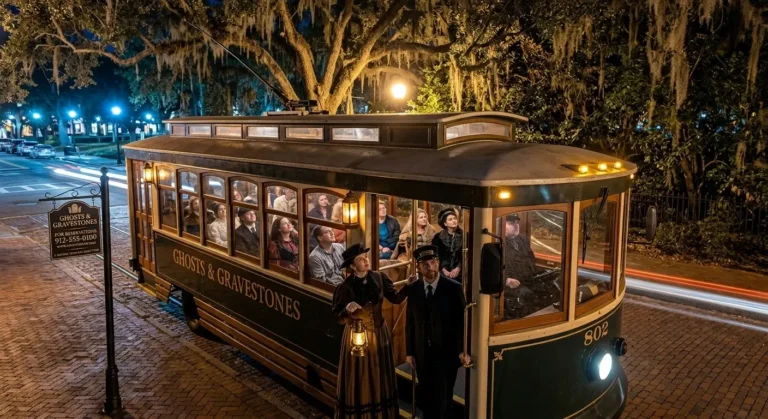
Savannah’s historic streets have plenty of eerie stories, and ghost tours in Savannah offer a unique way to experience the city’s haunted past.
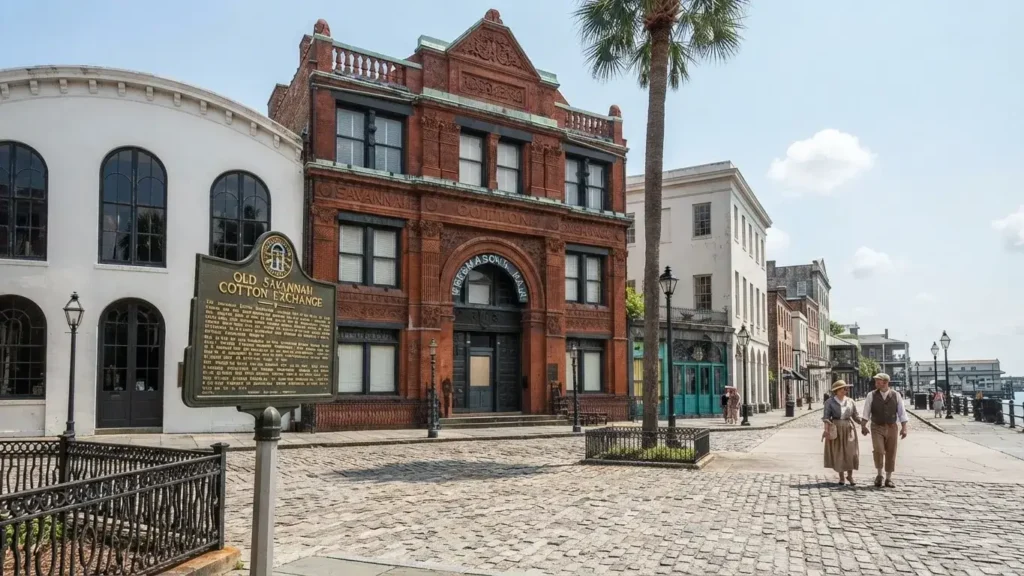
Can You Visit Savannah’s Founding Sites Today?
Yes. Visitors can still explore several places connected to Savannah’s early settlement and development. The strongest connections are found in the Historic District, along the Savannah River, and around the original squares.
Some sites preserve the city’s 1733 layout. Others help explain how Savannah developed during the colonial and early American periods. Together, they make the city’s founding easier to understand.
Savannah Historic District
The Savannah Historic District is the best place to see how the original settlement developed. Much of the area preserves the street and square system established after Savannah was founded in 1733.
The district includes historic streets, public squares, churches, homes, and other buildings from later periods. The original plan continued to influence the city’s growth long after the colonial period.
Visitors can walk through the district to see how Savannah’s original planning system still shapes downtown today. The surviving squares are especially useful for understanding the ward system.
River Street and the Savannah River
E River St sits along the Savannah River, the waterway that shaped the location and growth of the original settlement.
Oglethorpe selected Yamacraw Bluff because of its position above the river. The river supported transportation, communication, and trade as Savannah developed.
River Street itself dates from a later period, so it is not an original 1733 street. It is still useful for understanding Savannah’s long connection with the river and its commercial development. The original settlement stood on the bluff above the riverfront.
City Market
City Market has a later history than Savannah’s founding, but it connects to the city’s long tradition of public markets and commercial activity.
The market area developed as Savannah grew beyond its earliest settlement. Historic images and records document City Market as an important commercial gathering place during the city’s later history. Telfair Museums also preserves historical material showing the former market building in Ellis Square.
City Market therefore works best as a development site, rather than an original founding site. It helps show how Savannah’s commercial center changed after 1733.
Savannah’s Historic Squares
Savannah’s historic squares provide one of the clearest links to the city’s founding plan.
The original city plan organized residential areas around public squares. Streets, house lots, garden lots, and public buildings were arranged around these planned spaces.
Savannah originally had 24 squares. Twenty two remain today. Their survival makes the colonial planning system unusually easy to see in the modern city.
Walking from one square to another gives visitors a practical way to understand how the early wards were organized. The squares also help explain why Savannah’s downtown streets look different from a conventional rectangular street grid.
Telfair Museums
Telfair Museums has a later historical connection to Savannah’s founding period. The Telfair Academy stands on the site of the former colonial Governor’s mansion. The current mansion was completed around 1820 for Alexander Telfair.
This makes Telfair Academy useful for understanding how Savannah developed after its first decades. It is not a surviving 1733 building, but its location connects the museum to Savannah’s colonial government and later civic history.
The Owens-Thomas House & Slave Quarters, another Telfair site, adds context about life in nineteenth-century Savannah. It was built in the early 1800s and therefore belongs to a later period.
For a founding-focused visit, prioritize the Historic District and squares first. Then use the riverfront and selected historic museums to understand how the original settlement developed into the city that exists today.
From historic landmarks to outdoor adventures, these things to see and do in Savannah can help you plan a more memorable visit.
Savannah Founding Timeline
Savannah’s history after 1733 can be understood through a few key periods. This timeline shows how the original settlement developed into a major Georgia city.
Date/Period | Event | Why It Matters |
|---|---|---|
1733 | Savannah founded | James Oglethorpe and 114 colonists established the first town of the Georgia colony at Yamacraw Bluff. |
1730s | Early settlement develops | Savannah grew around its planned streets, wards, squares, homes, gardens, and farms. The settlement also became an important center for the new colony. |
1754 | Savannah becomes the seat of government | Georgia became a royal colony, and Savannah became the official seat of government for the colony. |
Colonial period | Savannah expands | The town grew through new wards and continued river trade. Its original city plan remained the framework for expansion. |
1775–1782 | Savannah becomes strategically important during the American Revolution | Savannah became a center of Georgia’s independence movement. British forces captured the city in 1778 and held it until 1782. |
1779 | Siege of Savannah | American and French forces attempted to retake Savannah but failed. The siege became one of the major Revolutionary War events connected to the city. |
After 1782 | Savannah grows after independence | The city continued developing as a center for river trade, agriculture, and commerce in the new United States. |
Later periods | Modern Savannah develops | New neighborhoods and buildings expanded the city, while much of the original street and square system remained visible in the modern city. |
This timeline shows the main progression: Savannah began as a planned settlement in 1733, became Georgia’s colonial government center, played a major role during the Revolution, and continued growing after independence.
Frequently Asked Questions About the Founding of Savannah, GA
Conclusion: Savannah’s Founding in 1733
Savannah was founded on February 12, 1733, when James Oglethorpe and 114 colonists established a settlement at Yamacraw Bluff along the Savannah River. It became the first town of the new Georgia colony and played an important role in the colony’s early development.
The site was already connected to the Yamacraw and other Indigenous communities before the colonists arrived. Savannah’s early city plan later shaped the streets, squares, and wards that remain visible today.
Much of that historic layout survives in modern downtown Savannah. To see how the 1733 settlement shaped the city, explore Savannah’s Historic District, where the original planning system remains part of the streetscape.
Start your morning with Southern favorites, fresh coffee, and hearty meals at popular Savannah breakfast restaurants before heading out for the day.
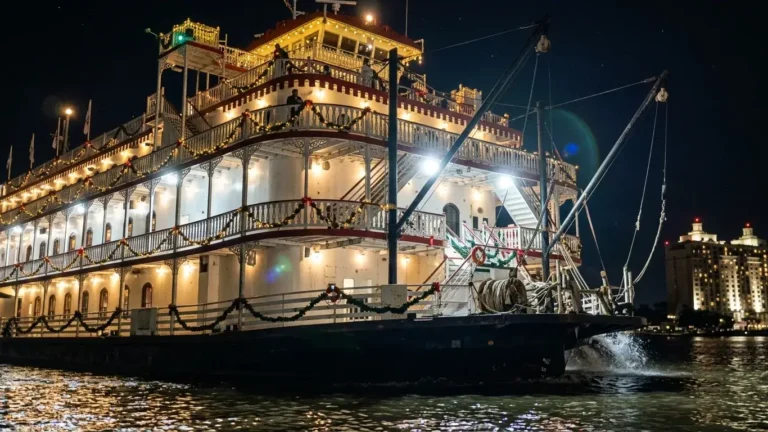
From historic landmarks to scenic waterfront spots, Savannah attractions offer plenty of ways to experience the city’s history, culture, and charm.
Nature lovers can enjoy a peaceful escape from the city while observing native birds and other wildlife in protected habitats. Visiting a wildlife refuge near Savannah offers a chance to experience the region’s natural beauty and coastal ecosystems.

John Robert
Travel Writer & Founder @ Thing Savannah
John Robert is a travel writer and explorer specializing in authentic regional guides, detailed itineraries, and practical travel logistics.